
This means the sandy part of Macao Beach is about 1 kilometer long. This beach is very important for the Punta Cana and Bavaro area because it is public and free to visit. Even though all beaches in the Dominican Republic are free (according to Law No. 305-68, the first 60 meters from the water cannot be private property), many of them are surrounded by hotels, making them impossible to access by car. But Macao Beach has several parking areas (I’ll share their exact locations a little later), so anyone can easily come here and enjoy the beach 😇
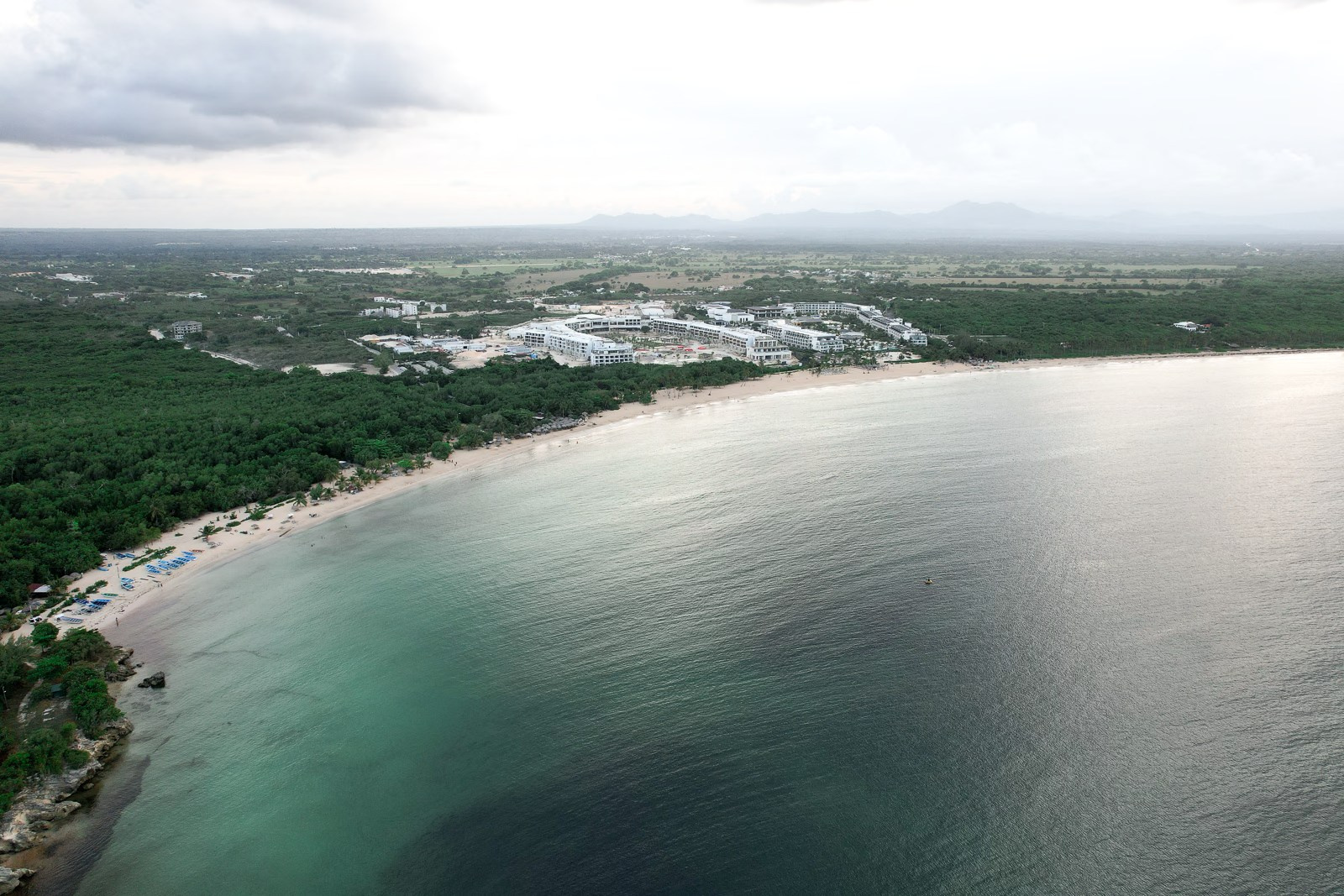
Macao Beach is one of the most famous and recognizable beaches in the Dominican Republic, except for Bavaro Beach, which I wrote a very detailed article about, by the way. I’ll leave a button linking to it below.
Why is Macao Beach so famous?
Thousands of people have photos taken on this beach, and not just regular photos, but professional ones! Why? Because it’s the most popular beach in the Dominican Republic for photoshoots, and so many people choose to have their photos taken here because it’s simply too beautiful not to capture! I’ve done hundreds and hundreds of photoshoots on Macao Beach, and I have so many interesting stories and memories from this place 😍 By the way, you can see photos taken on this beach by clicking the button below.
One interesting fact is that Macao Beach looks different in winter and summer! Its width, slope, and even the color of the sand change depending on the season. How is that possible? That’s exactly what we’re going to talk about! I’ll show you secret spots on the beach, tell you the history of surfing at Macao Beach, and share everything I’ve learned over my years in the Dominican Republic!
Where is Macao Beach located?
Macao Beach (2) is located between the small tourist village of Uvero Alto (1) and the large tourist town of Bavaro (3).
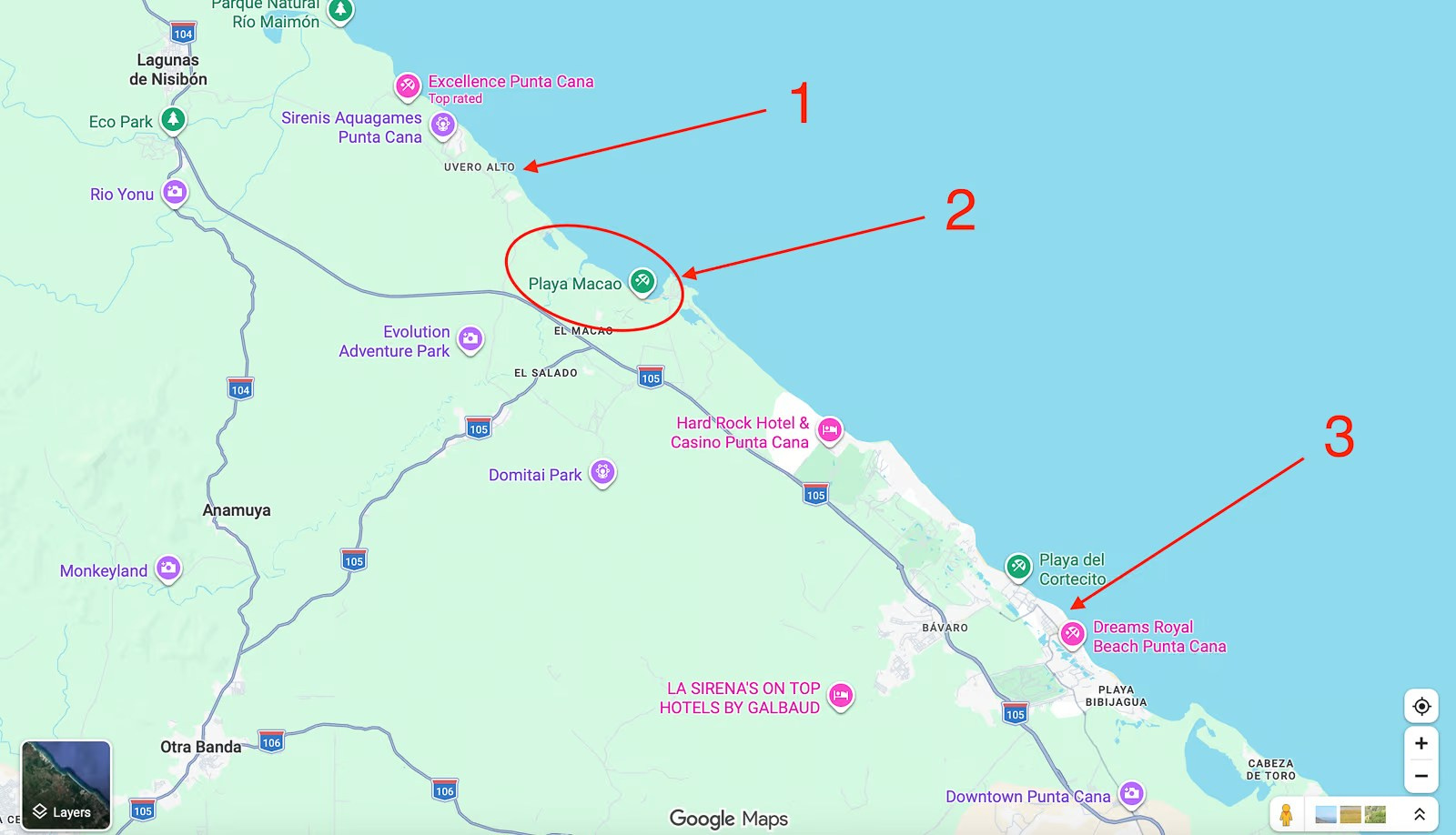
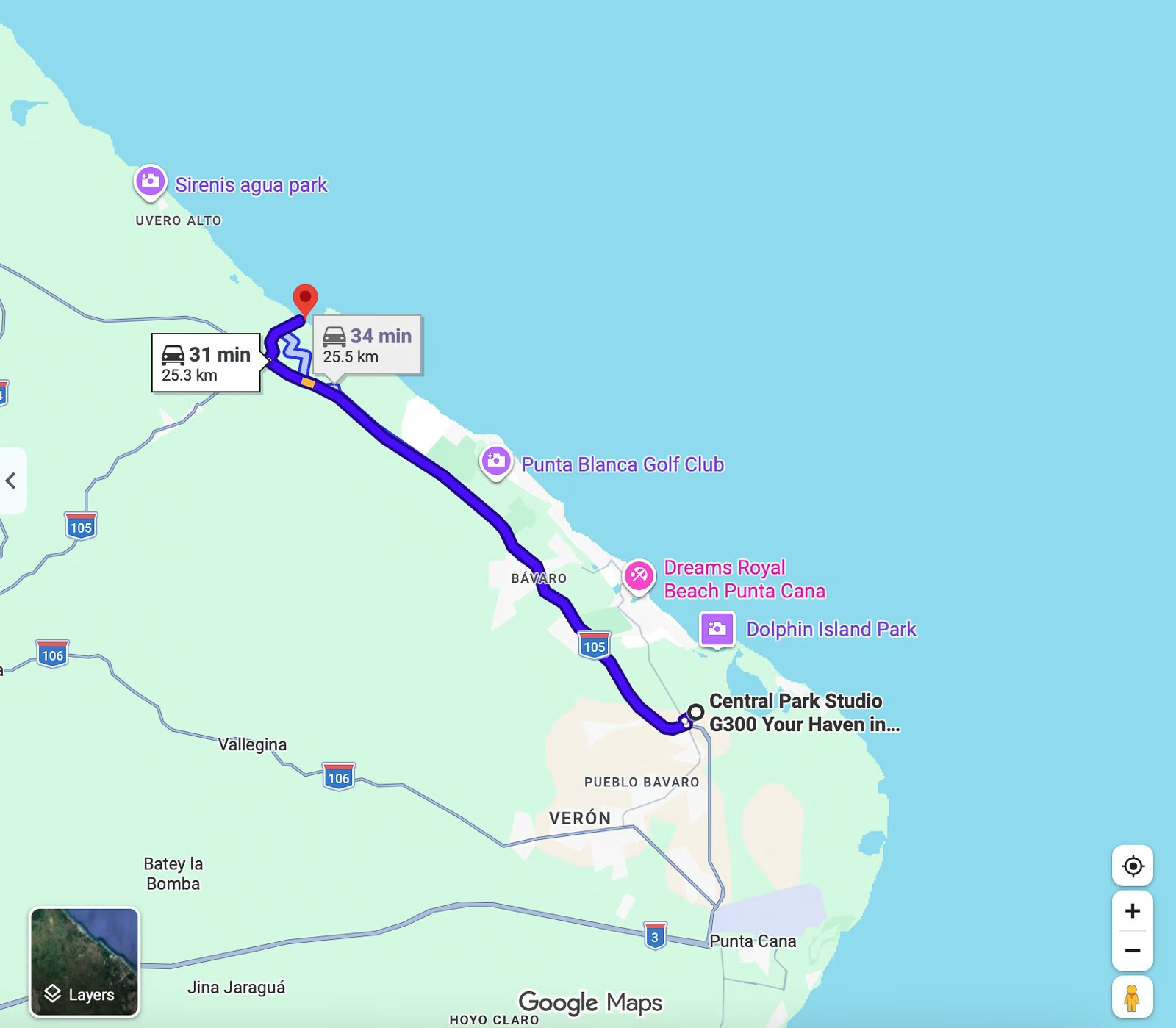
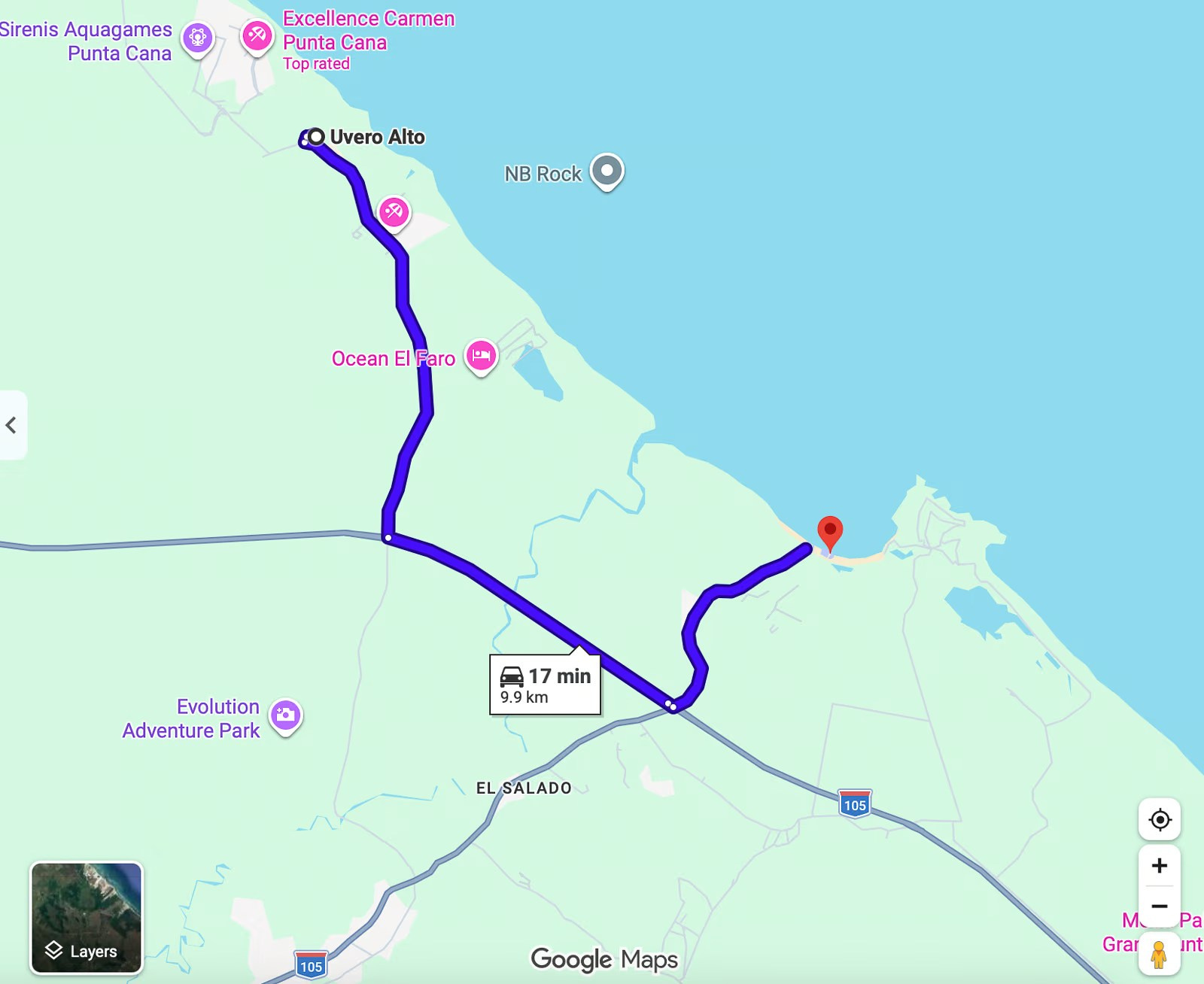
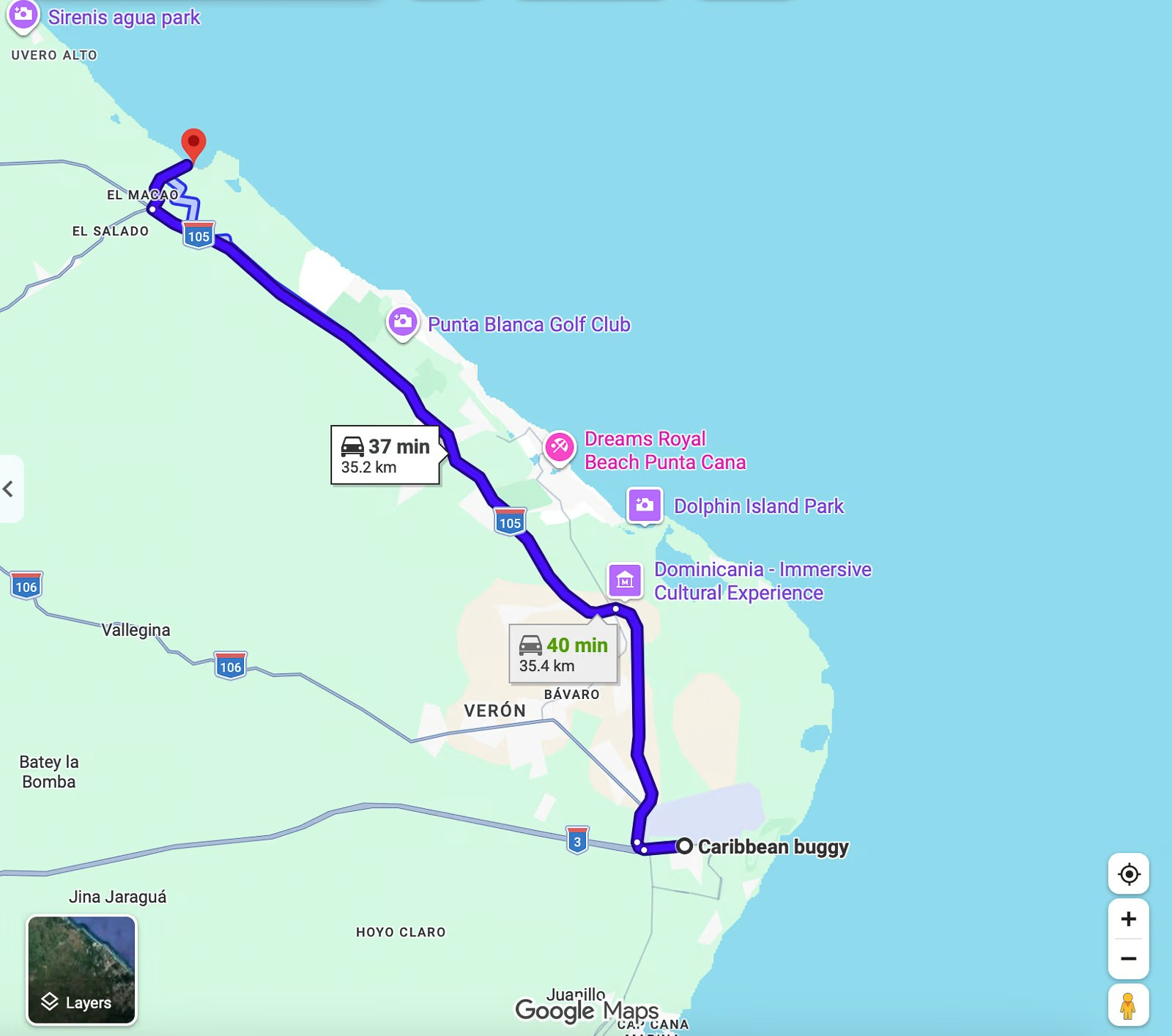
If we’re talking about driving time to the beach:
- From Bavaro to Macao Beach — 20-30 minutes, depending on where you start.
- From Uvero Alto to Macao Beach — about 15 minutes.
- From Punta Cana to Macao Beach — about 40 minutes.
Where to park at Macao Beach?
There are several parking areas here. Technically, they are all free, but in reality, you may find some “helpers” who “watch” the cars. It’s important to understand that you are absolutely not required to pay them, but the main thing is not to be rude to them, because they might be the ones who scratch your car. So the safest option is not to be cheap, give them $2-3 (100-200 pesos), and enjoy your day without worrying 😅
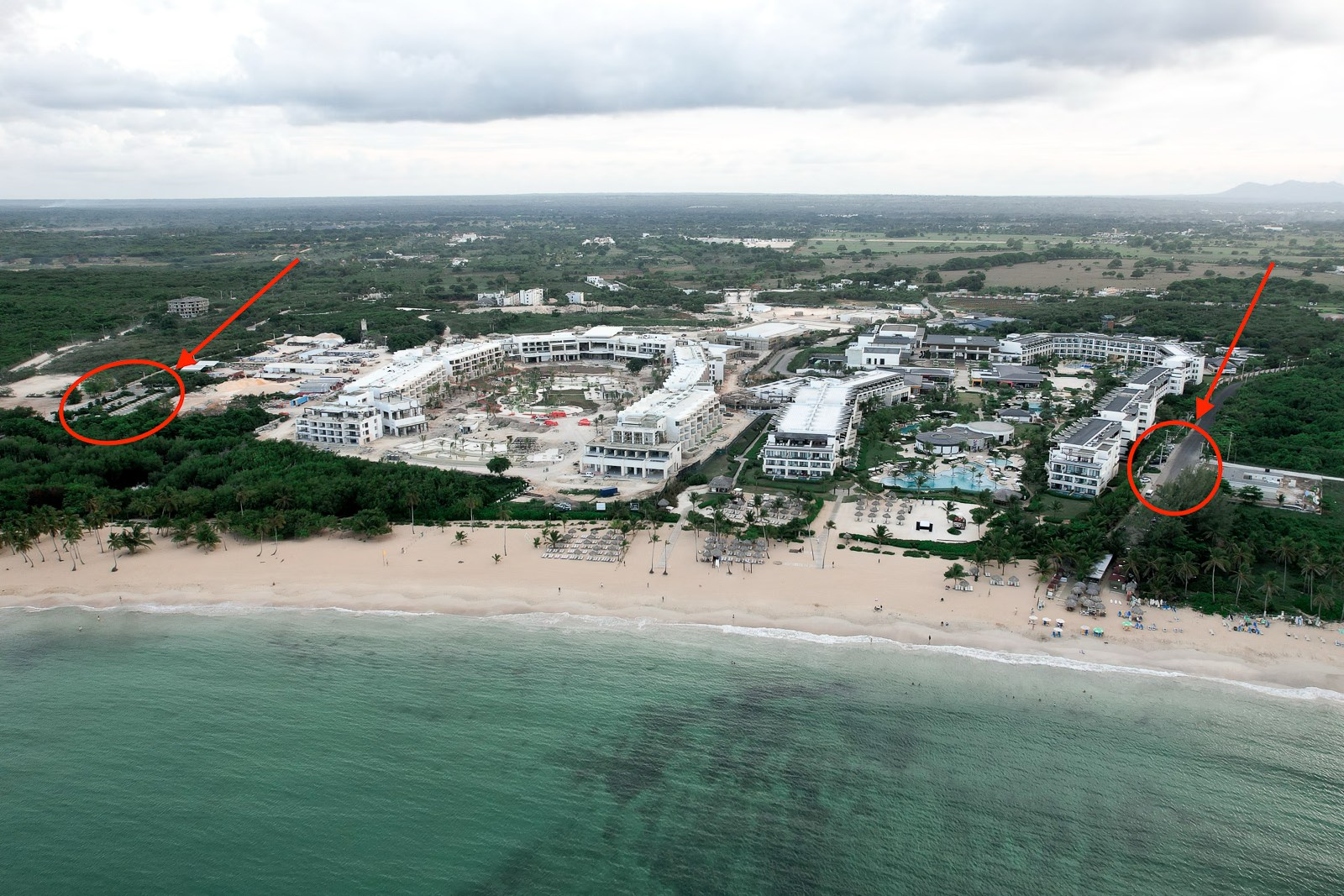
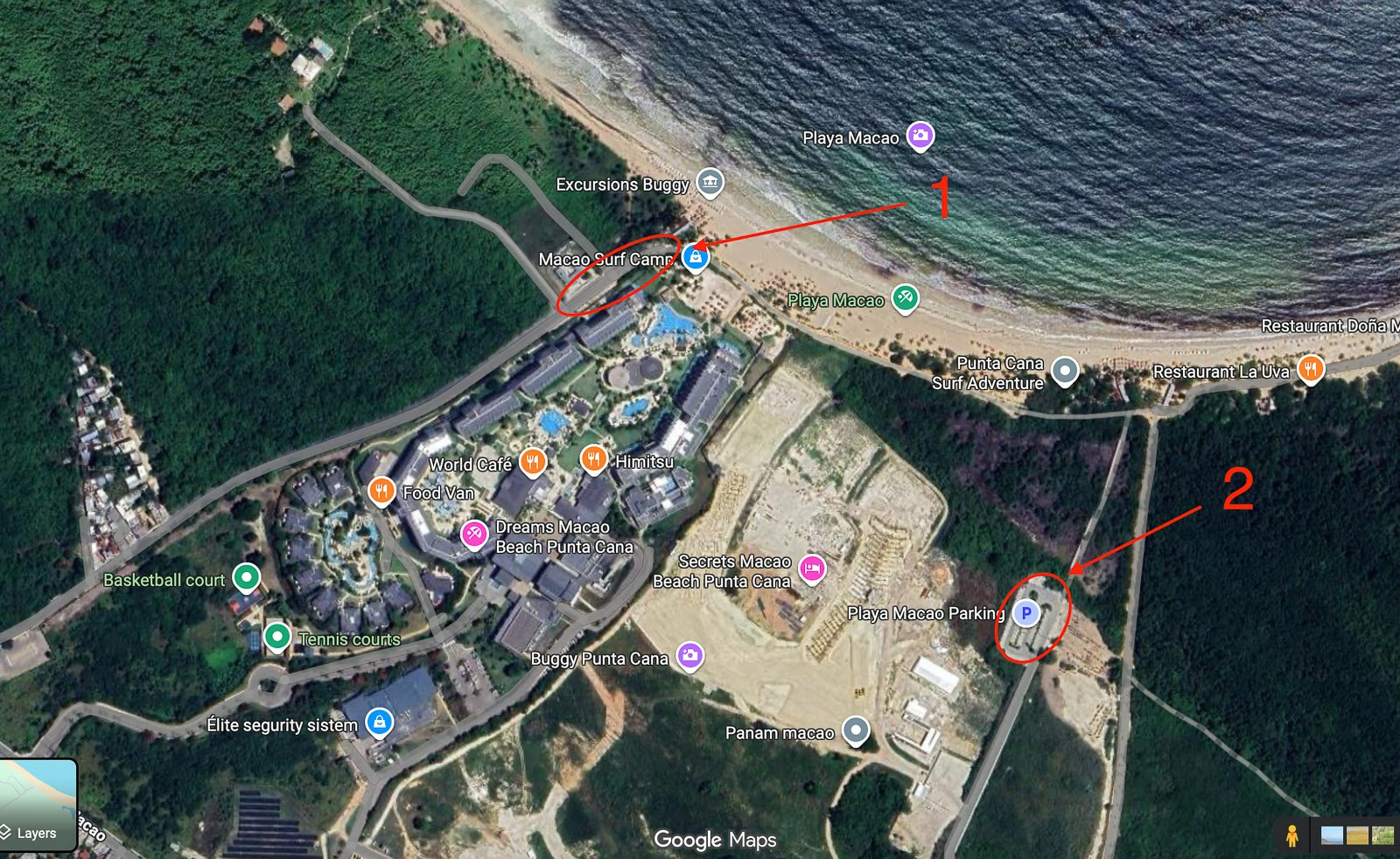
There are 2 main parking areas, and I’ve marked them in the photo above. Parking area #1 — near the Puesto del Macao station. It’s small, with space for about 20-30 cars, but you can usually find a spot. This is where you’ll often see guys asking for money to watch your car. It’s divided into 2 sections. In the first section, you don’t have to pay, but it’s better to give them $1-2. The second section is closer to the beach and has a barrier gate. The price varies, usually around $3-5. Parking area #2 — a new, large parking area with space for about 100 cars. I see these “helpers” there less often. I’ll leave the exact locations below:
- Parking area #1 — maps.app.goo.gl/AW5E2q5qhDm3J2qSA
- Parking area #2 — maps.app.goo.gl/AXt29Pz4y1×49uxT6
On Google Maps, it looks something like this:
History of Macao Beach
Now it’s time to talk about the history of Macao Beach and the village of Macao! Interestingly, it all started a very long time ago, even before Columbus arrived and, of course, long before the modern Dominican Republic existed 🤓
The first known settlements at Macao Beach
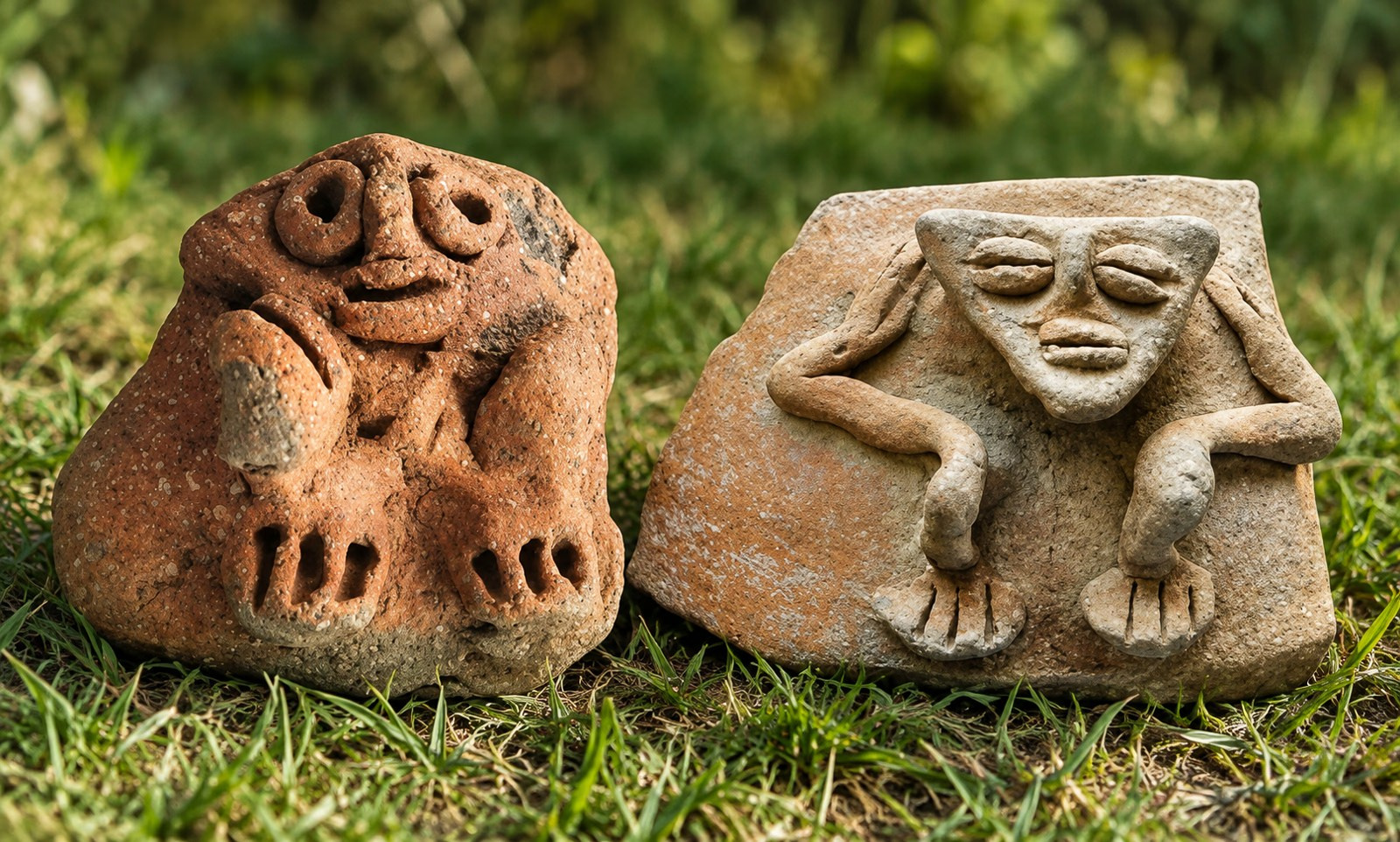
There is evidence dating back about 1,000 years that people were already living here at that time. Remains of ancient pottery were found in the area where Macao Beach and the village of Macao are located today. Radiocarbon dating helped estimate their age to around the 10th–12th centuries. However, the earliest mention of the name “Macao” that I could find dates back to the 16th century.
The first mentions of the name “Macao” in the Dominican Republic
Around 1502, a man named Bartolomé de las Casas arrived on the island of Hispaniola. This was 10 years after Christopher Columbus discovered the island (in 1492) and found a local settlement of the Taíno people. Bartolomé de las Casas spoke out against the cruel treatment of the Taíno people and wrote a work called Historia de las Indias. This is where the first mentions of the village of Macao appear. He wrote, “un pueblo grande de indios que llamaban Macao.”
He also suggested that the village of Macao may have been a separate region or province from Higuey — “de manera que Higuey y Macao fuesen dos provincias.” This means that the village existed long before Columbus arrived and was already quite large. But one question remains — where did the word “Macao” come from, and what does it mean?
Origin and meaning of the word “Macao”
There are 2 theories, and one of them makes perfect sense to me because sometimes there’s no need to look for complicated explanations — things are simple. In dictionaries of the ancient Taíno language, there is a word “Maco, ” which means “frog.” You can also see that frogs often appear on the ancient pottery found in this area. There were probably many frogs in this region in the past, and that’s likely why the village was named Macao 🤓
The second theory seems less believable to me. In 2023, a survey was conducted among residents of the modern village of Macao to learn about the origin of its name. Many said that there used to be many trees called Macao in this area, and that’s where the village got its name. But there’s one problem with this theory — the residents say the village was founded in 1916, while we have mentions of the name Macao by Bartolomé de las Casas dating back to 1502. In my opinion, it’s more likely that the tree got its name because it grew in this area, which had already been called Macao long before 1916 and even before Columbus first arrived here 🤓
I hope you found this little history lesson interesting! Personally, I found it really fascinating while researching all this information 😇
Photoshoot at Macao Beach
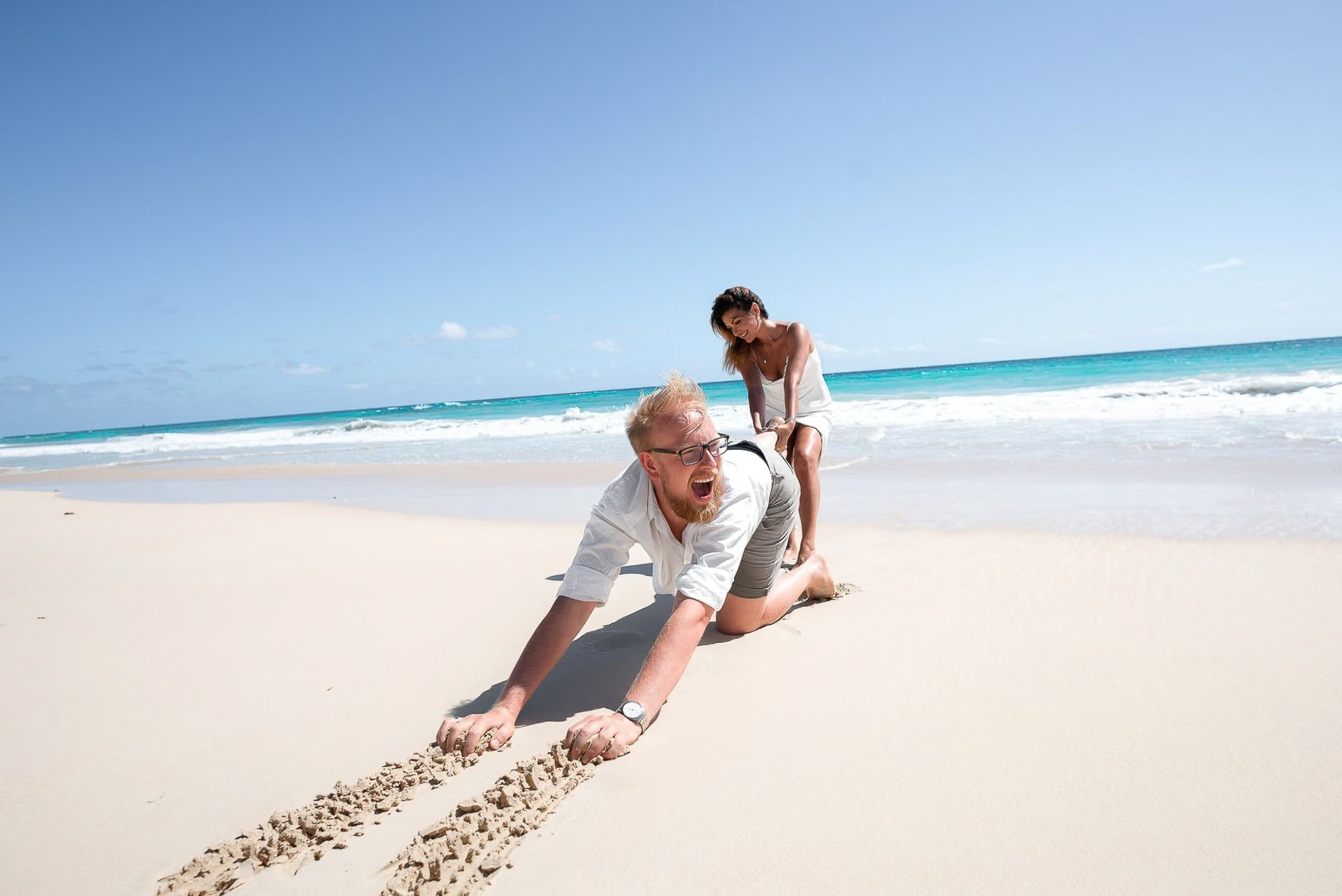
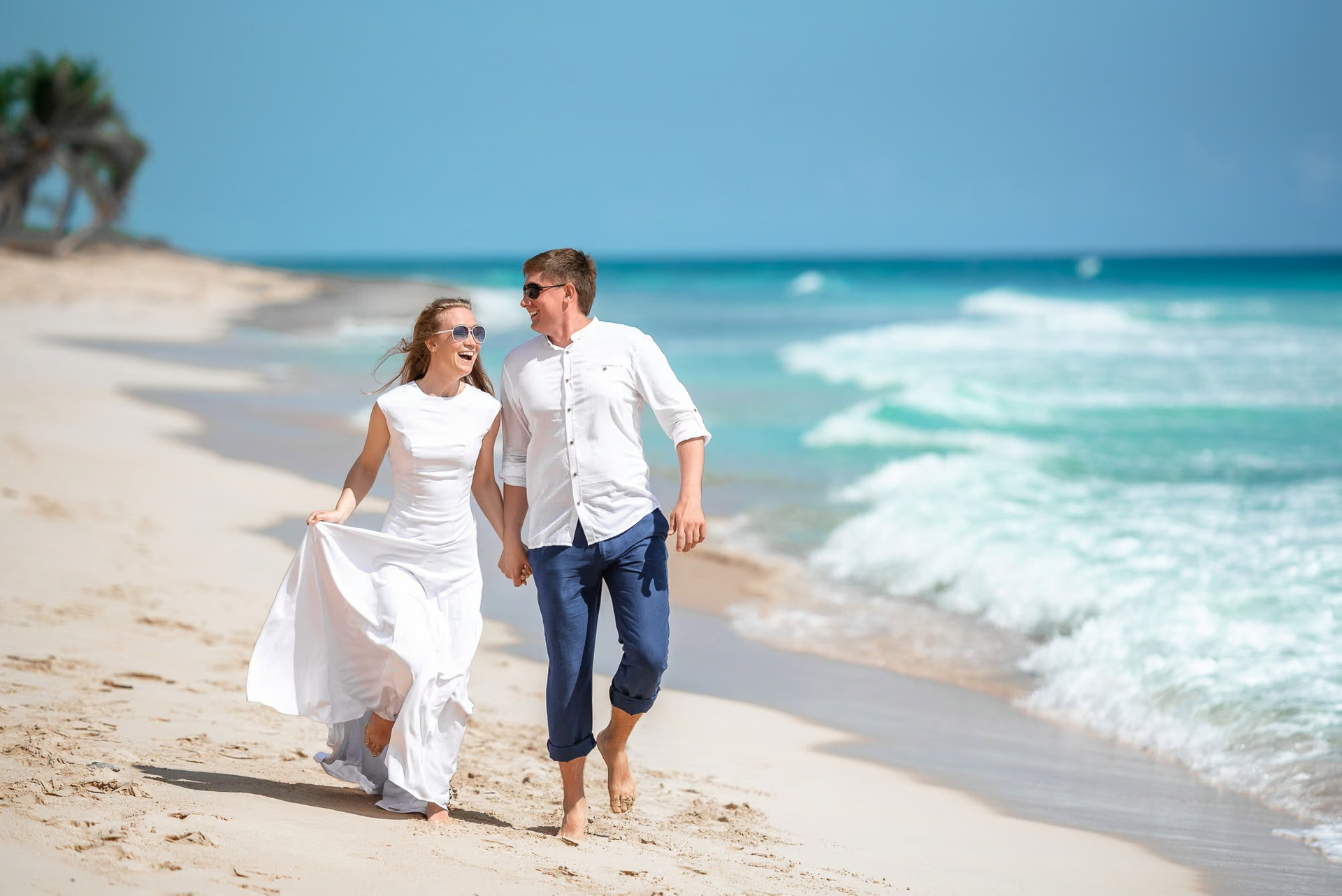
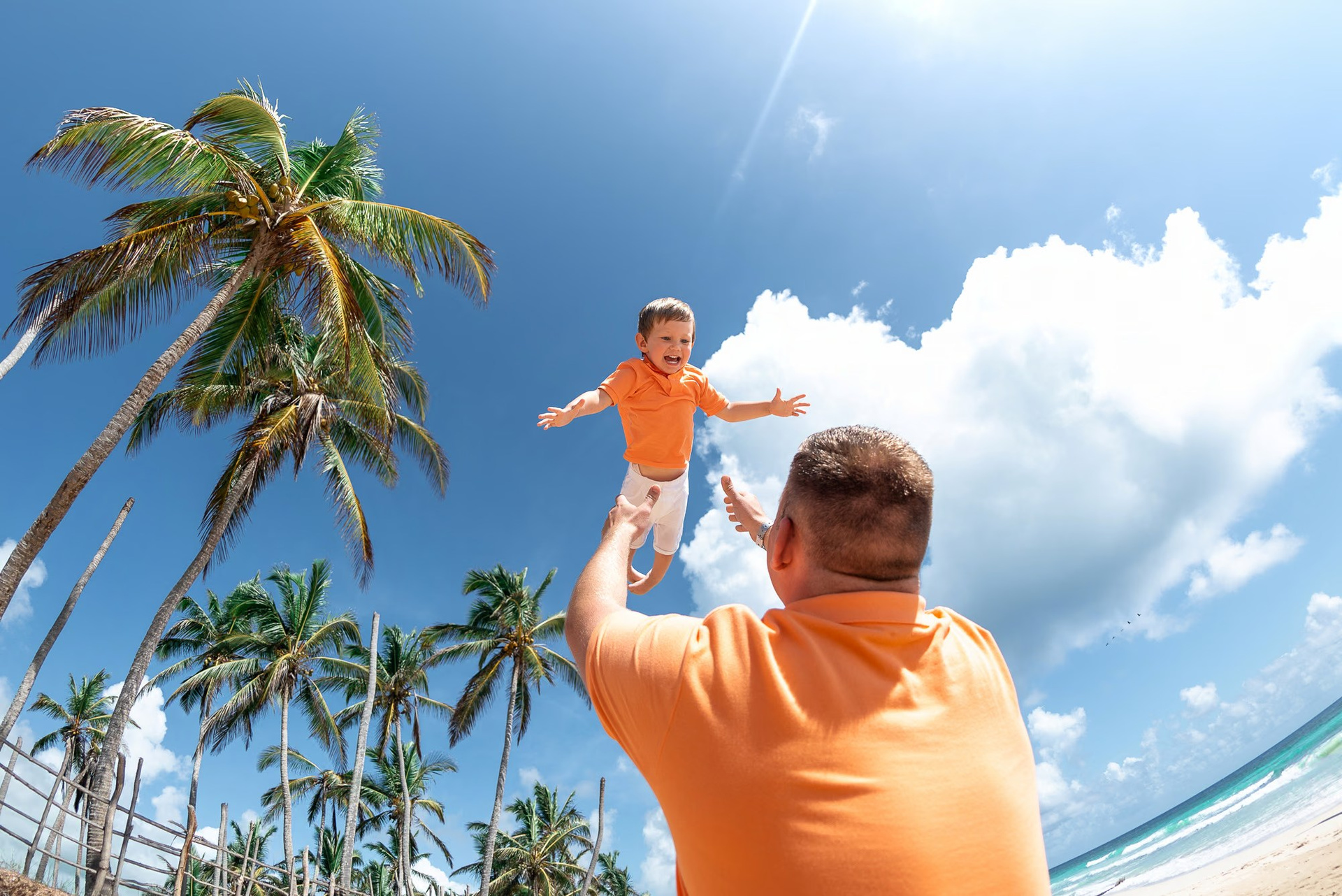
This is exactly what Macao Beach is famous for. As tourism began to grow in Punta Cana, it became the most popular beach for photographers. During the high season, you can always see photographers here doing family, couple, or individual photoshoots. Macao Beach doesn’t have a lot of props or different backgrounds, but it has everything you need for a beautiful photoshoot in the Dominican Republic: stunning turquoise water, golden-white sand, and palm trees 😍
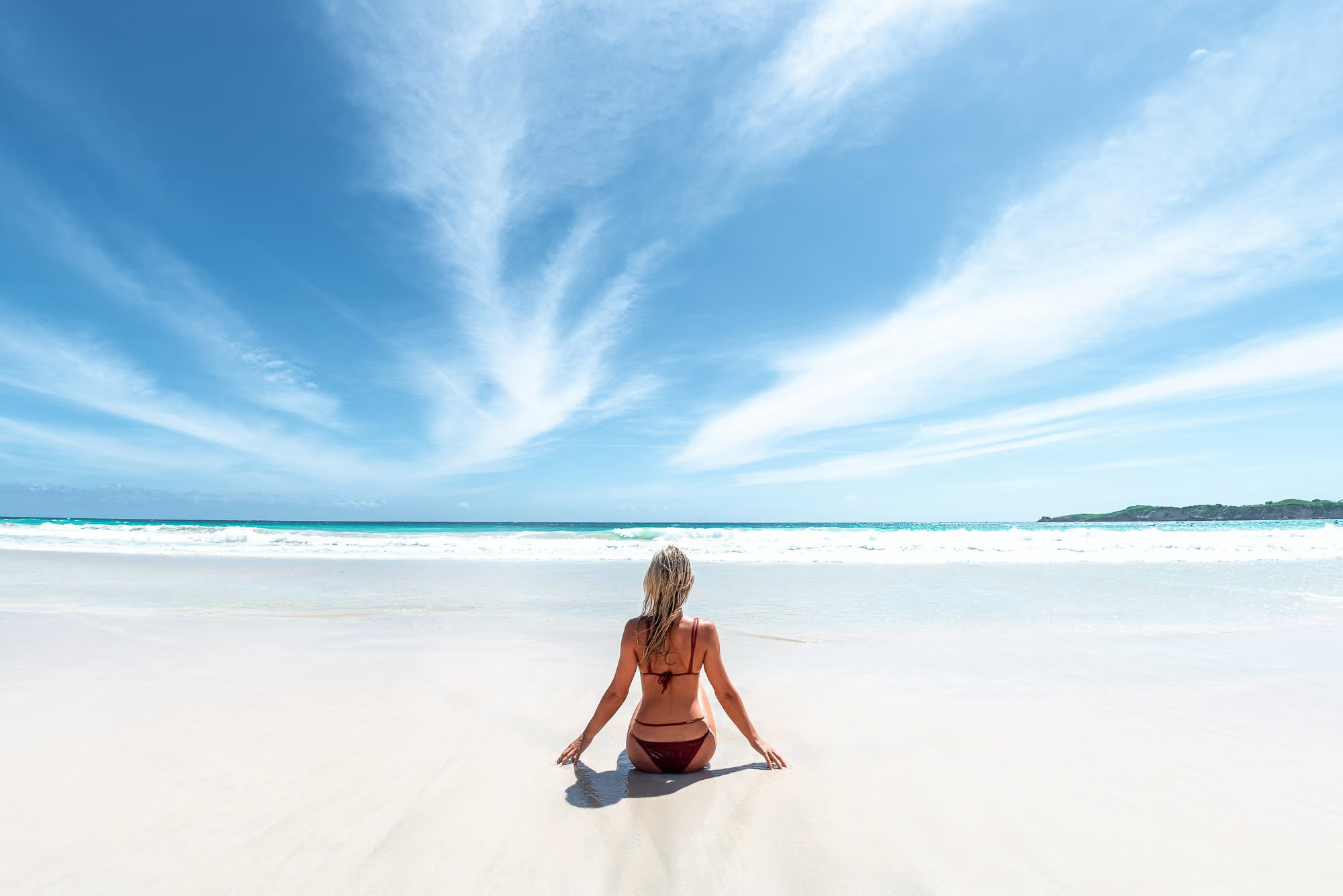
Best photo spots at Macao Beach
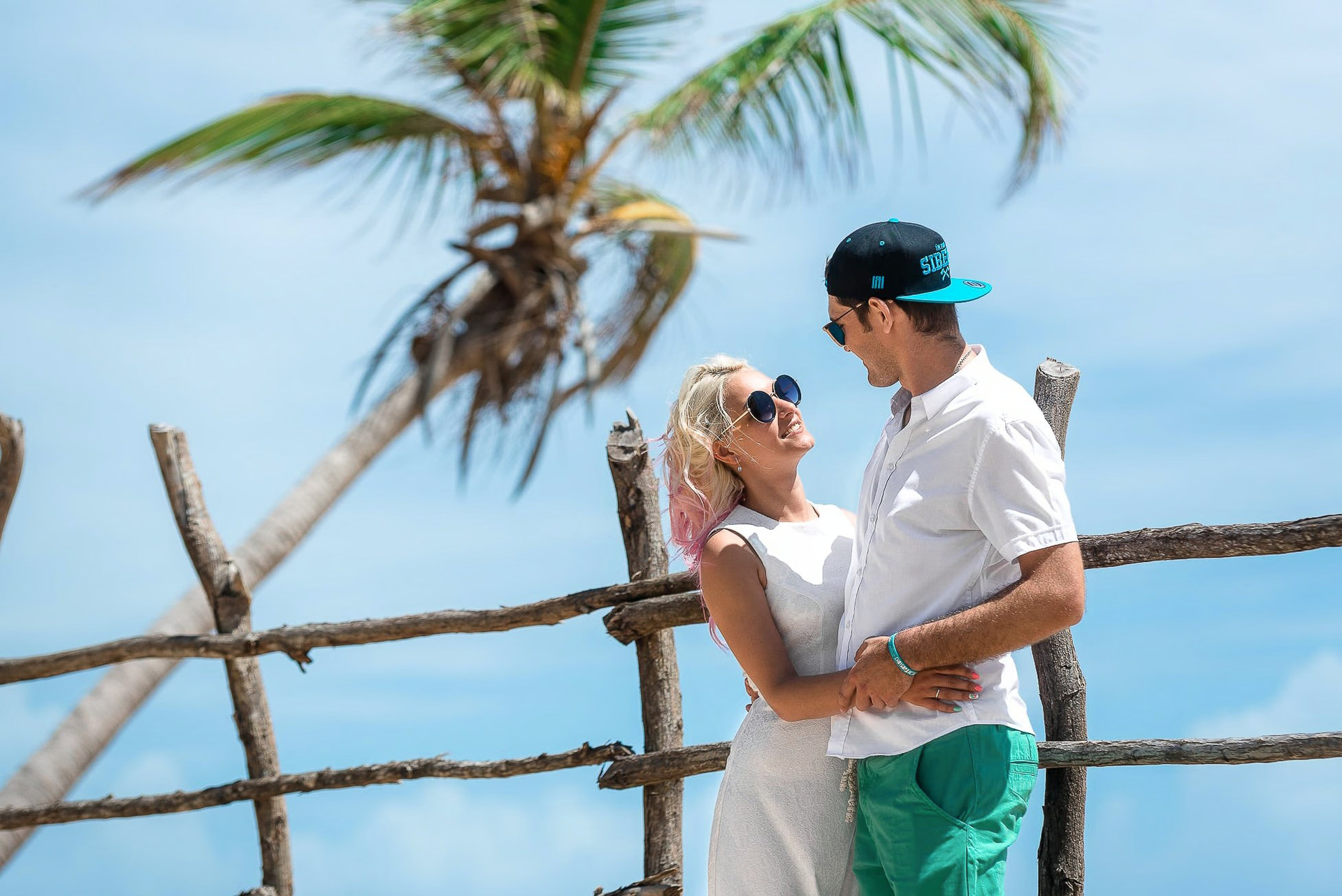
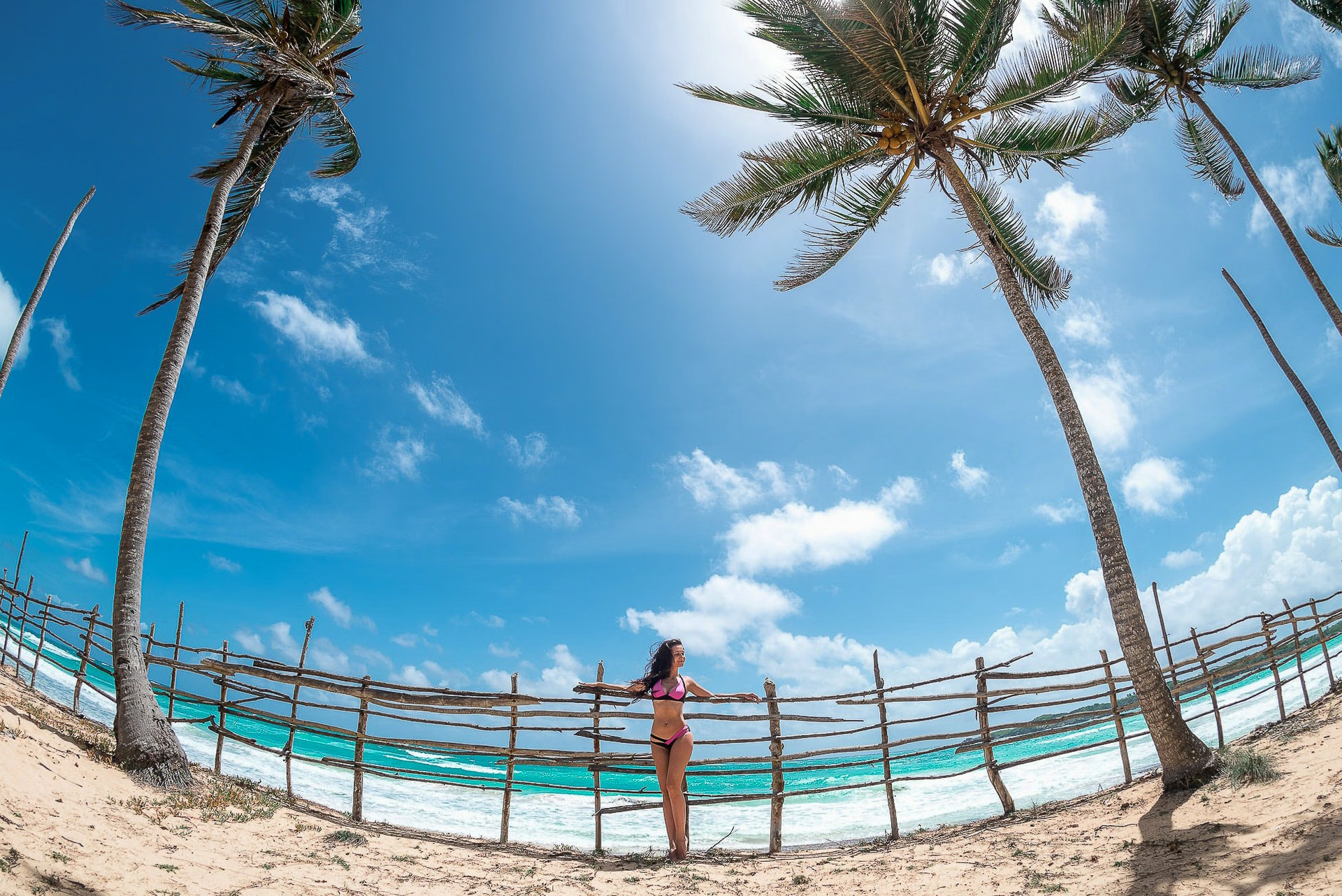
There are several spots that we (Punta Cana photographers) usually use: the beach itself, a small fence, palm groves, and sometimes I also shoot along the rocky coastline. Let me show you some examples!
The most popular and classic spot is the beach itself. By the way, it’s interesting that the beach looks very different in summer and winter. In summer, the waves are much smaller and don’t wash away the shore, so the beach is wide and the sand is almost white. In winter, the waves are much bigger and wash away the shore, making the beach much narrower, while the sand that washes up is golden-yellow.
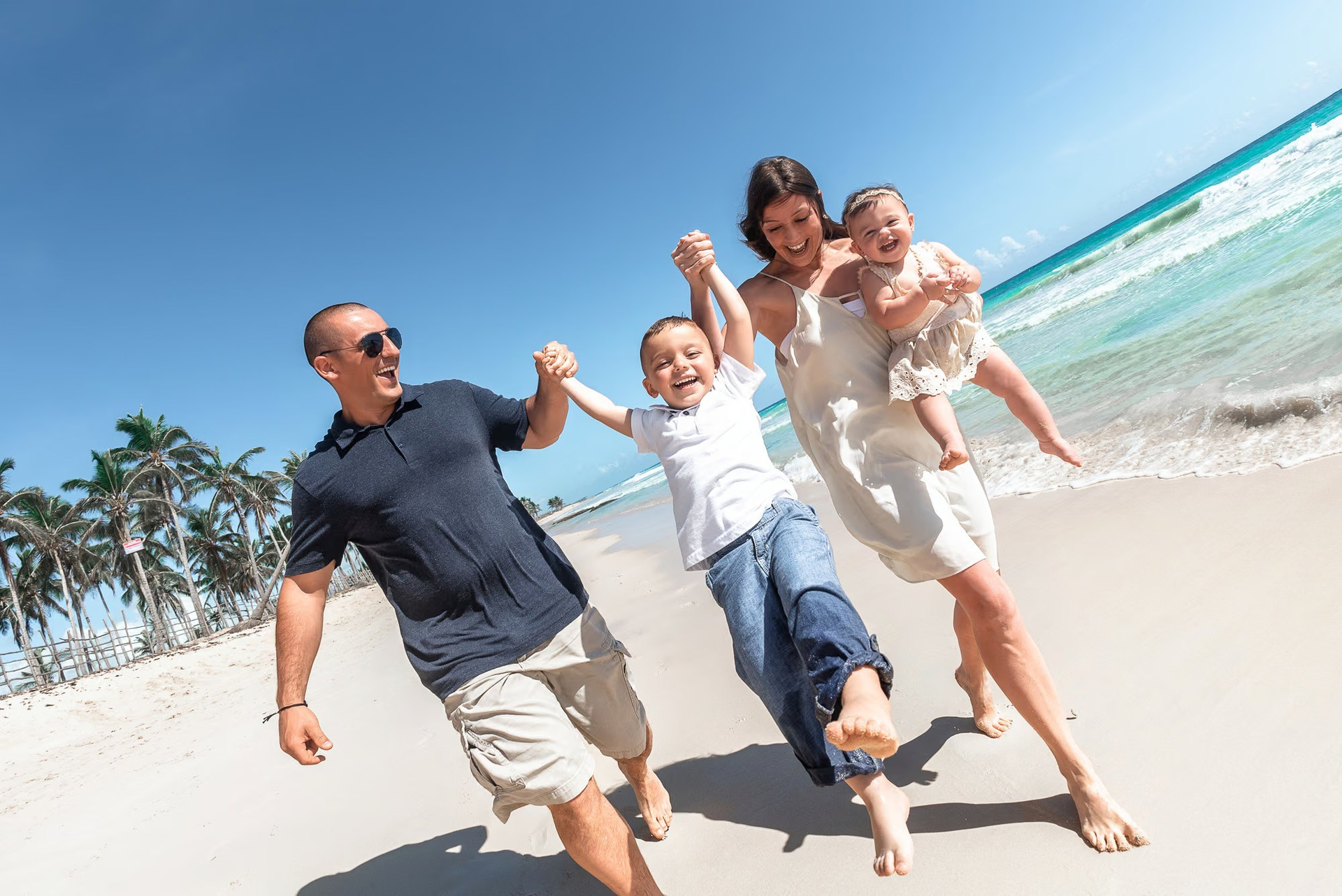
There is also a beautiful little fence with a palm forest behind it. Some parts of the fence are broken, but it can still be used as a background for photos.
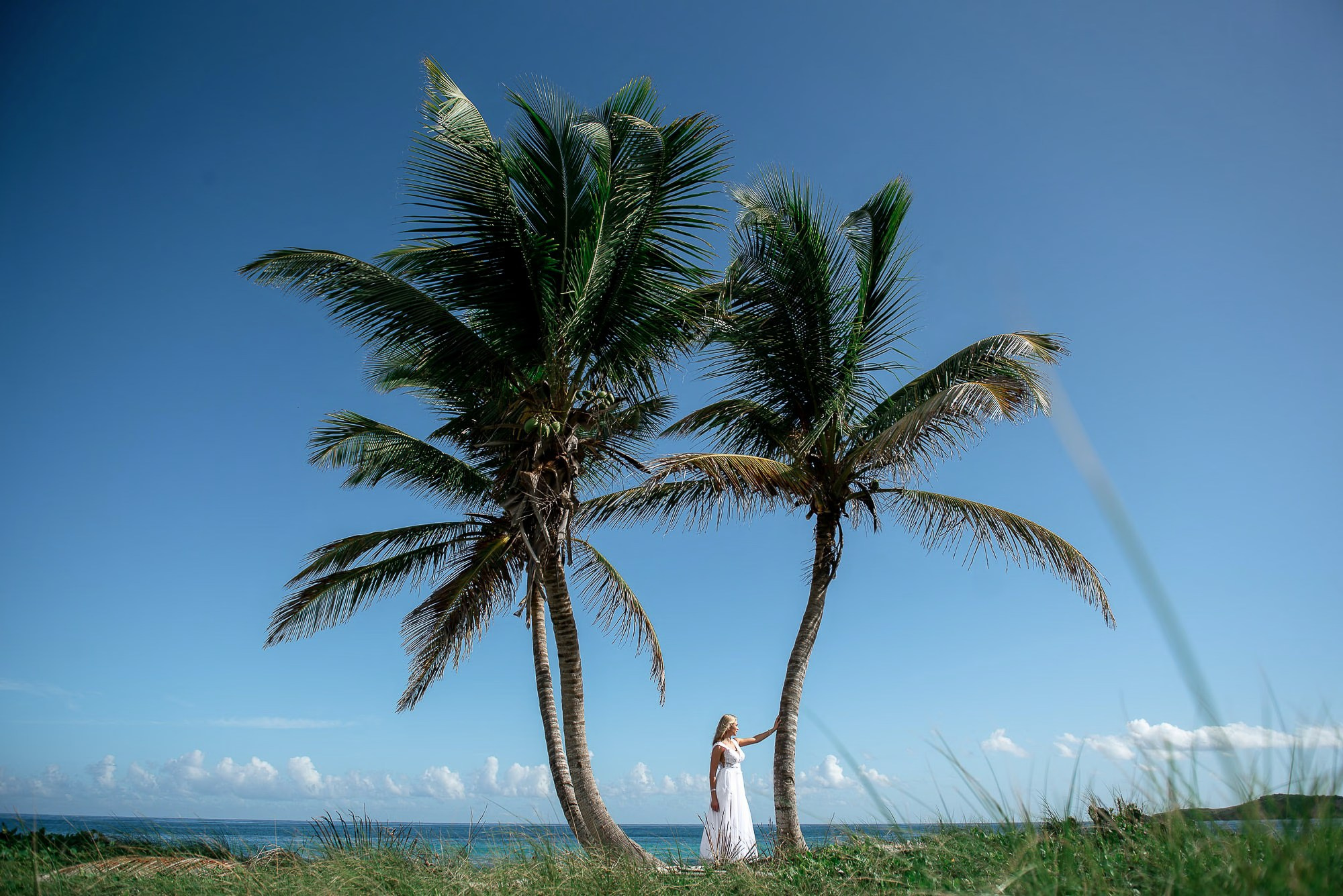
There is also a very beautiful spot with individual palm trees and grass. It’s located at the end of the beach, and I often use it for photoshoots.
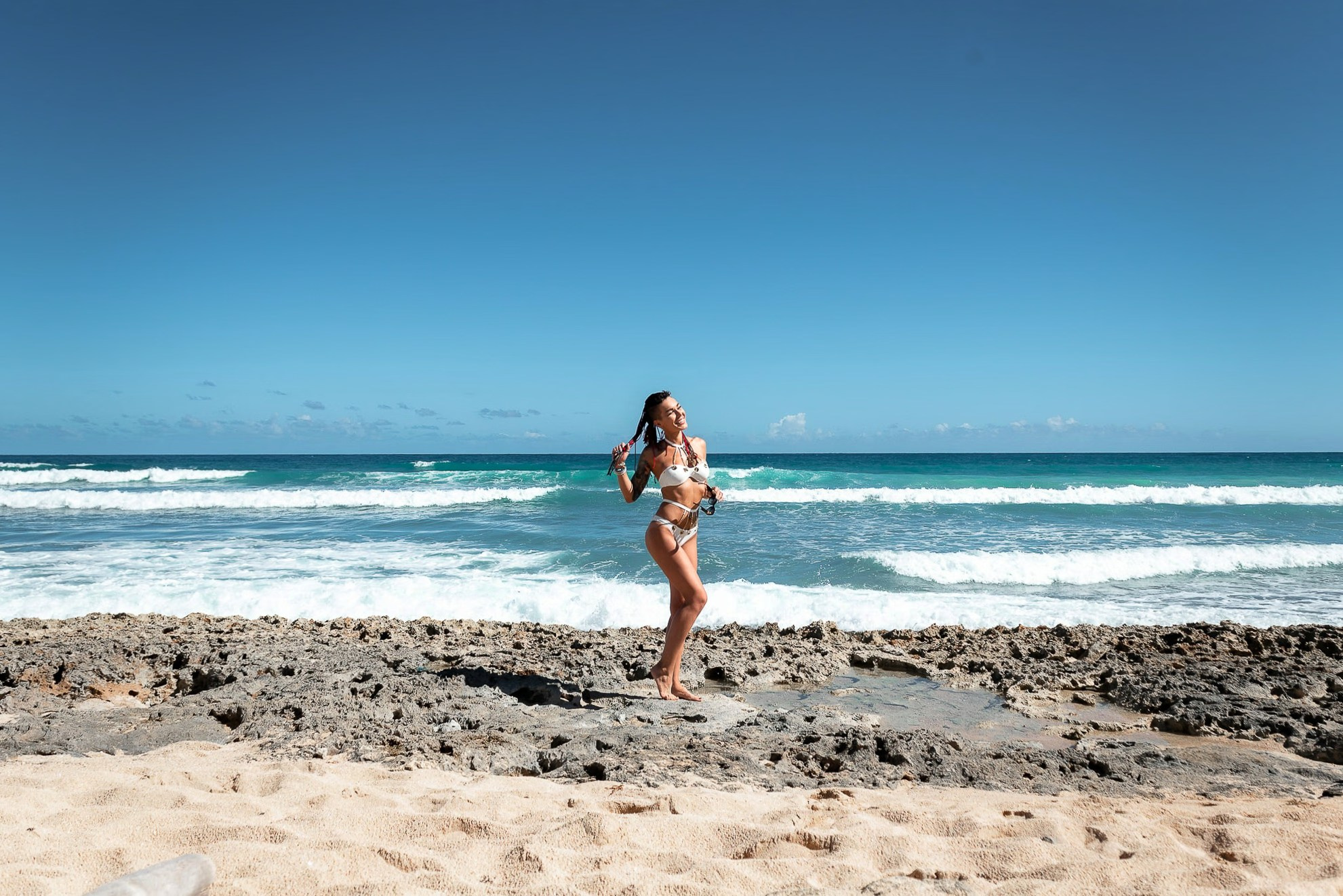
There is also a rocky coastline. By the way, almost half of the entire island’s coastline looks like this. It’s a very typical landscape for any part of the Dominican Republic.
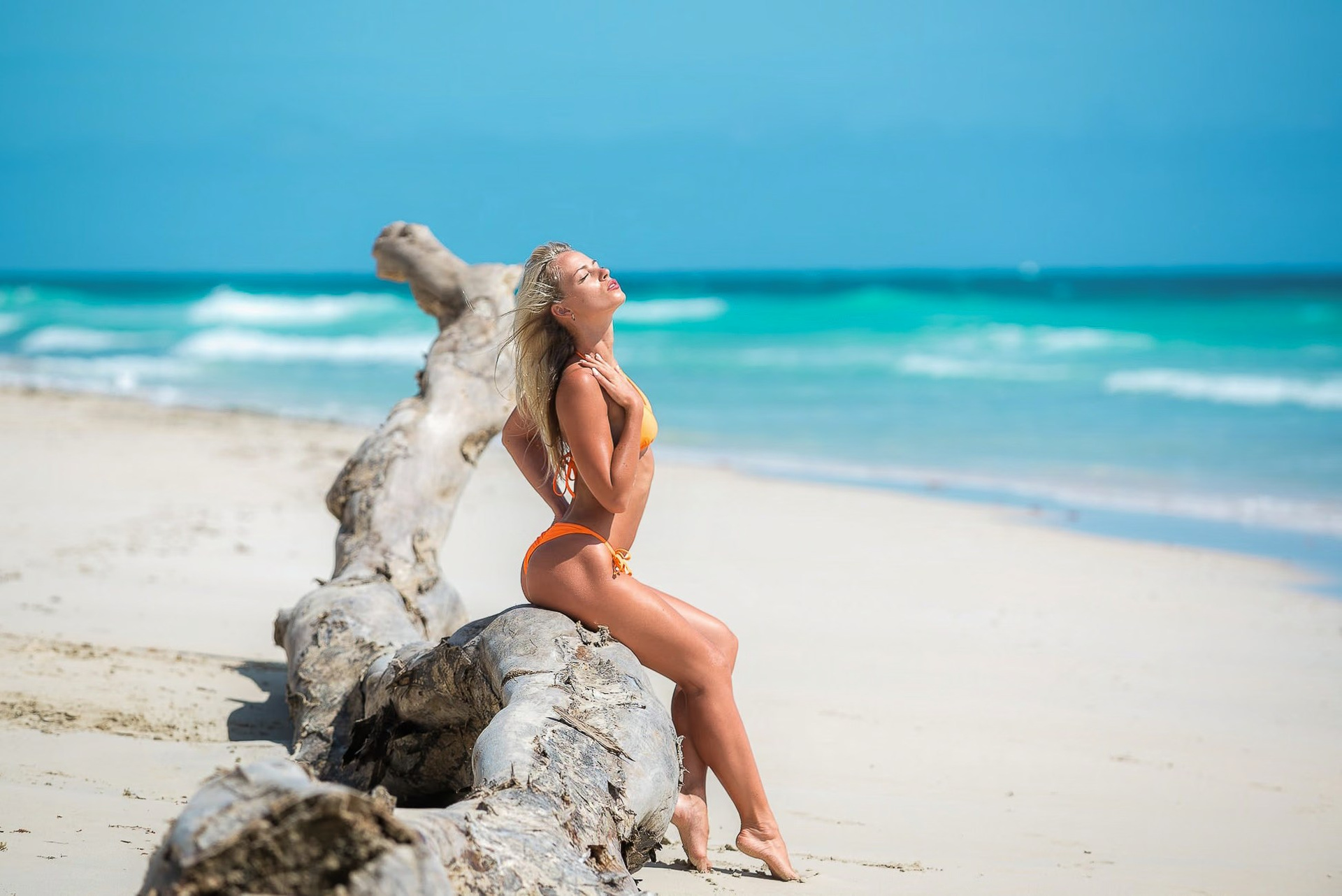
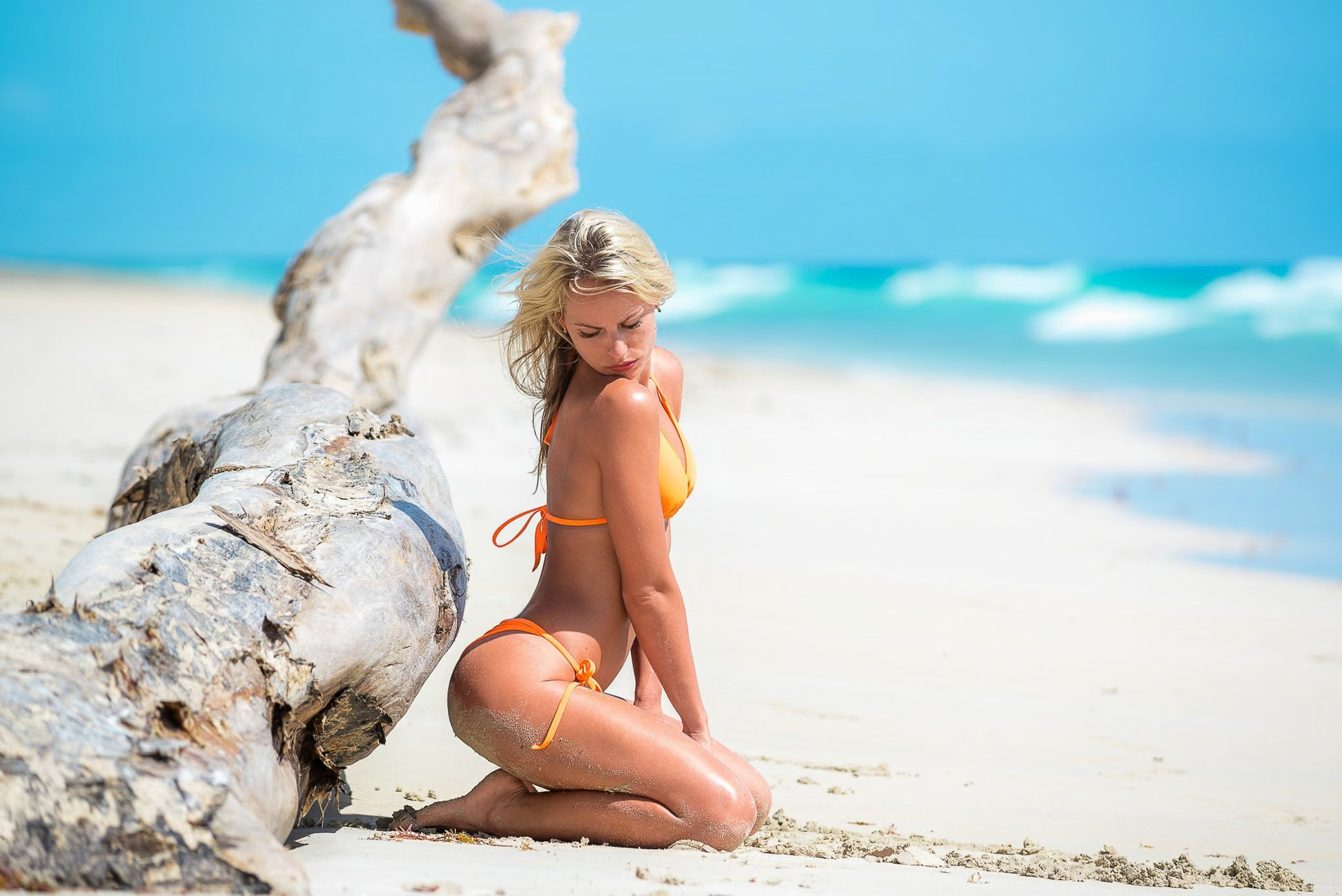
Sometimes huge logs wash up on the beach, and we use them for photoshoots too 😅
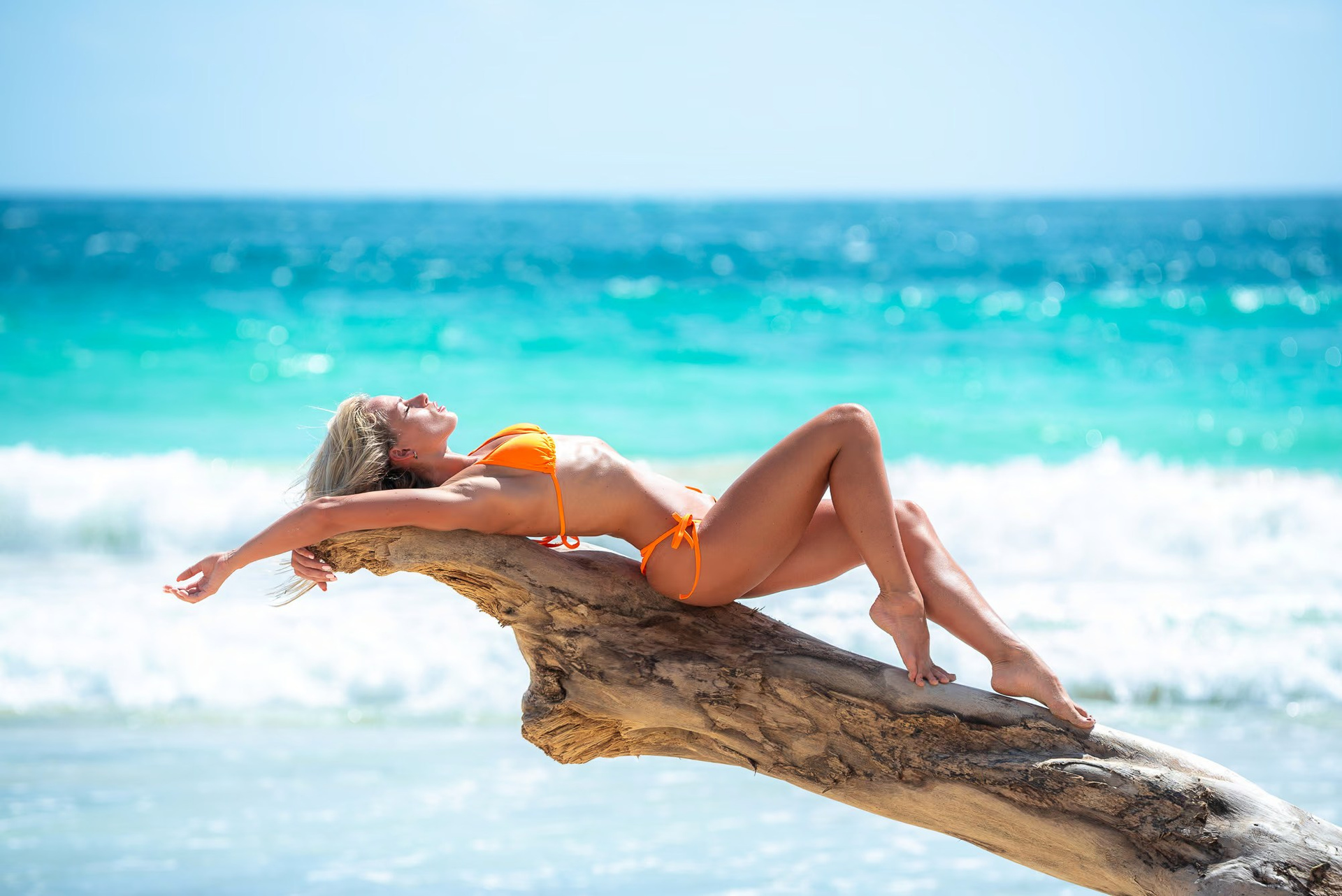
There are also palm trees leaning over the beach, but lying on them requires incredible professional skills 😅
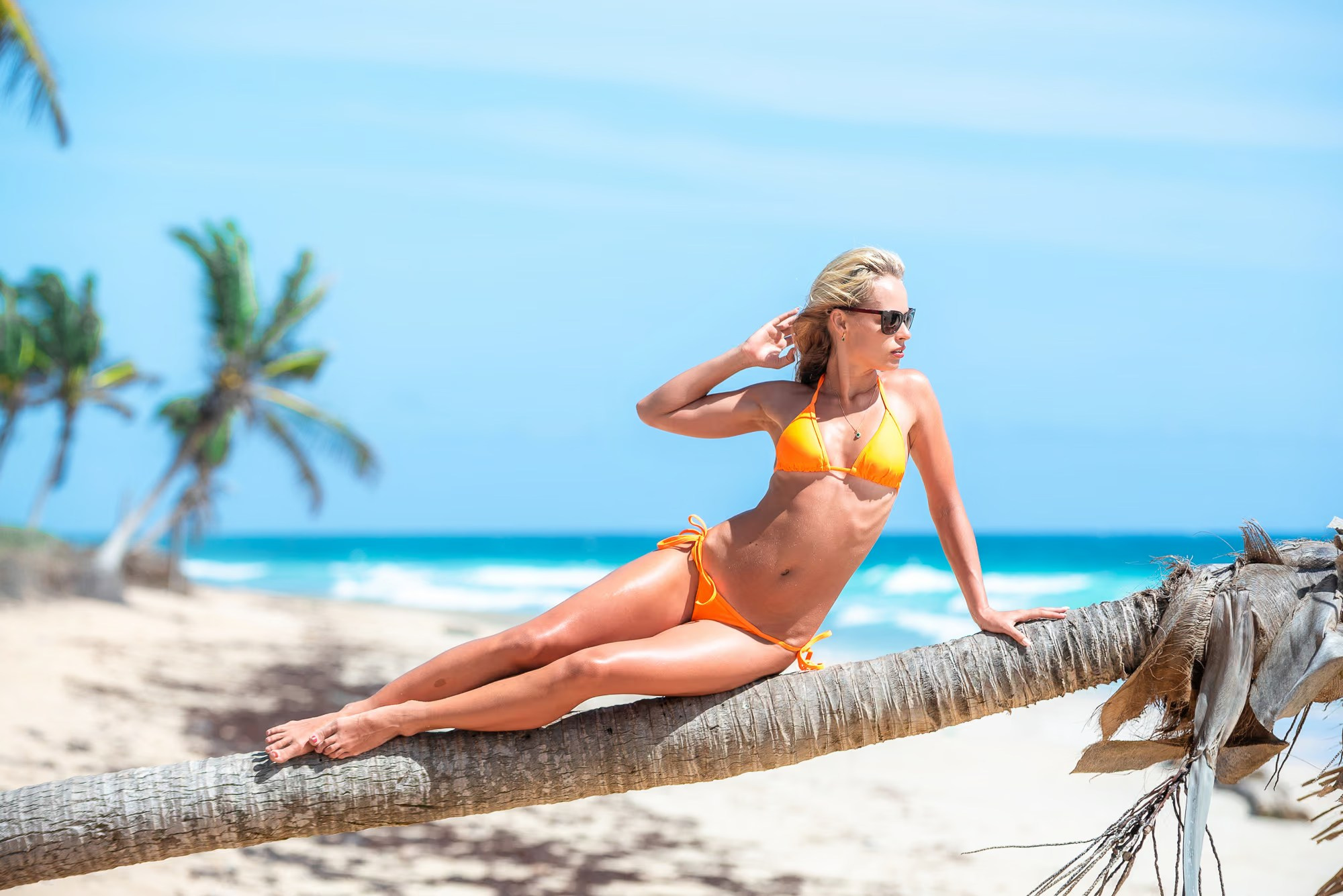
If you’d like to have a photoshoot at Macao Beach, I’d be happy to help! I’ll share my photoshoot prices below:
Best time for a photoshoot at Macao Beach
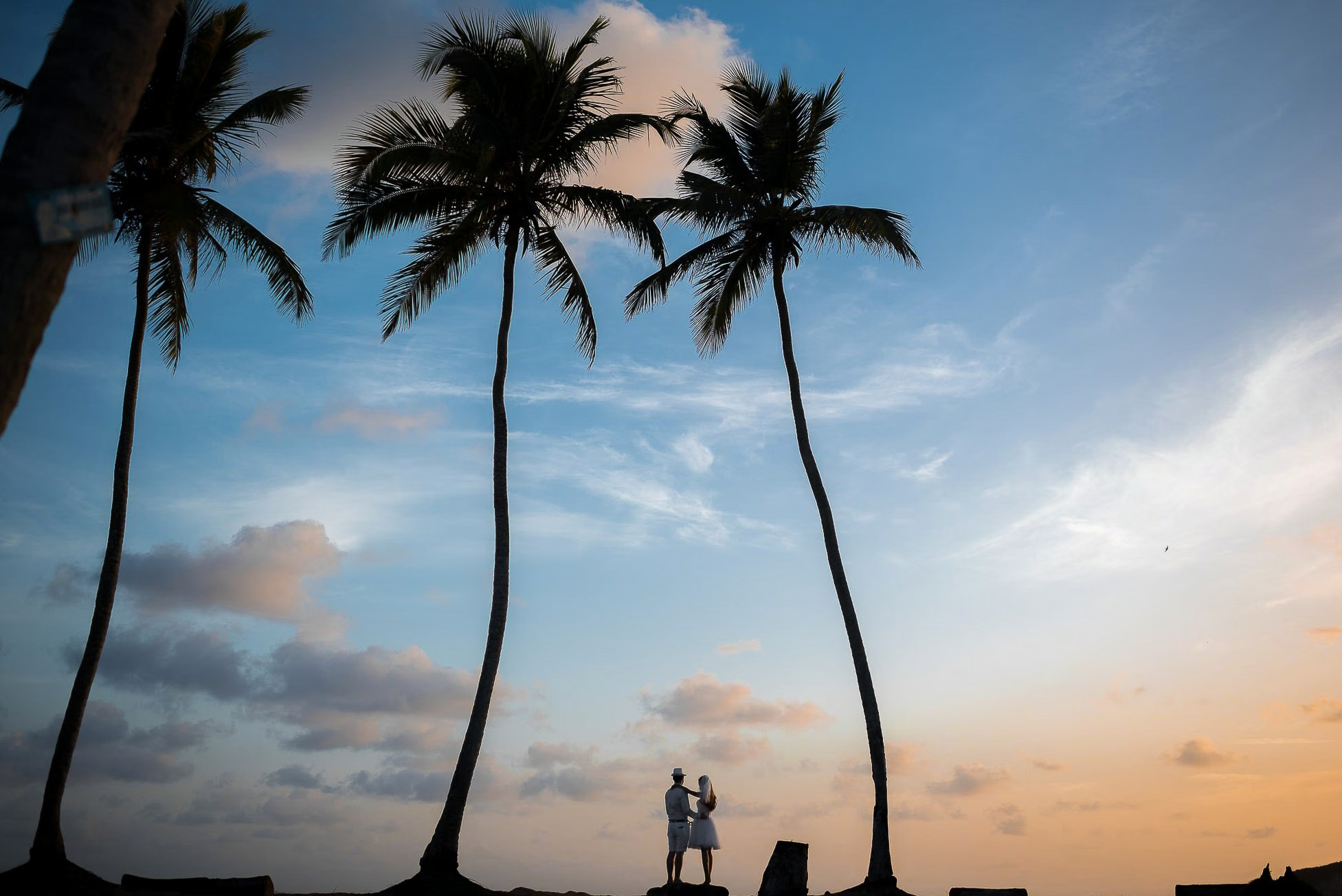
In this part of the Dominican Republic, the sun rises over the ocean. In my opinion, the best time for a photoshoot at Macao Beach is sunrise and the next few hours, until around 11 AM. After that, the sun is directly overhead, and besides being extremely hot, the angle of the sunlight is terrible for photos. The next good time is from around 3-4 PM until sunset. The sun sets behind the palm trees.
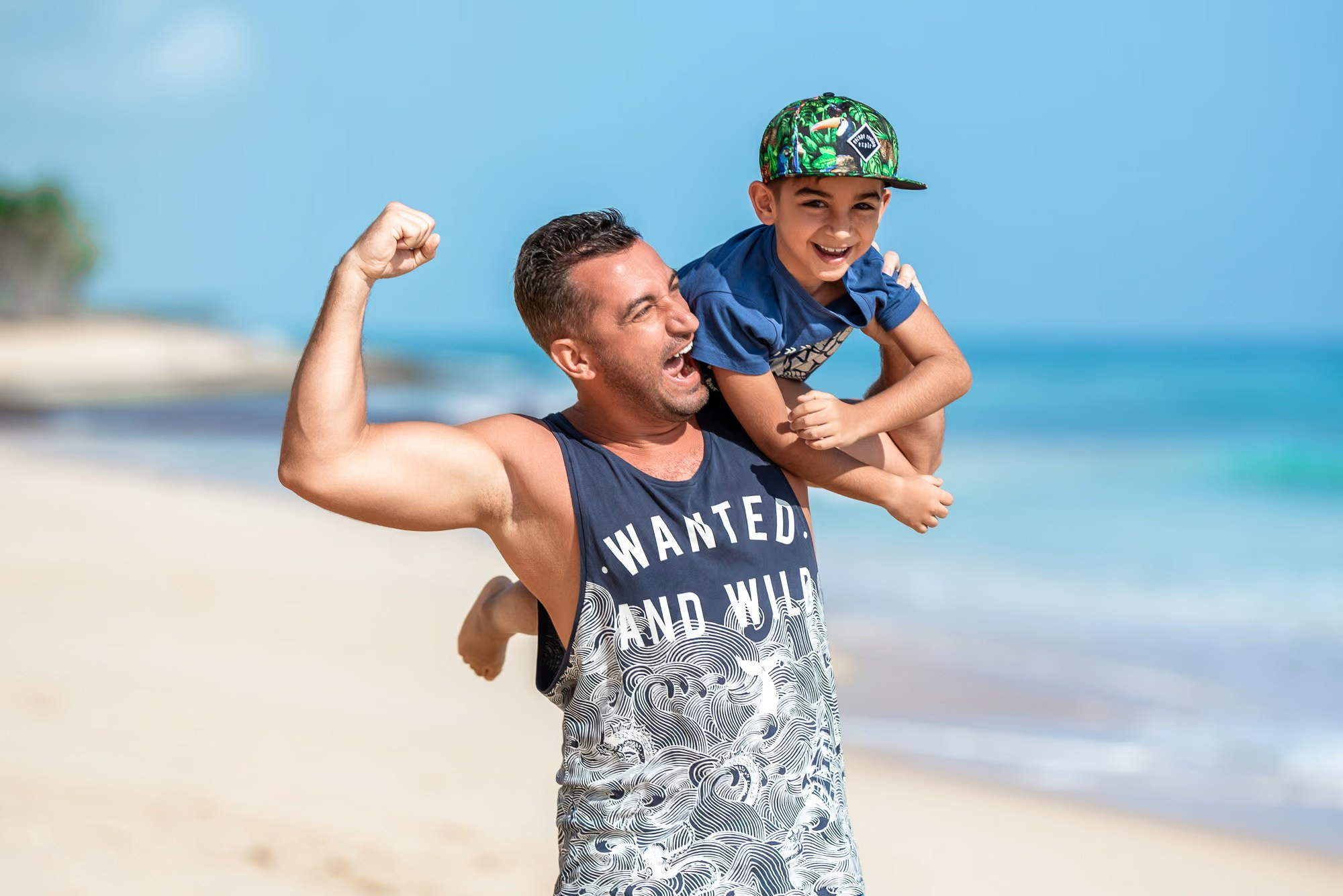
I always try to schedule photoshoots in the first half of the day, and there’s an important reason for that. After the night, it’s not as hot, so doing a photoshoot is much easier physically. In the evening, after a hot day, the temperature is higher and it’s more humid. Also, from what I’ve noticed, clouds and rain are more likely in the afternoon. That’s why my ideal time for a photoshoot is between 8 and 10 AM!
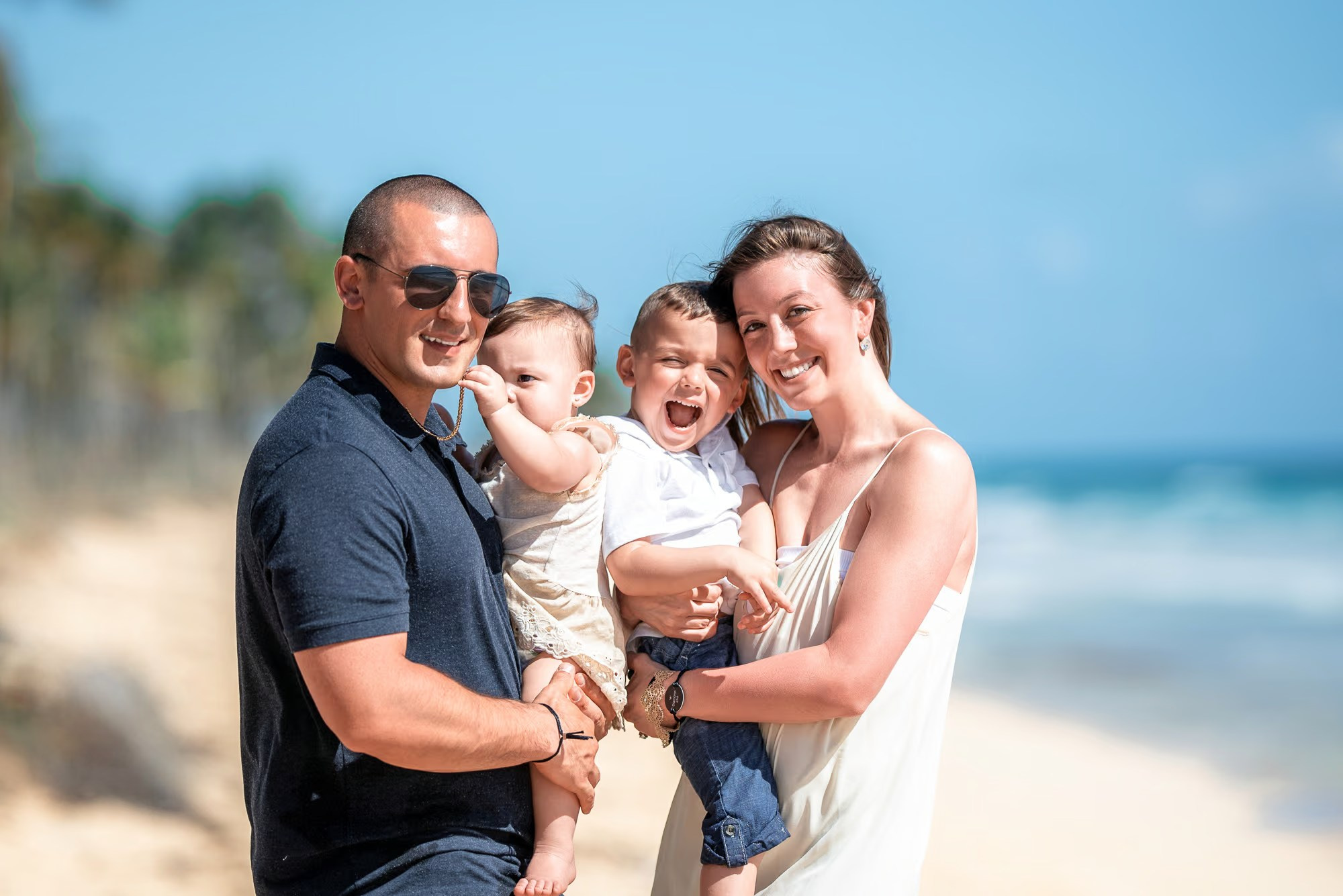
A sunrise photoshoot at Macao Beach is also a great option. The beach is completely empty, it’s peaceful, and the light is beautiful. Not many people are willing to wake up at 4-5 AM, get ready, and drive to the beach for a photoshoot, but it’s a magical time, and the photos turn out just as magical!
Secret beaches for photoshoots at Macao beach in Punta Cana
There are two secret beaches at Macao Beach. One is part of Macao Beach (2), and the other is located nearby (1).
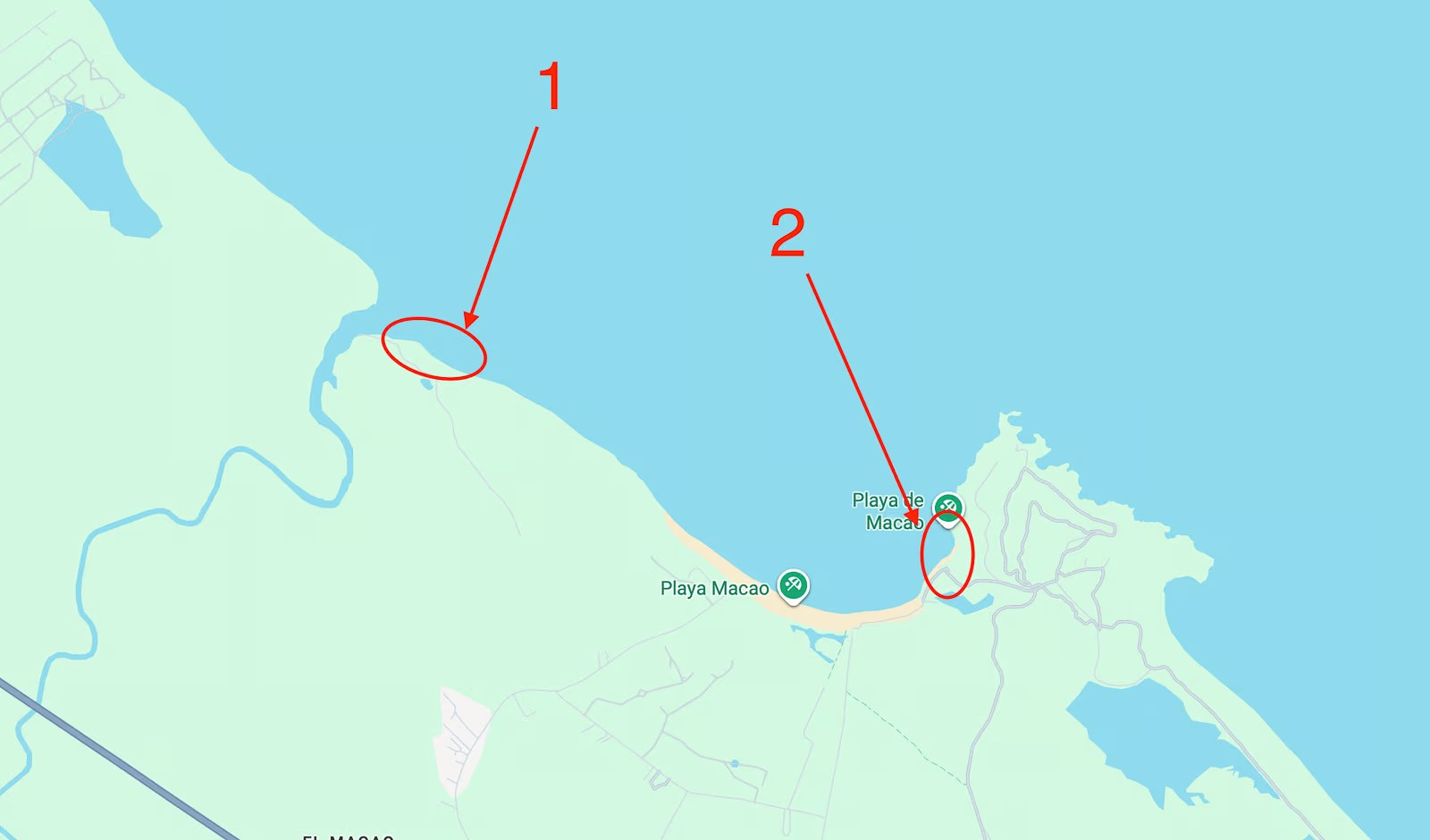
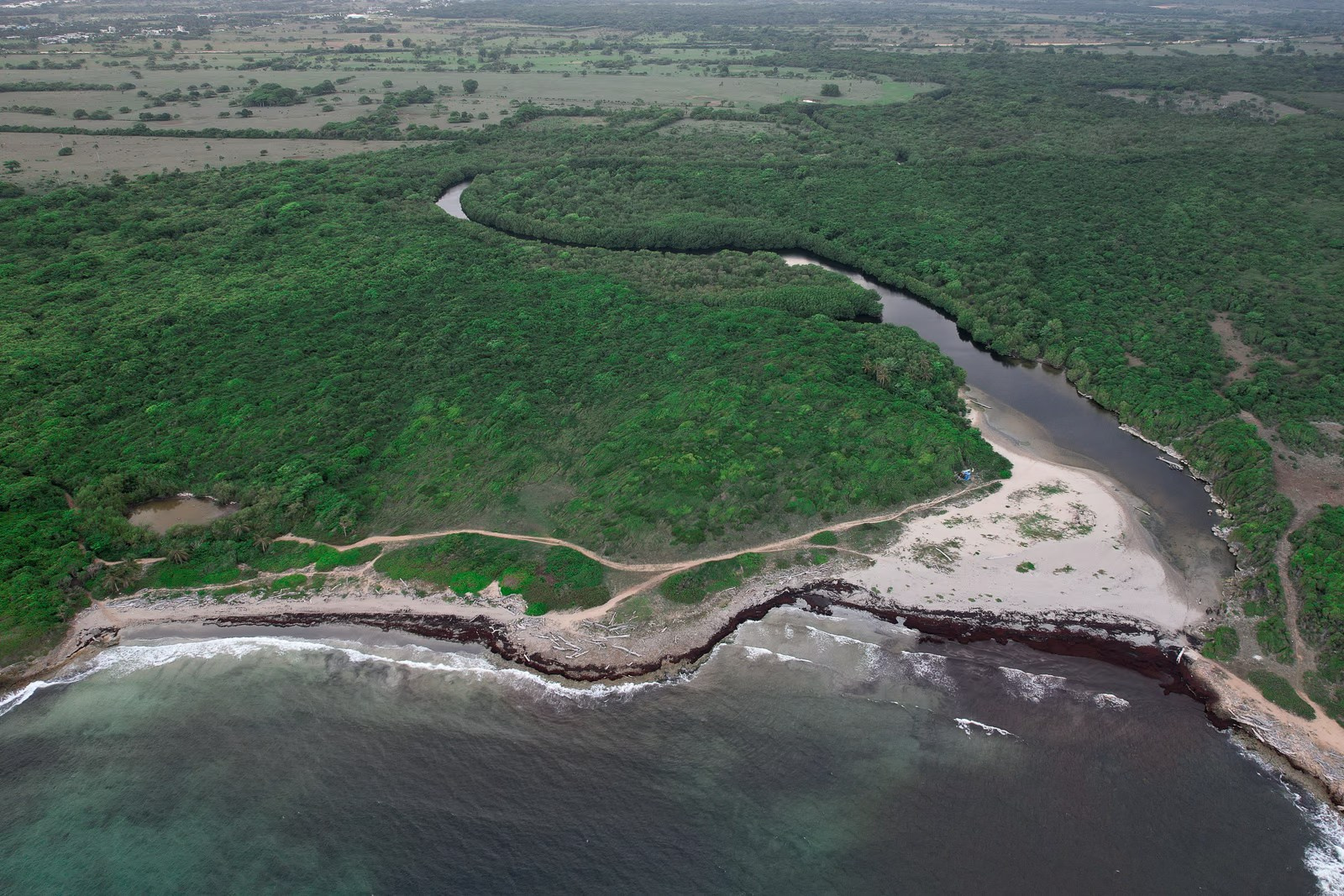
Let’s start with the unnamed beach behind the rocks (1). There are two ways to get there: you can walk along the shore and cross the rocks, or take a trail through the jungle and the village.
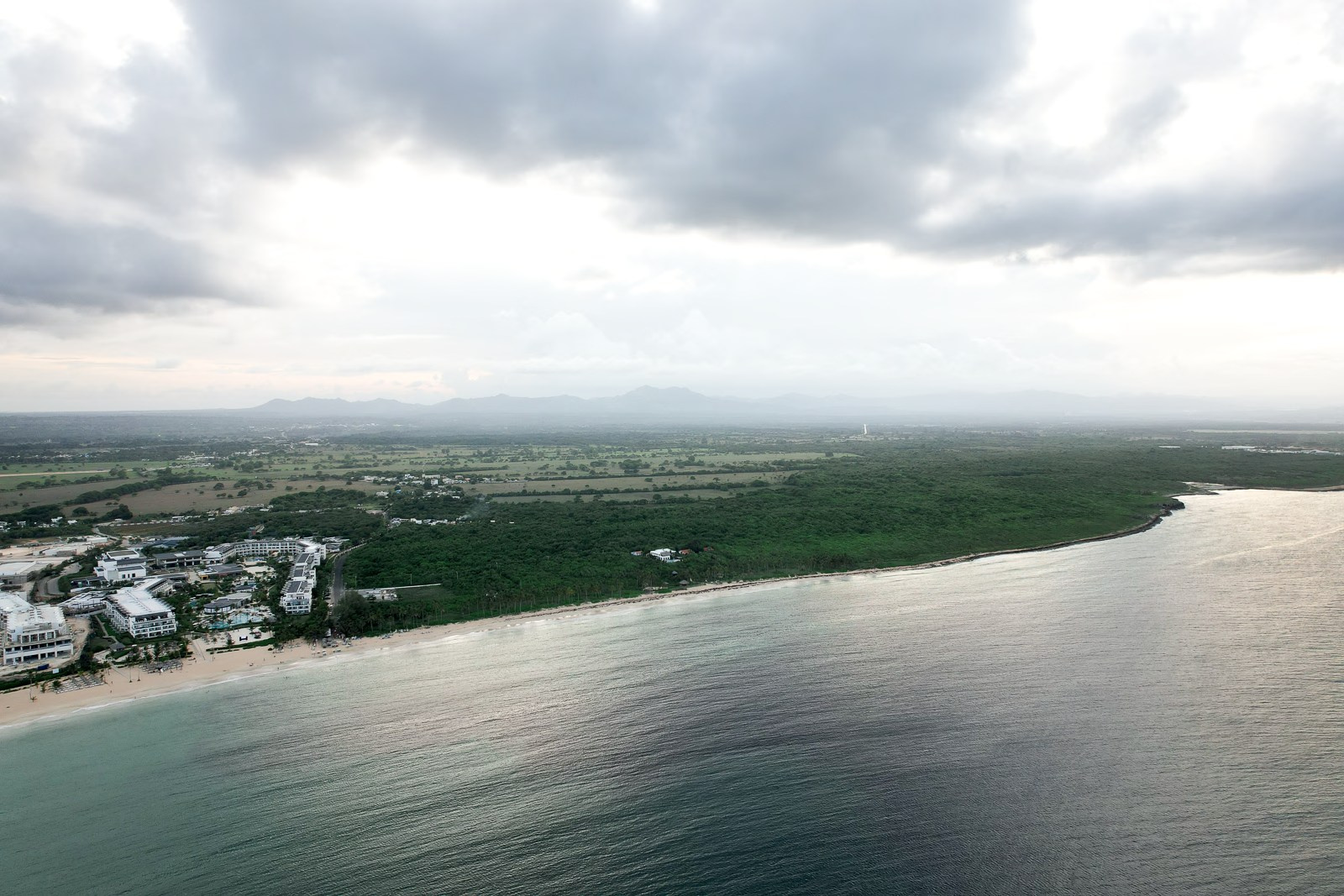
This is a wild, secluded beach where you’ll almost never see anyone. However, the problem is that, from what I’ve noticed, there is always a lot of seaweed there. In my opinion, it’s very rarely suitable for a photoshoot.
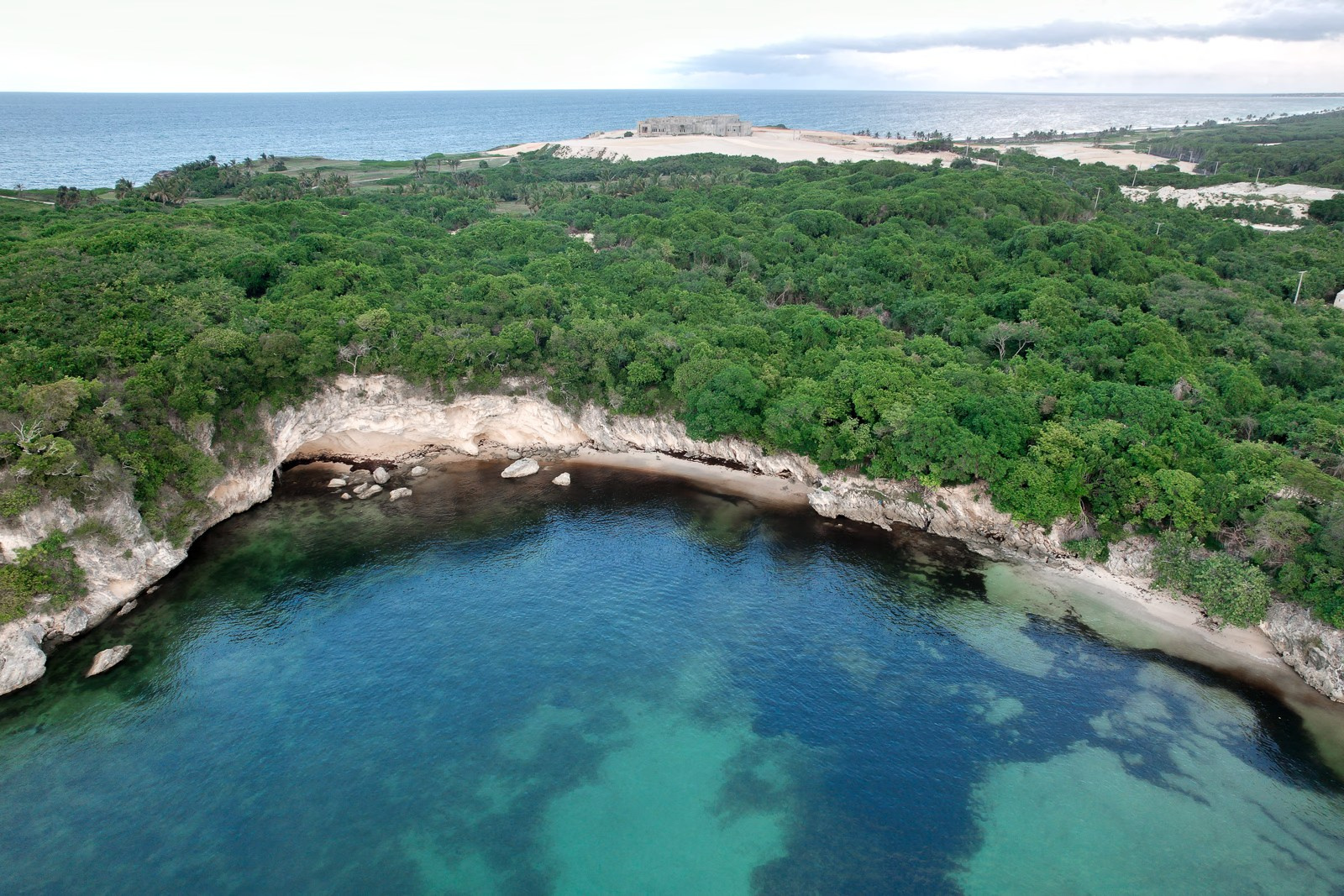
The second beach, called Escondida (2), is much more interesting. Nude photoshoots are done here, and it’s usually empty too. Seaweed is rare here, but this beach has another problem. Technically, it’s part of an abandoned hotel property, and to get there, you need to walk through the hotel grounds, where there is a fence (4). I’ll show everything on the map below. Macao Beach (1), the rocky viewpoint (3), Escondida Beach (2), and the fence (4).
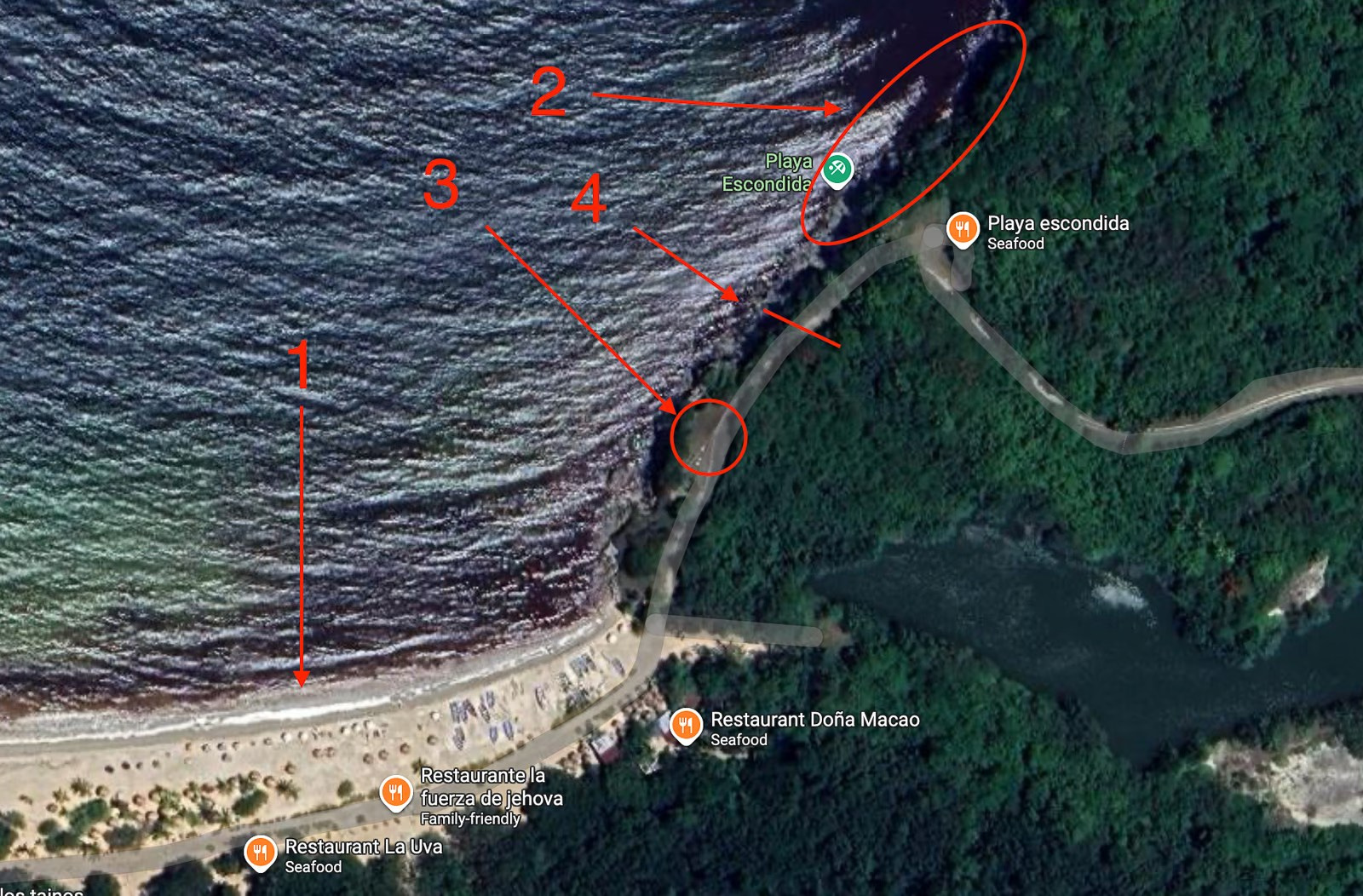
So you can go there at your own risk, but you can also visit the rocky viewpoint. It offers a beautiful view, even though it’s very small 😇
Seaweed at Macao Beach
There usually isn’t much seaweed at Macao Beach. If we compare the sargassum situation at Macao Beach with Bavaro Beach, there is less seaweed at Macao. By the way, I’ve already written a long and detailed article about where the seaweed in the Punta Cana area comes from, what to expect in the future, and I even shared live beach webcams! I’ll leave a button linking to the article below.
Macao Beach has a very good location, and Punta Macao protects the beach from seaweed. This means that seaweed coming from the Atlantic Ocean (from the Great Atlantic Sargassum Belt) usually ends up in Uvero Alto or near the Maimon River.
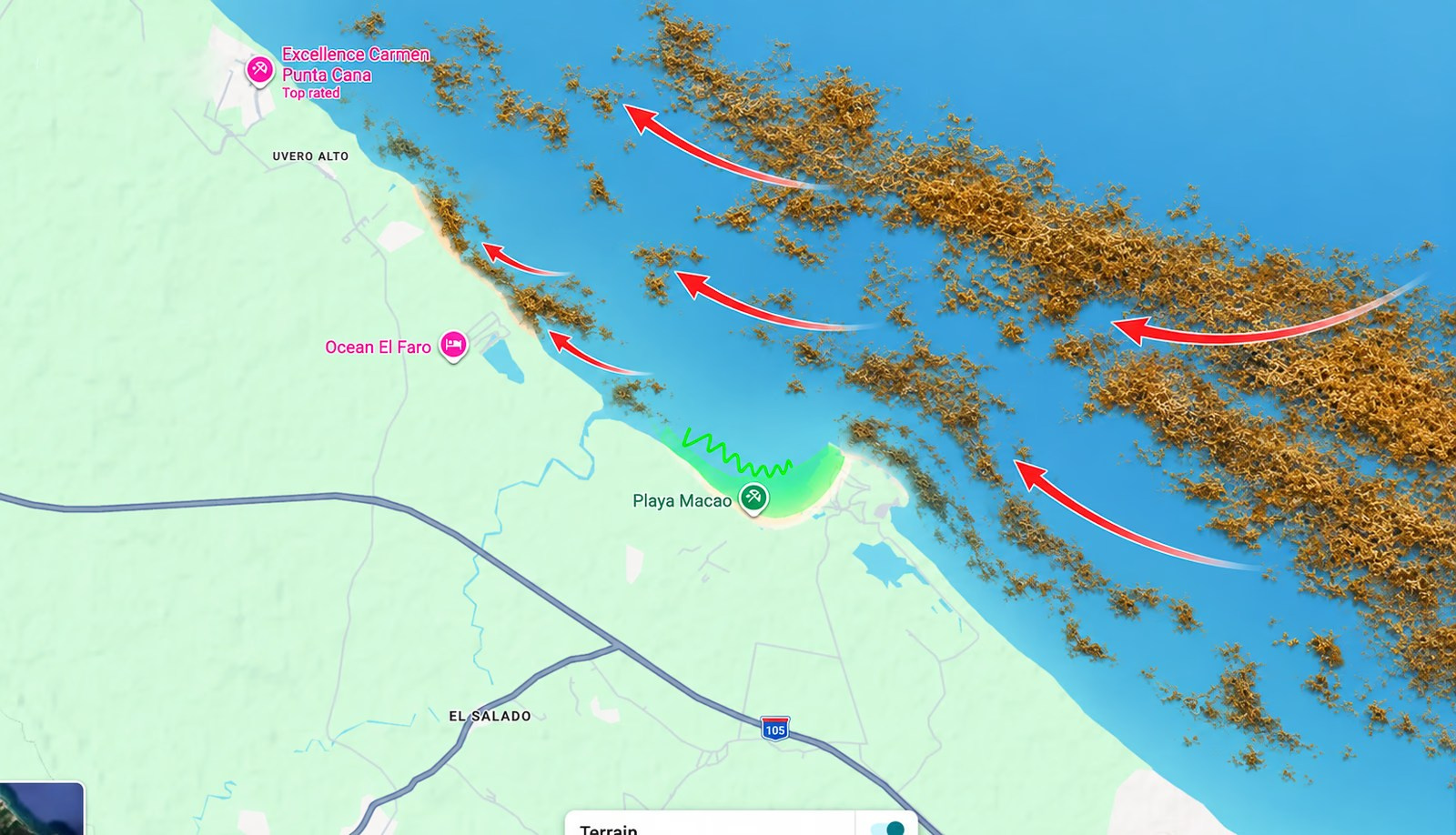
However, when seaweed comes from the Sargasso Sea, it does reach Macao Beach. But from what I’ve seen, there is less seaweed here than at Bavaro Beach, and that’s another reason why Macao Beach is a great place for a photoshoot!
Surfing at Macao Beach
Personally, Macao Beach makes me think of two things. The first is photoshoots because I’m a photographer, and this is the most popular beach for photoshoots in Punta Cana. The second is surfing. Unfortunately, surfing here has become less popular in recent years, but the history of surfing at Macao Beach is very interesting, and I want to share it with you! To do this, I did a short interview with Dmitry Yushko, one of the founders of the first surf school at Macao Beach 😇
Alex: Hey Dima! So, are we ready to tell the story of surfing at Macao Beach straight from someone who was there from the beginning? 😅
Dmitry: Of course! I’d be happy to!
Alex: How did you come up with the idea of starting a surfing business at Macao Beach? How did it all begin?
Dmitry: I moved to the Dominican Republic in 2013, to the town of Bavaro. By that time, I already had some surfing experience because I had previously lived in California. Over there, pretty much everyone surfs, unless they eat too many burgers 😁
One day, completely by accident, I saw surfboards for sale in a store and asked about surfing. They recommended that I go to Macao Beach. That’s where I met Rafael (the founder of Macao Surf Camp), who had opened his surf school just a year earlier. They worked with American and Canadian tourists in English, as well as Spanish-speaking tourists from Latin America. At that time, Russian tourism was growing very quickly, and many people were coming from Russia. We agreed that I would take care of the Russian market, which eventually became the main market for our surf school. (Dmitry was born in Moscow and speaks Russian fluently.)
Alex: So you joined forces and became partners?
Dmitry: Yes, we started a project together, although we had different names. Rafael’s business was called Macao Surf Camp, and mine was Caribbean Surf Adventure. At that time, we had a small building and some equipment, including surfboards and other surfing gear.
Alex: How did things develop? As far as I remember, back then, tourists were not very willing to leave their hotels… They were told it was dangerous and things like that…
Dmitry: Yes! At first, I picked people up in my 7-seater Nissan SUV. After the lessons, I drove them back to their hotels. At that time, I didn’t see it as a business. It was a hobby. I enjoyed watching my students improve, being part of the surfing community, and just enjoying the vibe.
Alex: When did it turn into something bigger?
Dmitry: At first, my SUV was enough. We had 3-6 people a day. Then, in 2014, there was an economic crisis in Russia, which slowed down the growth of surfing at Macao Beach. But in 2016, when the big tour operator ANEX started offering trips to the Dominican Republic… That’s when we got so many people that we had to buy an 11-seater minivan and hire a driver, and then another one.
Alex: How many students did you have per day at your peak?
Dmitry: Oh… Around 60-80 students a day! We had about 20 instructors, assistants, drone operators, and photographers working with us. It was on a scale I couldn’t even imagine when we first started.
Alex: For Macao Beach, that seems huge to me… By the way, I remember those days when the whole beach was full of surfing students. Luckily, you used a different part of the beach, not the one where we did our photoshoots. We often asked students to borrow their surfboards for a couple of minutes to take a few photos!
Dmitry: Those were good times!
Alex: Tell me the story about the surfing dog!
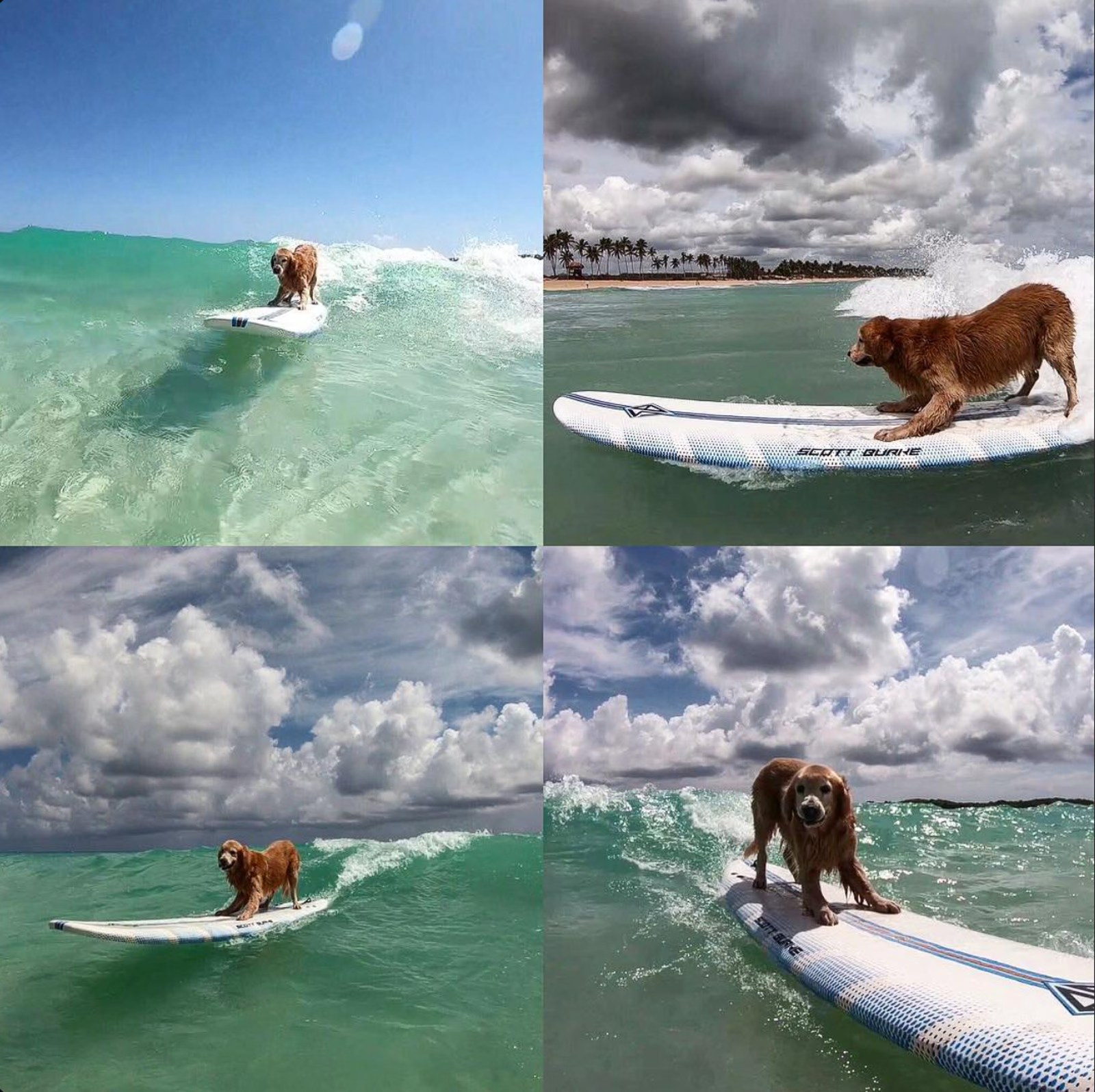
Dmitry: Ha ha ha! It’s a story straight out of a movie! So… Jack (a golden retriever) belonged to Gustavo, one of the founders of Macao Surf Camp. But first, let me tell you Gustavo’s story! He was one of the first professional surfers at Macao Beach. He was surfing here back in the 1970s… But the most interesting part is how it all started 😁
Alex: I’m all ears!
Dmitry: After the Cuban Missile Crisis in 1962, the US sent troops to the Dominican Republic in 1965. They stayed here for about two years. The commander of one of the units was from Hawaii, and he brought his surfboard with him. So he was a surfer himself, and since they were staying in the Dominican Republic for a long time, he brought his family along. He had a daughter…
Alex: … Don’t tell me Gustavo managed to win her heart?
Dmitry: Exactly! Gustavo started dating her. And that’s how Gustavo got his first surfboard — it was a gift from the girl’s father.
Alex: That would make a great movie 😁
Dmitry: Yes, exactly! Ha ha ha!
Alex: Okay, but what about Jack?
Dmitry: When Gustavo got Jack, he decided to put him on a surfboard just for fun. And surprisingly, Jack was actually able to control the board and ride the waves. By the way, Jack later had two puppies, but neither of them could stand on a surfboard or control it…
Alex: So Jack wasn’t just standing on the board for photos, he was actually controlling it?
Dmitry: Exactly! Jack was a unique dog who could ride the waves and control his surfboard!
Alex: That sounds unbelievable, and I wouldn’t believe it if I hadn’t seen it myself! But I actually saw him do it several times with my own eyes!
Alex: Dima, why did the business close?
Dmitry: After the events of 2022 and the sanctions, all travel companies in Russia stopped offering trips to the Dominican Republic. This meant that tourists stopped coming not only from Russia and Ukraine, but also from other countries like Kazakhstan, Kyrgyzstan, and so on. And since 90% of our students came from those countries, the business had to stop operating. In 2023, Caribbean Surf Adventure closed down.
Alex: Do you miss those days?
Dmitry: It was fun, it was great, but it’s part of our lives. Time moves on, life changes, and all we can do is adapt.
Alex: I couldn’t agree more! Thank you, Dima, for sharing this amazing story!
Dmitry: I hope someone finds it interesting!
What’s at both ends of Macao Beach?
This is my favorite topic — exploring places where almost nobody goes 😅 Macao Beach is an interesting place because there are some very unusual things at both ends of the beach. If you stand on Macao Beach facing the ocean and walk to the right, you’ll find an abandoned hotel with a golf course and the secret Escondida Beach, which we’ve already talked about. If you walk to the left, you’ll find tall cliffs, another secret beach (which we’ve also talked about), and the mouth of the Maimon River. Now I’ll tell you about each side separately.
Abandoned hotel at Macao Beach
For many years, this unfinished hotel stood here, although the golf course was always kept in excellent condition. Recently, I was flying my drone in this area and noticed that part of the hotel had been demolished, as if they were preparing to build something new. At the moment, only one building remains.
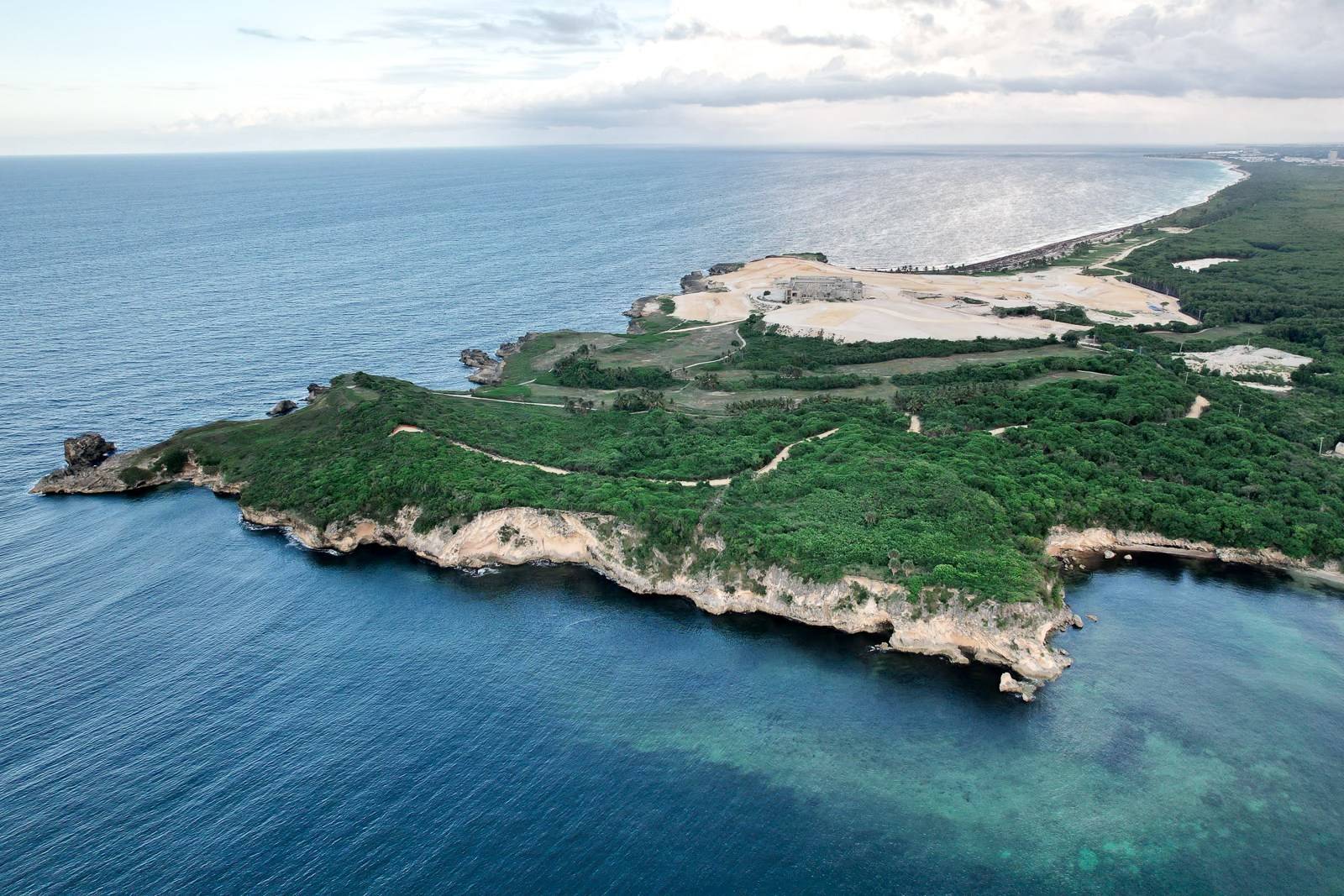
The unfinished hotel used to look like this.
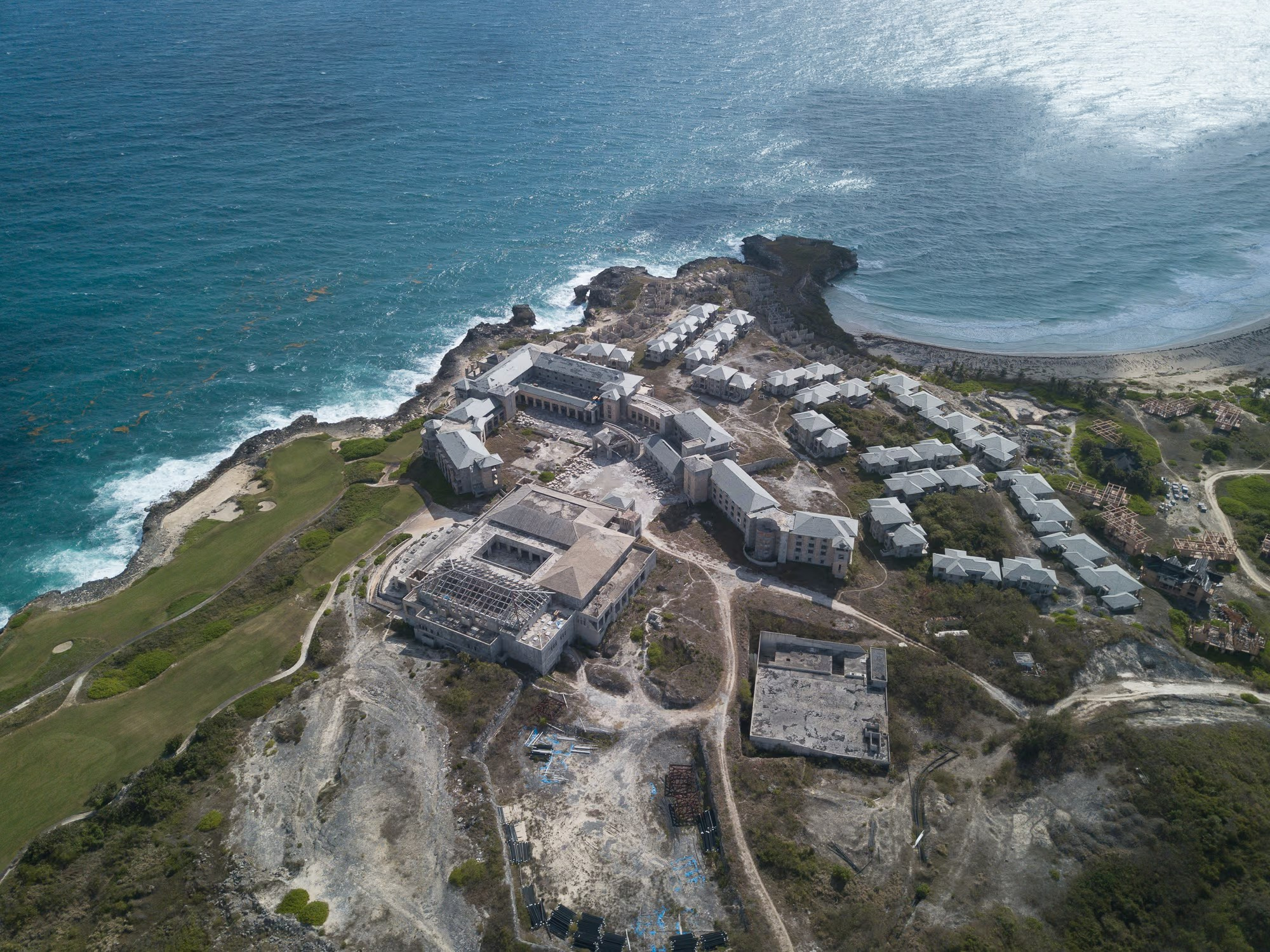
In my opinion, this is a great location for a luxury resort. A hotel in this spot could become one of the most interesting places in the area. Let’s see what happens in the future!
Cliffs, a secret beach, and a river mouth at Macao Beach
Where the beach ends, the rocky coastline begins. There are lots of small crabs, different kinds of mollusks, and you can even spot octopuses here. The landscape in this area is quite interesting and changes very often. If you decide to walk in this direction, make sure to bring shoes because the rocks are very sharp for bare feet.
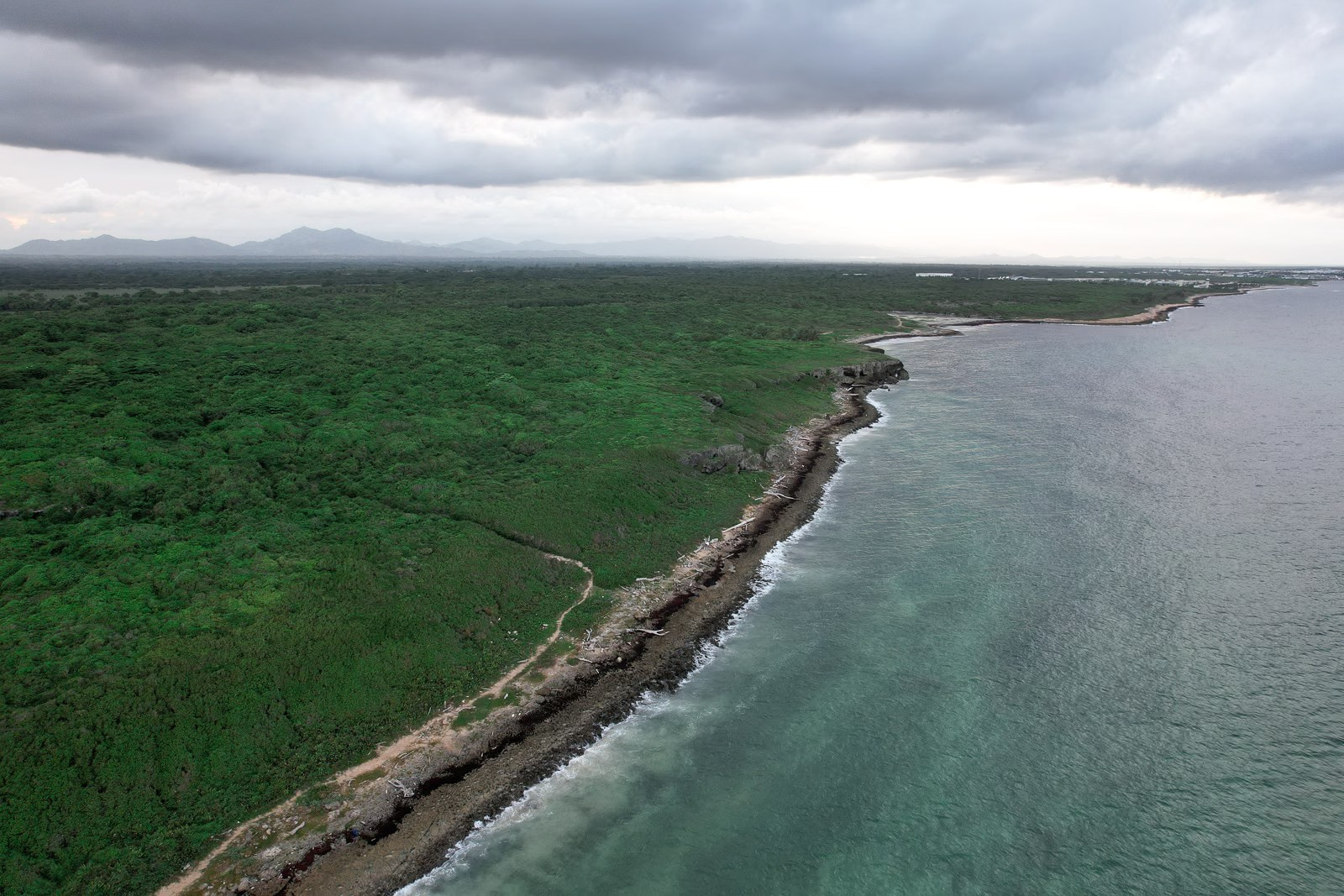
Next, there are some small rocky hills. You can easily climb them, but be very careful because the rocks are sharp.
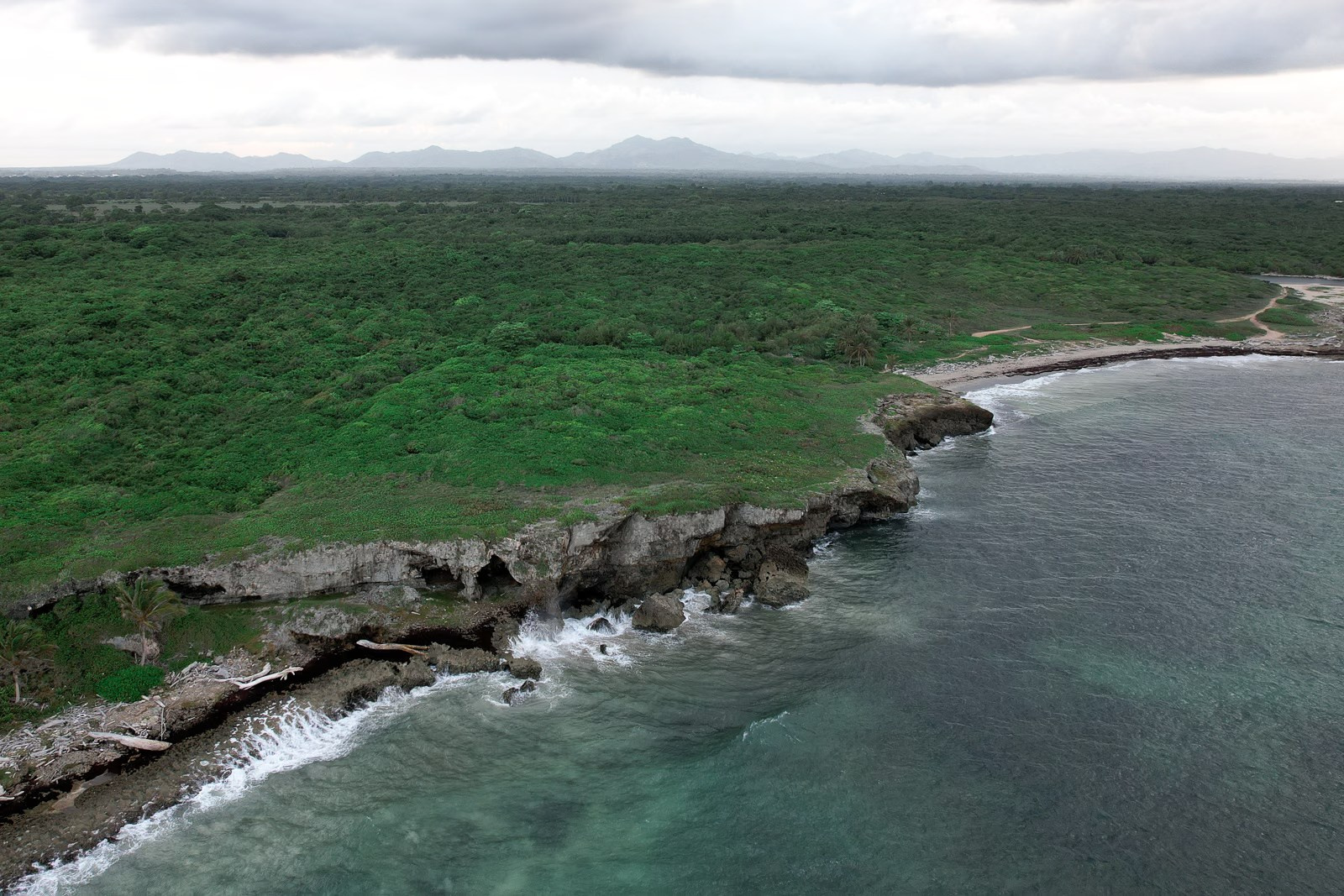
After the rocks, you’ll find the unnamed secret beach we’ve already talked about and the mouth of the Maimon River. As I mentioned earlier, there is always a lot of seaweed here. This means that Punta Macao protects Macao Beach from seaweed up to about this point.
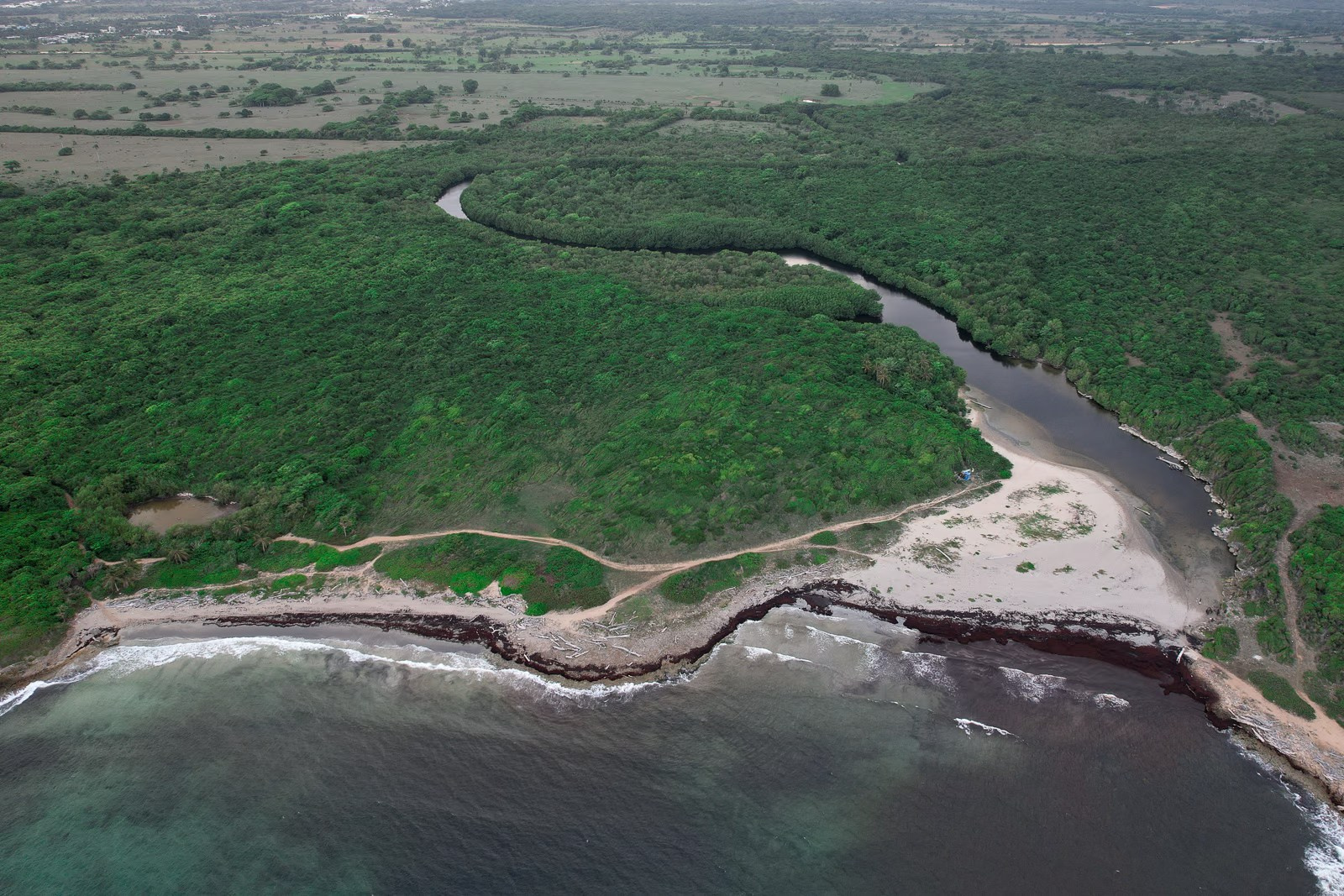
Beyond that, the rocky coastline continues, followed by the beaches of the Uvero Alto tourist area.
Phew! Now you know almost everything about Macao Beach! Why almost? Because I’ve saved a little information for dessert — for future articles, and I hope you’ll come back to read them too. If you’d like to have a beautiful photoshoot at Macao Beach, you’ll find a contact button below. Thanks for reading, and enjoy your vacation in the Dominican Republic 🙂
About the author:
Alex Po is a photographer in Punta Cana. He first visited the Dominican Republic in 2011. He has been a photographer for over 15 years and has done hundreds of photoshoots at Macao Beach.