
Esse assunto preocupa absolutamente todo mundo! Quem gosta de nadar no mar, e não na piscina; Quem considera uma linda sessão de fotos em Punta Cana uma prioridade e até quem simplesmente gosta de caminhar pela praia. E sabem… eu não vou dizer que o sargaço em Punta Cana e Bávaro é um mito. A cada ano esse problema fica mais sério e a cada ano há mais sargaço!
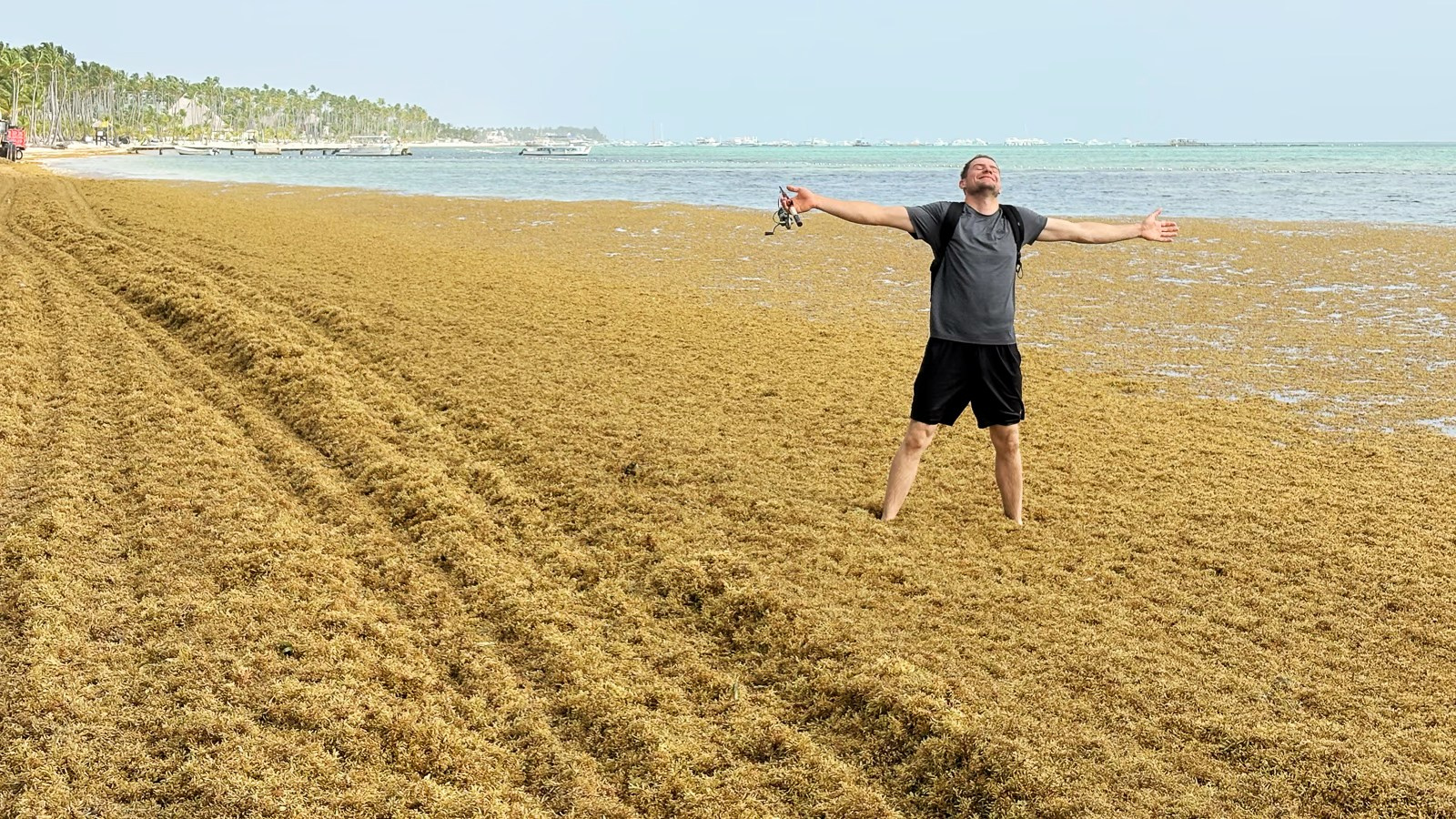
Mas não se preocupem, vou mostrar como verificar as condições da praia em tempo real! Também vamos investigar de onde vem o sargaço e o que pode acontecer no futuro, daqui a 5 — 15 anos. E também, o que fazer para que não apareça sargaço nas suas lindas fotos?! Aliás, é importante dizer desde o início que as algas do gênero Sargassum são chamadas de forma mais simples — sargaço. É esse nome que vou usar no restante do artigo.
Há sargaço em Punta Cana e Bávaro agora?
O mais interessante sobre o sargaço é que é impossível prever quando ele vai aparecer. À noite, a praia pode estar completamente limpa e, pela manhã, pode estar totalmente coberta de sargaço! Mas vivemos no século XXI 😁 por isso podemos verificar as condições de algumas partes da praia de Bávaro pelas câmeras! Aliás, anteriormente escrevi no meu blog um artigo completo sobre a praia de Bávaro, onde vocês podem conhecê-la com mais detalhes 😎
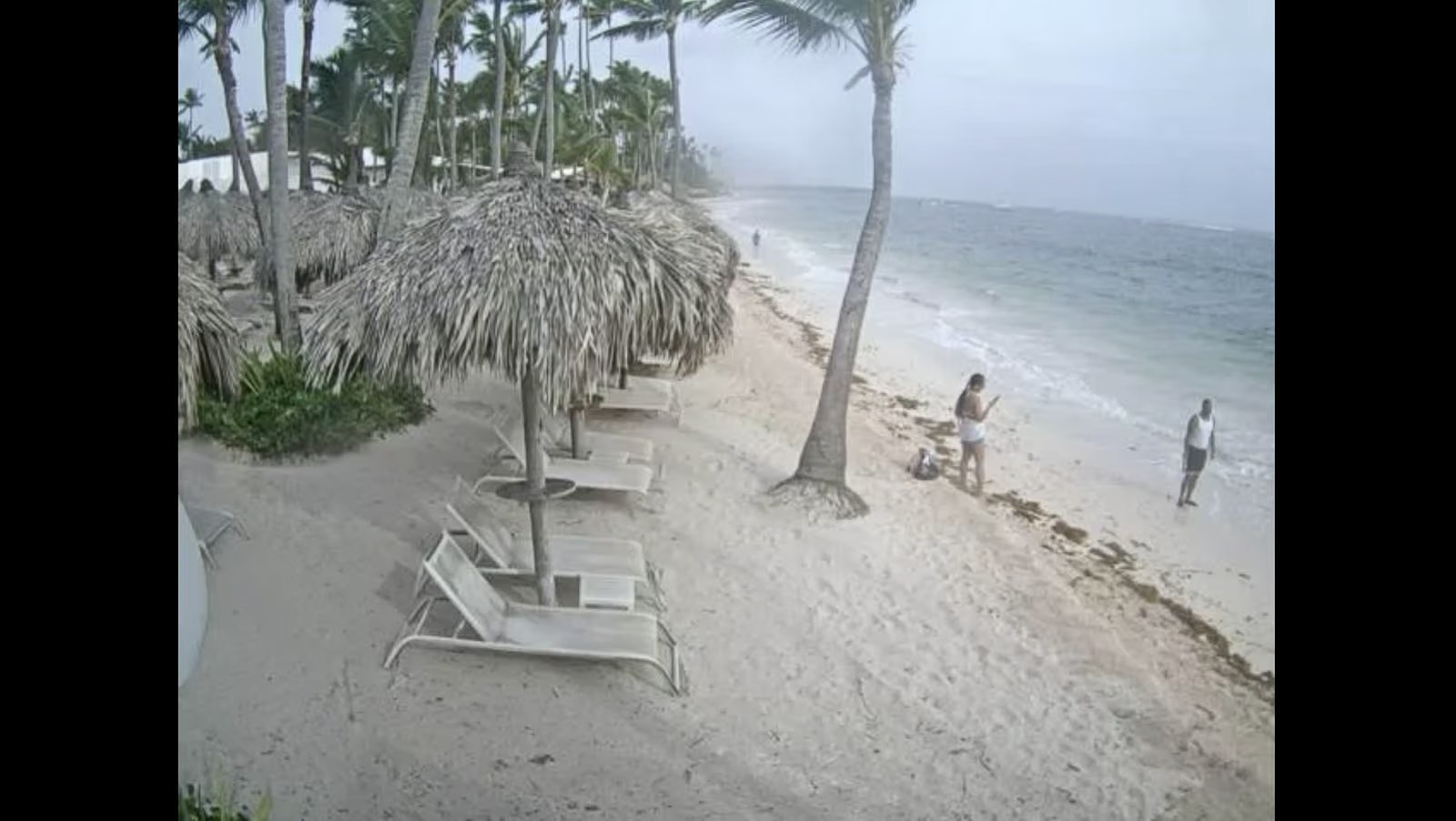
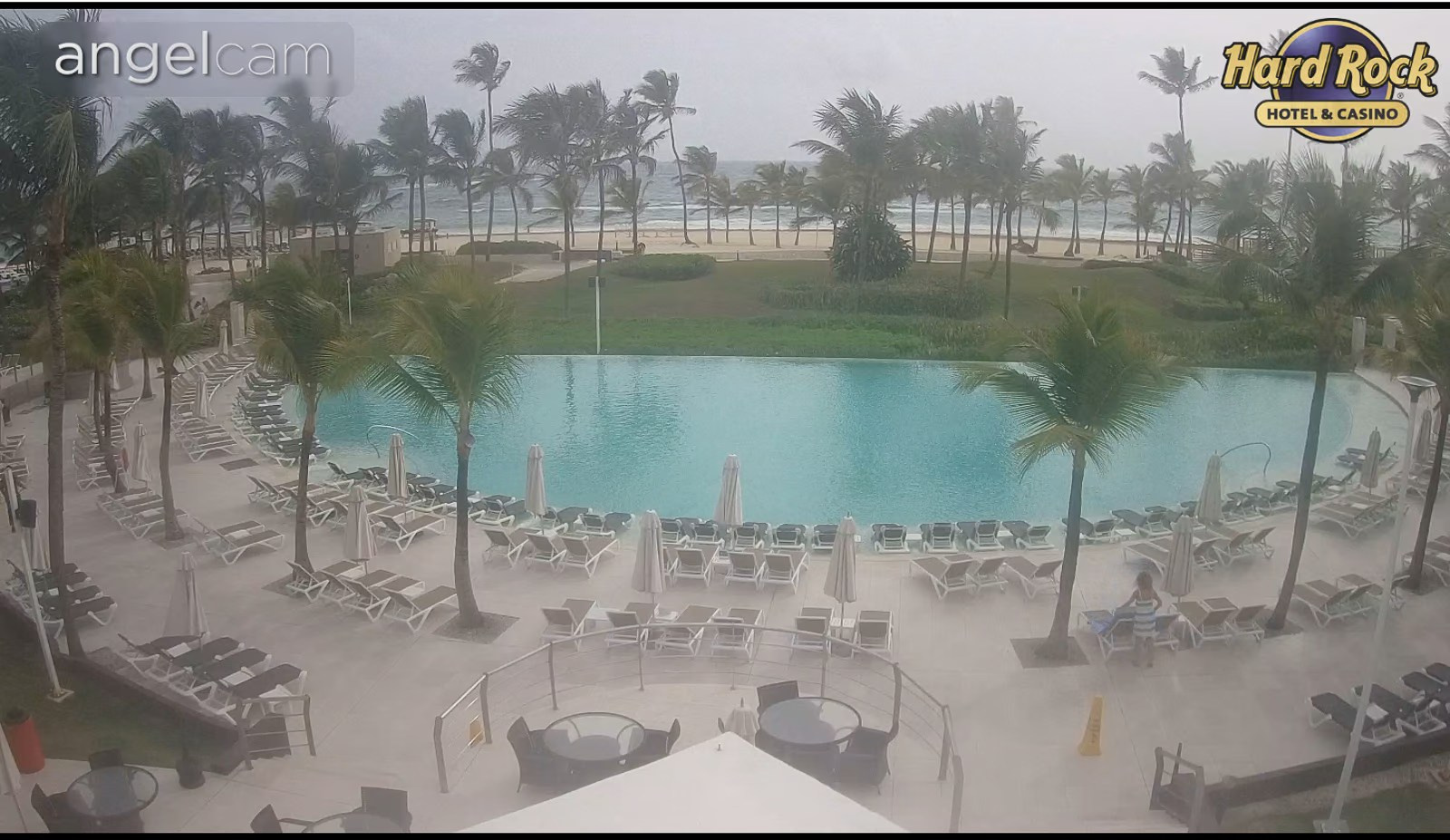
Preparei 2 webcams gratuitas para vocês! Mas devo avisar que às vezes as câmeras não funcionam por problemas técnicos. Mesmo assim, vou acompanhar e atualizar as informações quando for necessário!
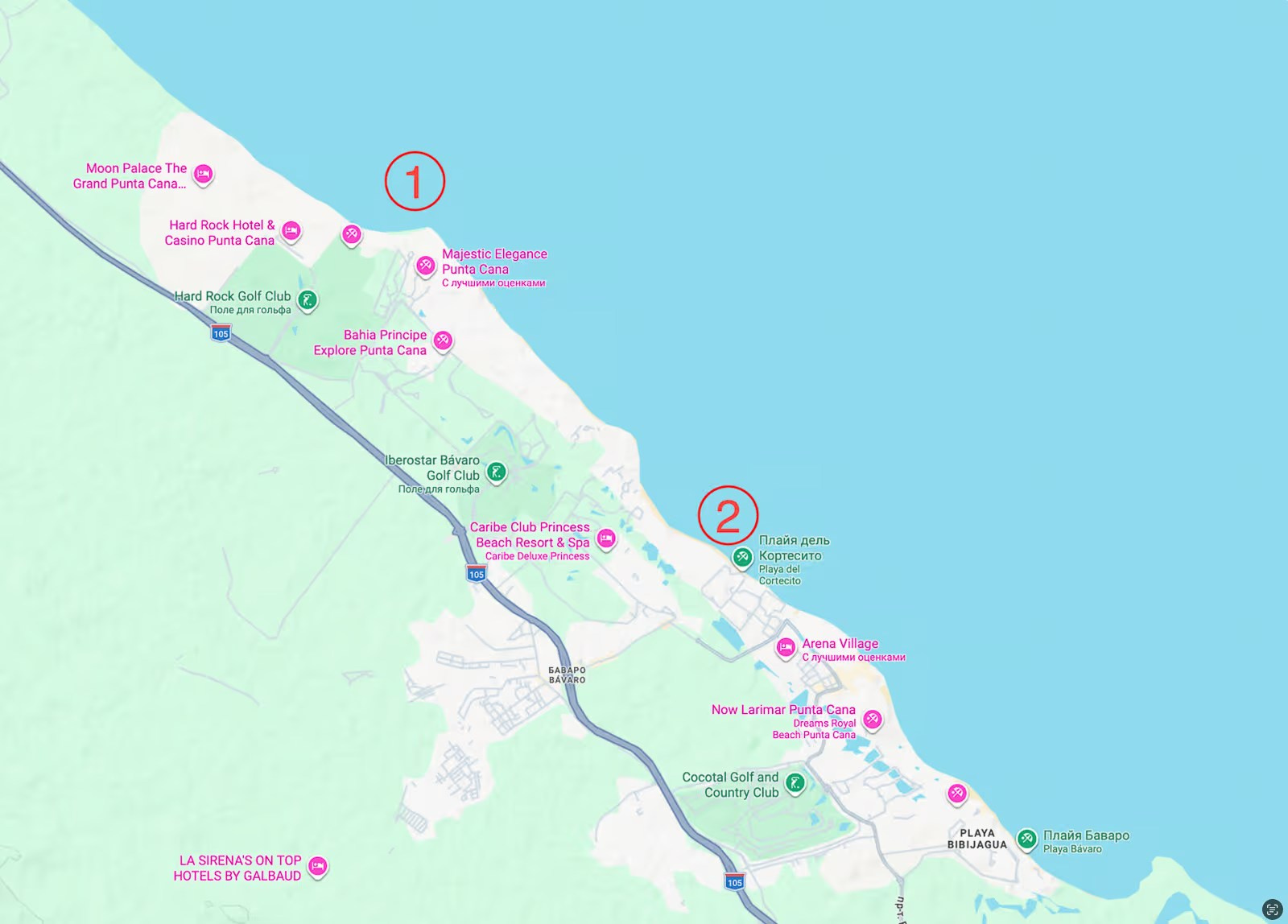
No mapa marquei a localização das câmeras e abaixo vou deixar os links:
A câmera está localizada no hotel Hard Rock Punta Cana (um agradecimento especial a eles por isso) e está voltada para o mar. A câmera tem uma excelente qualidade, por isso é possível ver se há sargaço na praia. Essa parte da praia de Bávaro se chama Arena Gorda. Aqui estão as maiores ondas de toda a praia de Bávaro e normalmente há menos sargaço.
A câmera funciona apenas no computador (exceto no navegador Safari). Em celulares e tablets, a câmera não funciona corretamente. Pedimos desculpas pelo inconveniente.
A câmera está localizada diretamente na Cortecito Beach, no hotel Palladium (obrigado ao hotel pela câmera). A qualidade da câmera não é muito boa, mas é possível entender 100% como estão as condições da praia.
De onde vem o sargaço que chega à República Dominicana?
Eu me lembro perfeitamente da época em que tudo começou a mudar. Há cerca de 15 anos, as praias de Punta Cana estavam quase sempre limpas e a chegada do sargaço era algo raro. É fácil imaginar por que essas algas são chamadas de sargaço… Elas vinham do Mar dos Sargaços, localizado ao norte da República Dominicana. Aliás, é o único mar do mundo que não tem costas terrestres. Ele é conhecido por ter uma enorme quantidade de sargaço (algas do gênero Sargassum). Mas existia um equilíbrio. Apenas de vez em quando pequenos pedaços se separavam e chegavam até Punta Cana. Ah… eram tempos de praias paradisíacas e areia branca em Punta Cana 😍 Embora isso tenha sido há tanto tempo que hoje é até difícil acreditar, porque agora encontrar grandes quantidades de sargaço na praia é algo normal 😅
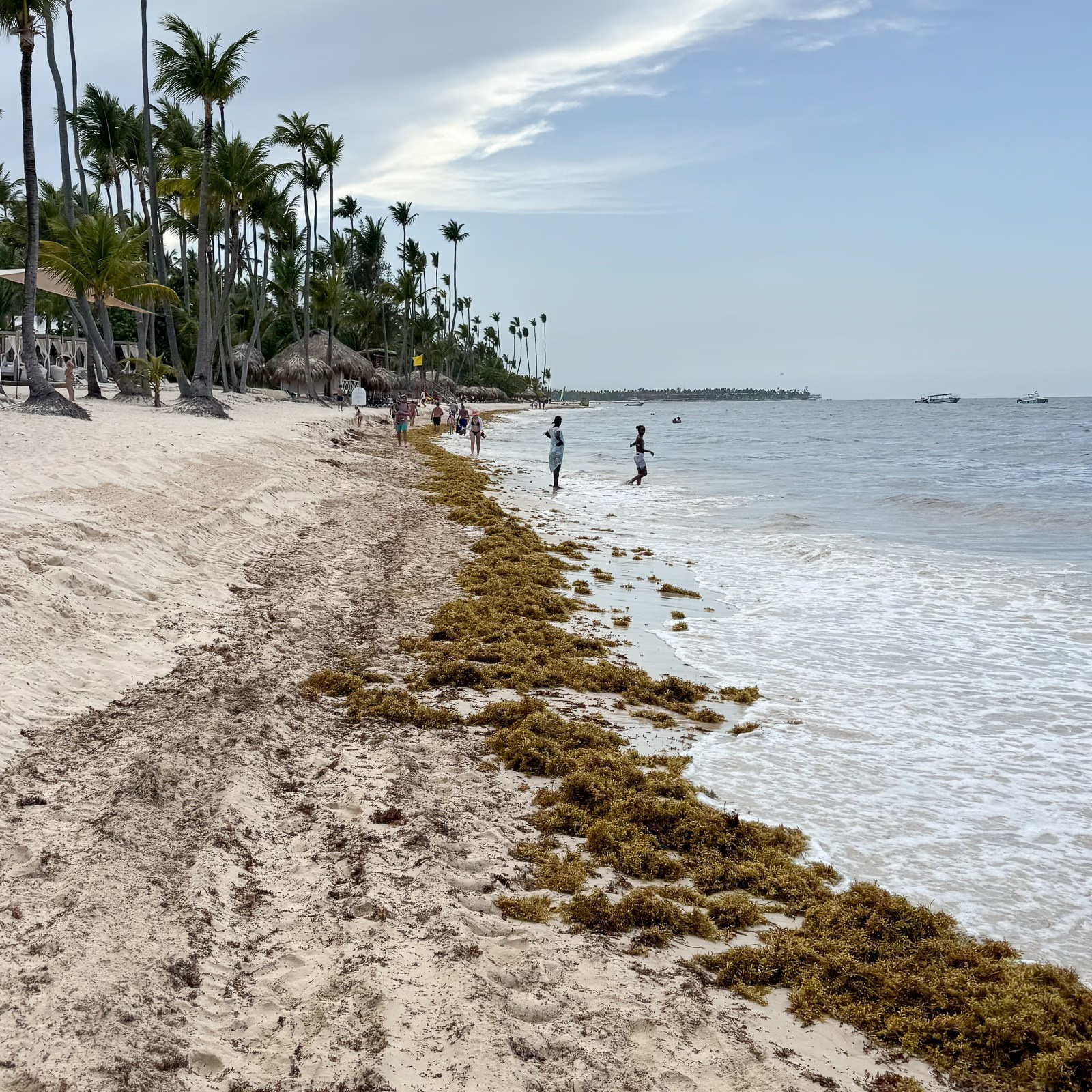
Por volta de 2011, tudo mudou. Isso aconteceu por diferentes razões, e não foi apenas por causa do aquecimento global, foram vários fatores. Mas este não é um artigo científico para analisarmos todas as causas. Não quero sobrecarregar vocês com isso e vou passar para algo mais importante — as consequências, que são bastante sérias. Uma grande parte do sargaço do Mar dos Sargaços migrou para o oceano Atlântico aberto e começou a se reproduzir. Essas algas não precisam se prender ao fundo do mar, elas simplesmente flutuam na superfície e se reproduzem.
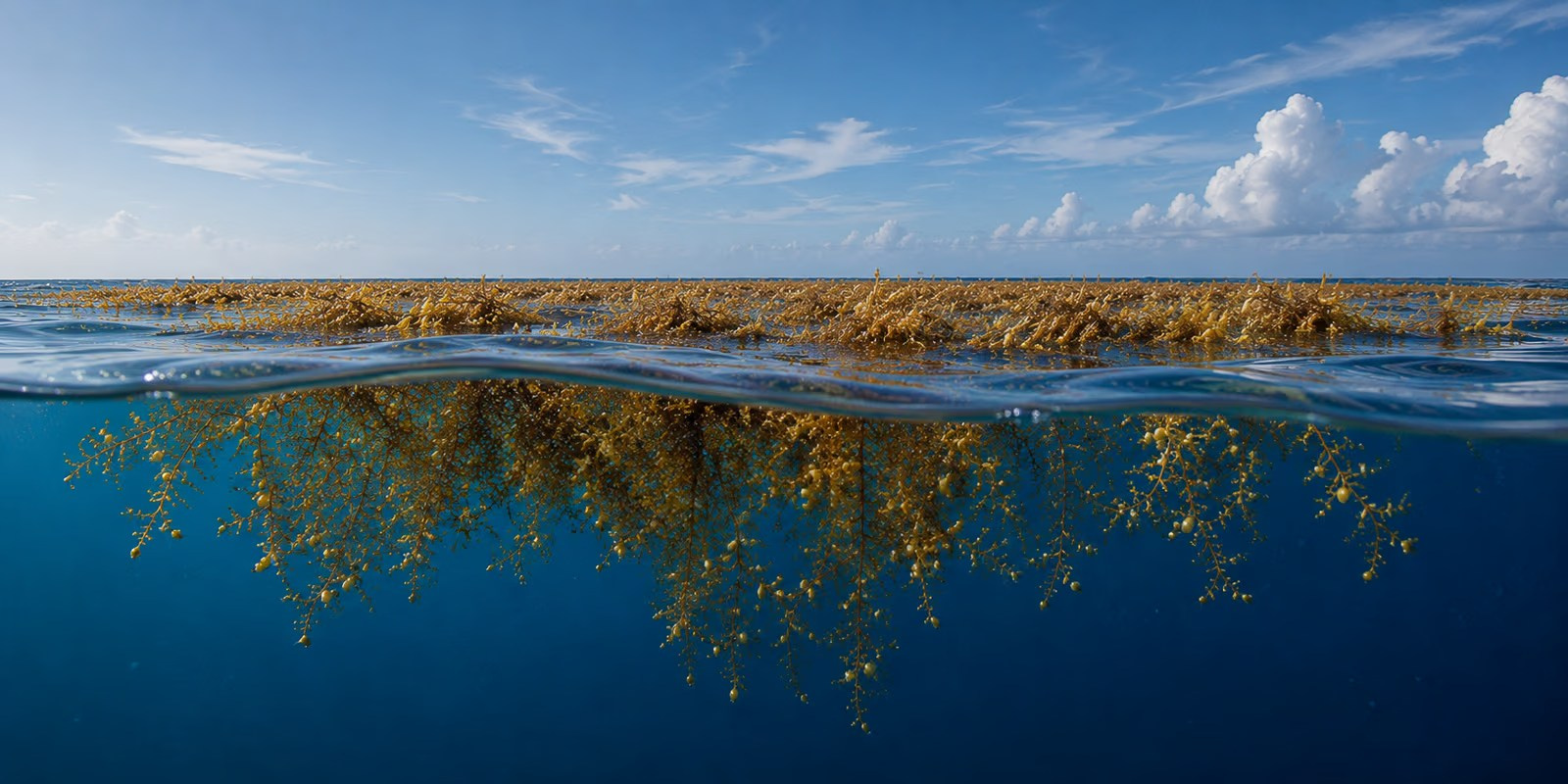
O novo habitat se mostrou tão favorável que o sargaço começou a se reproduzir em uma velocidade enorme e se formou o Grande Cinturão de Sargaço do Atlântico (Great Atlantic Sargassum Belt).
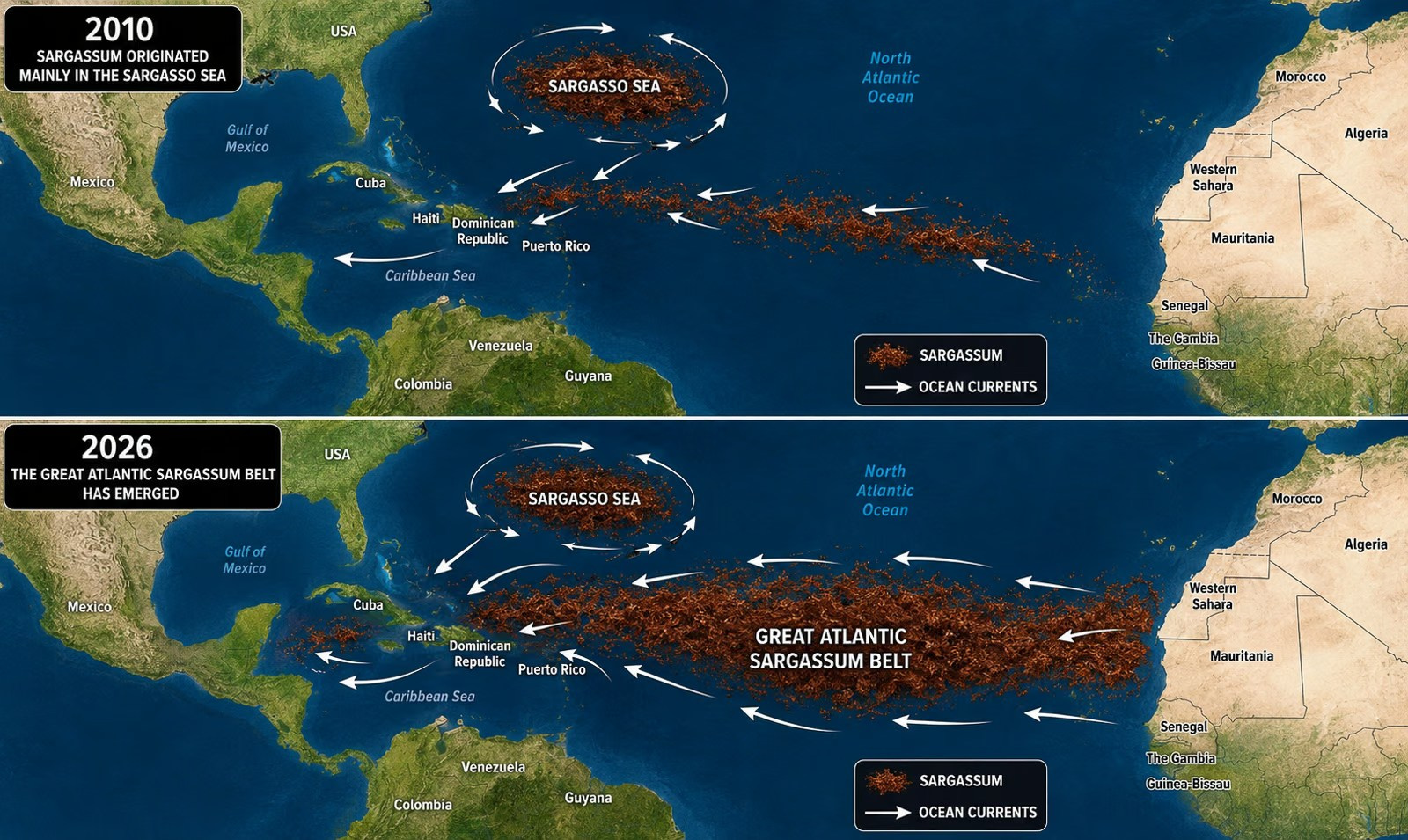
Já em 2018, seu tamanho era estimado em quase 9 000 km e mais de 20 milhões de toneladas.
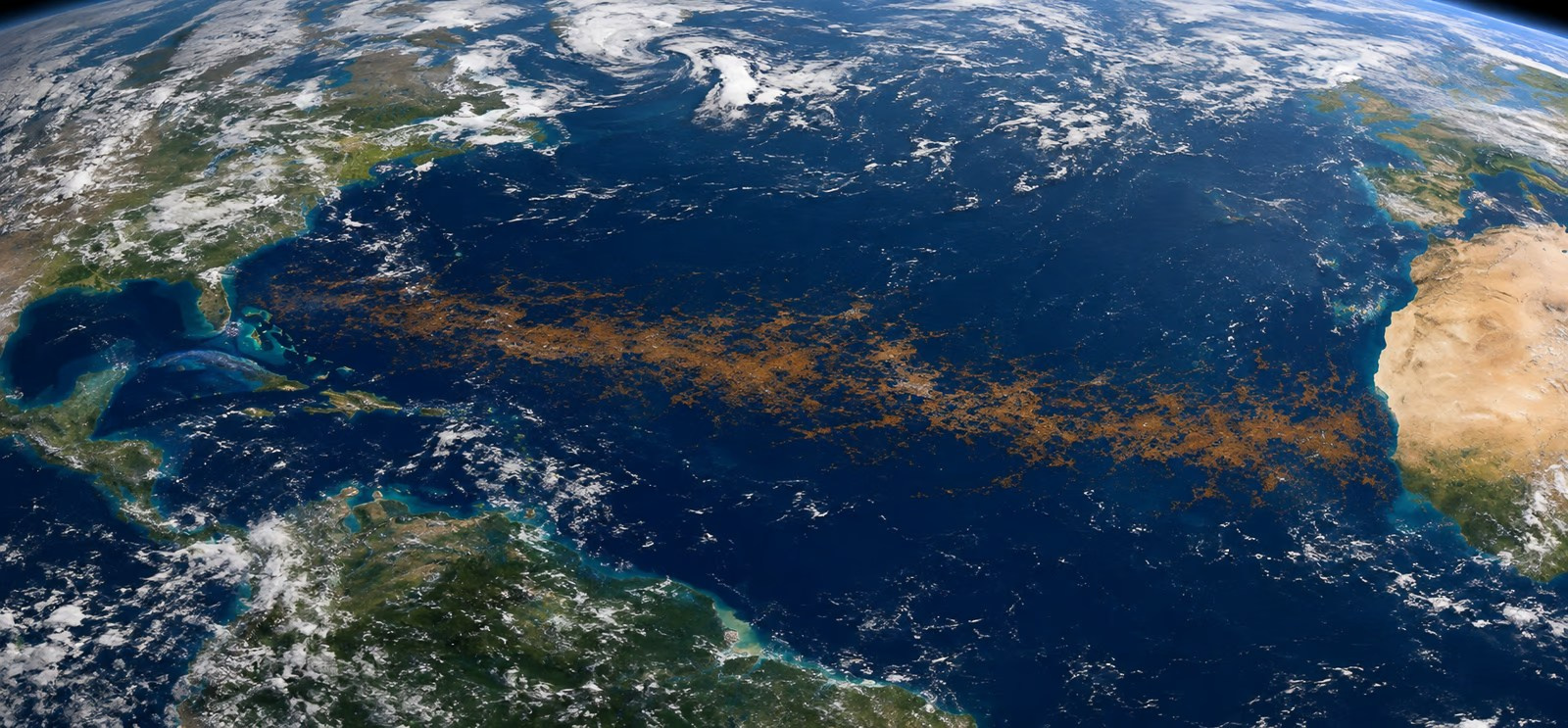
Em 2025, o NCCOS informou em um artigo que o cinturão ficou 2 vezes maior, chegando a cerca de 38 milhões de toneladas de sargaço. Por isso, há cada vez mais sargaço e simplesmente não há perspectivas de melhora da situação.
Previsão sobre o sargaço em Punta Cana e na República Dominicana
Para ser sincero, mesmo considerando o cenário mais otimista, a situação não parece nada boa. Haverá cada vez mais sargaço. A única pergunta é — QUANTO MAIS?! É pouco provável que as águas na região do Grande Cinturão de Sargaço do Atlântico fiquem mais frias e que a quantidade de sargaço diminua. O sargaço inevitavelmente continuará se reproduzindo e quantidades cada vez maiores chegarão às praias de Punta Cana.
O que aconteceu e o que vai acontecer?!
Cronologia dos acontecimentos:
2011 — O Grande Cinturão de Sargaço do Atlântico se formou, segundo o Woods Hole Oceanographic Institution.
2018 — Segundo uma pesquisa da NOAA, ele cresceu até atingir aproximadamente 9 000 quilômetros de comprimento e cerca de 20 milhões de toneladas.
2018 — 2022 — O crescimento foi moderado e, em 2022, foi registrado um novo recorde — 22 milhões de toneladas, como informa a EPA em seu artigo.
2025 — Um forte aumento e um novo recorde — 38 milhões de toneladas, segundo a University of South Florida.
Previsão otimista para 2030 — 2040:
Segundo as previsões mais otimistas (extrapolação exponencial moderada (crescimento de ~9% ao ano)):
2030 — O Cinturão de Sargaço chegará a ~50 — 60 milhões de toneladas
2040 — Ele poderá crescer até ~150 milhões de toneladas, quase 4 vezes mais do que em 2025. Com esse tamanho do Grande Cinturão de Sargaço do Atlântico, haverá sargaço nas praias de Punta Cana durante todo o ano, até mesmo em janeiro e fevereiro.
* Esses números são extrapolações matemáticas ilustrativas baseadas em um cenário de crescimento moderado, e não previsões científicas oficiais.
Previsão pessimista para 2030 - 2040:
Segundo a previsão pessimista (extrapolação exponencial acelerada (duplicando aproximadamente a cada 5 anos)):
2030 — O cinturão crescerá até ~76 milhões de toneladas
2040 — O tamanho poderá chegar a ~300 milhões de toneladas, 8 vezes mais do que em 2025. Claro que isso não significa que haverá 8 vezes mais sargaço nas praias da República Dominicana, Cuba, México e outros países do Caribe, mas haverá muito mais do que em 2025.
* Esses números são extrapolações matemáticas ilustrativas baseadas em um cenário de crescimento acelerado, e não previsões científicas oficiais.
Essa situação poderá se tornar perigosa no futuro, porque o sargaço em decomposição libera sulfeto de hidrogênio e amônia, como confirmam estudos publicados no ScienceDirect. Isso causa falta de oxigênio, o que pode reduzir bastante a qualidade do ar. Isso afetará principalmente o meio ambiente e a vida animal. Alguns estudos já registram a morte de dezenas de espécies de animais. Naturalmente, isso também afetará as pessoas que vivem perto do mar, porque a qualidade do ar diminuirá bastante.
Por enquanto, os cientistas não preveem uma catástrofe ambiental e, como sou otimista, espero que o equilíbrio natural nos salve de consequências críticas 🙏 Mesmo assim, em um futuro próximo, teremos que fazer alguma coisa para lidar com essa situação.
Em quais meses há mais sargaço na praia de Bávaro?
Existe uma tendência clara na quantidade de sargaço dependendo do mês! Por isso, posso responder com bastante precisão, depois de décadas de observações da comunidade científica. A maior quantidade de sargaço na região de Punta Cana — Bávaro é observada em junho, julho e agosto, e a menor quantidade em dezembro, janeiro e fevereiro.
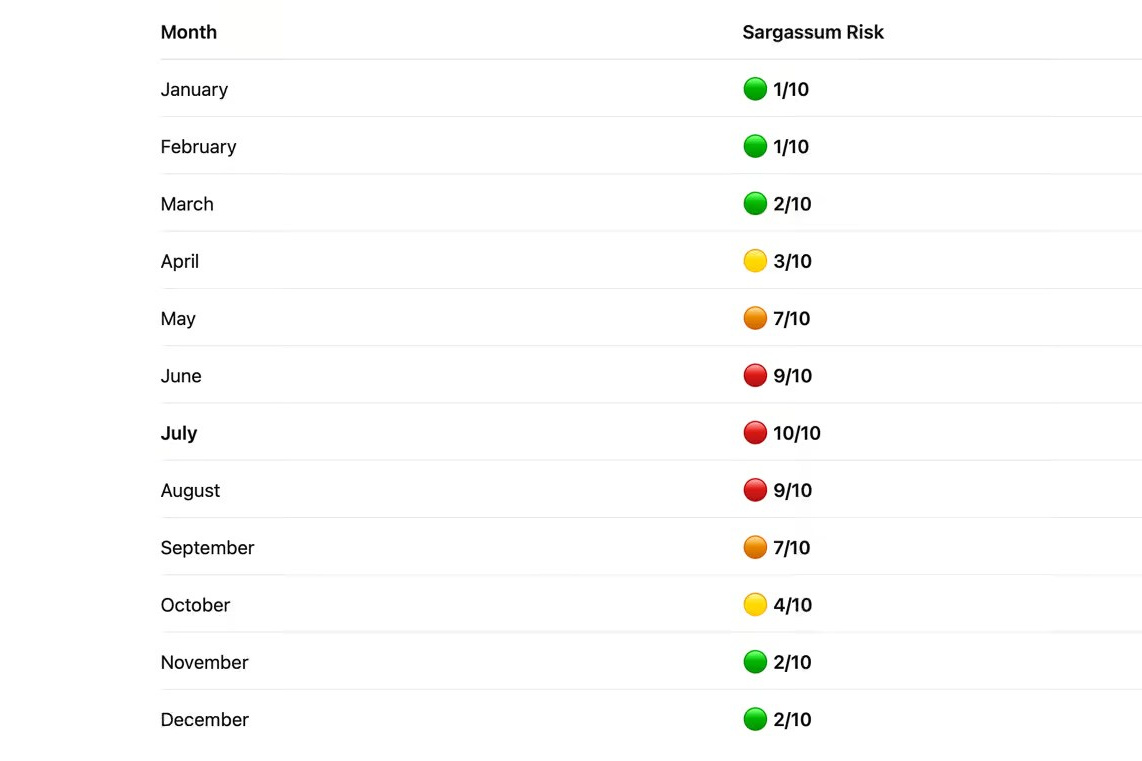
A partir de março, a quantidade de sargaço aumenta a cada mês — abril, maio e assim por diante. Em setembro e outubro, a quantidade começa a diminuir e, em novembro, já há bem menos sargaço. Mesmo assim, em 2025 e 2026, há tanto sargaço que ele está presente até no inverno e desaparece completamente muito raramente.
As condições da praia podem mudar muito em apenas um dia?
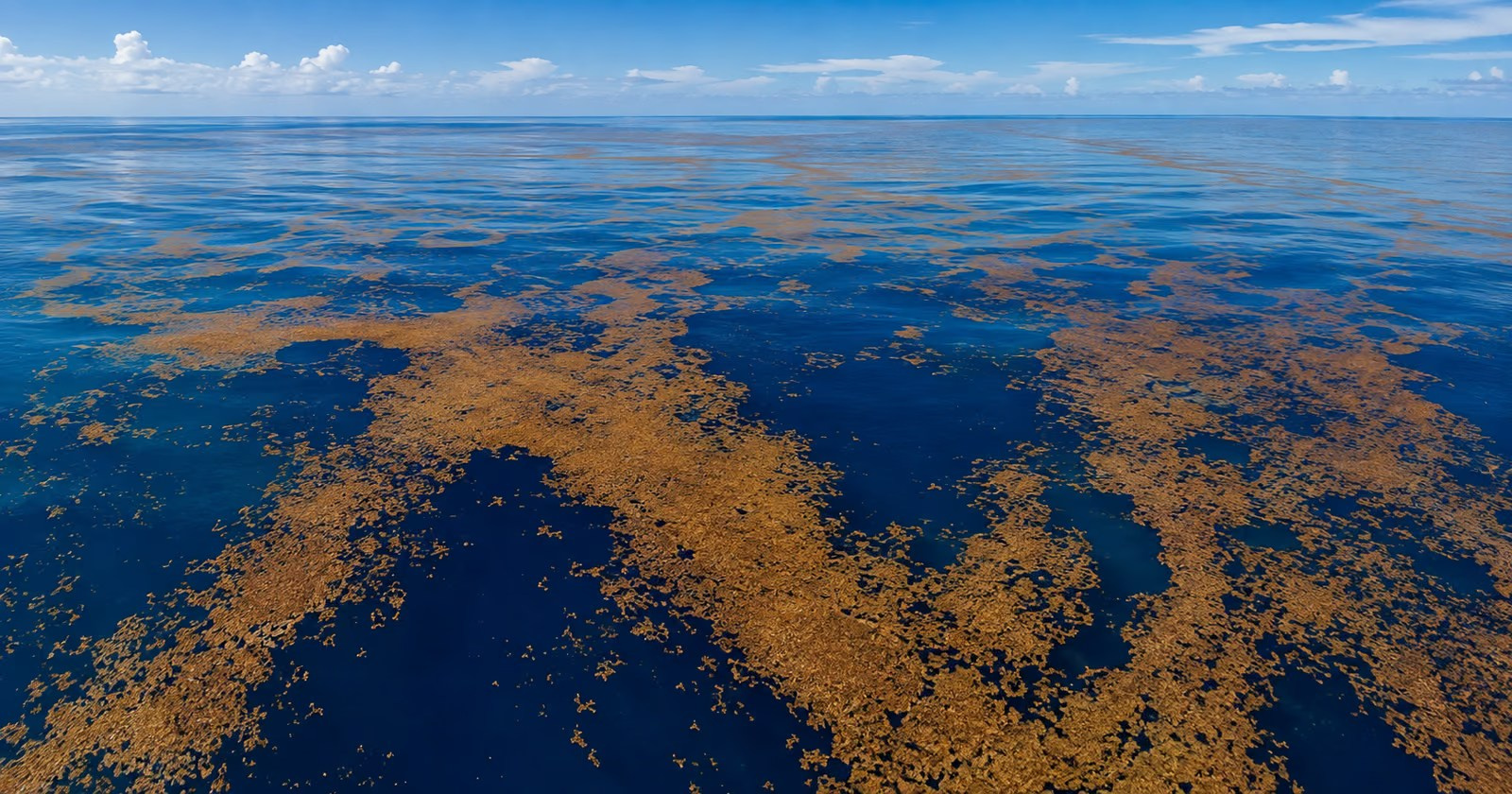
Sim! O sargaço chega em grandes quantidades de uma vez, e o tempo entre uma chegada e outra pode ser de horas, dias e até semanas. Se uma quantidade de sargaço chegar à praia e for rapidamente removida, e ainda faltarem alguns dias para a próxima chegada, no dia seguinte a praia estará perfeitamente limpa e a água transparente. Essa situação continuará até a próxima chegada de sargaço.
Em qual parte da praia de Bávaro há menos sargaço?
Quando o sargaço se aproxima da costa, o clima local começa a influenciar. Por isso, a quantidade de sargaço depende das condições do tempo em Bávaro e Punta Cana.
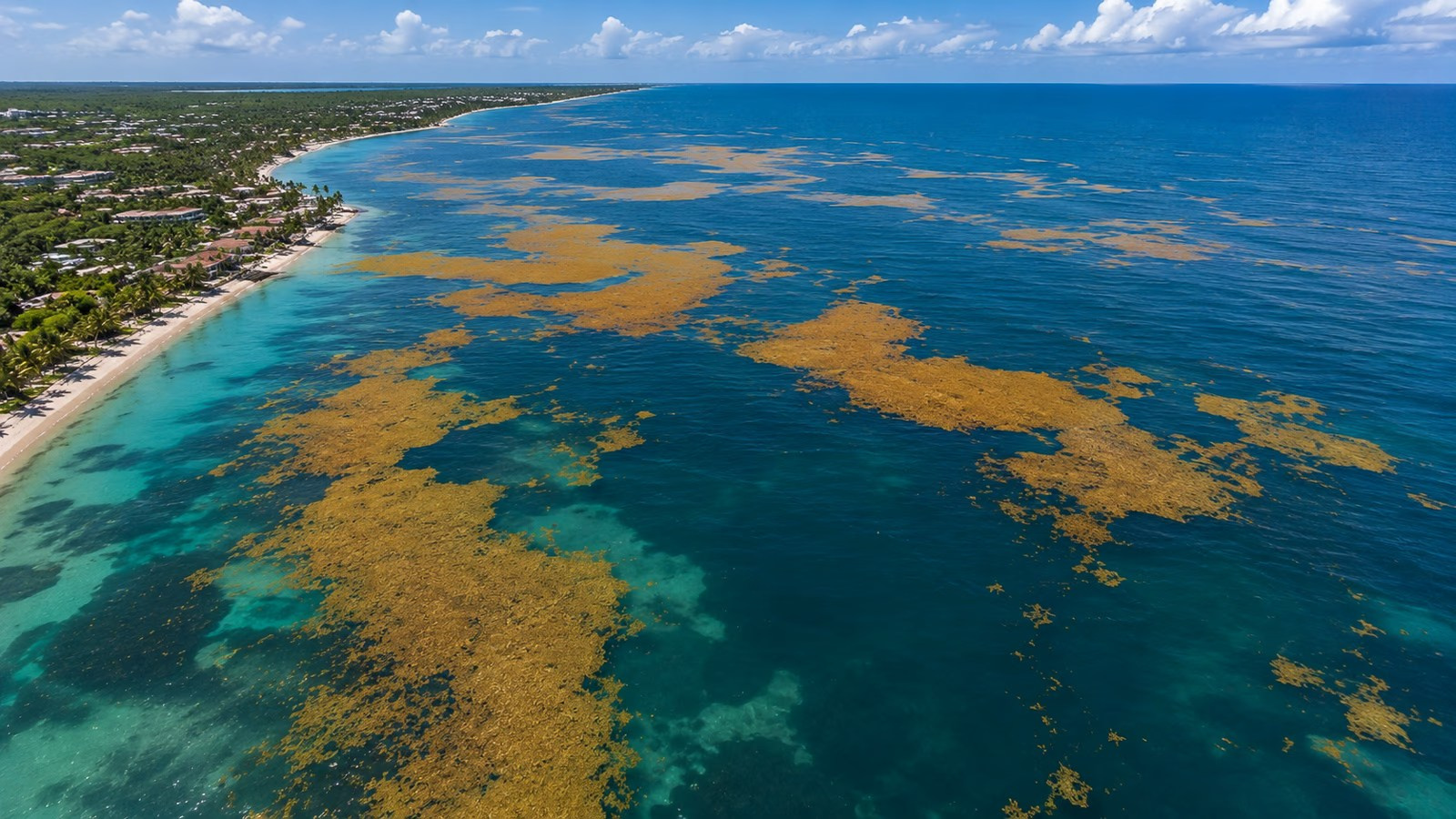
O clima aqui é muito estável, mas as correntes locais podem variar. O sargaço fica sempre na superfície, por isso seu movimento é influenciado não apenas pelas correntes, mas também pelo vento, que também pode mudar. Mesmo assim, na minha opinião pessoal, a quantidade de sargaço diminui do sul para o norte, ou seja, do hotel Barceló até o Hard Rock.
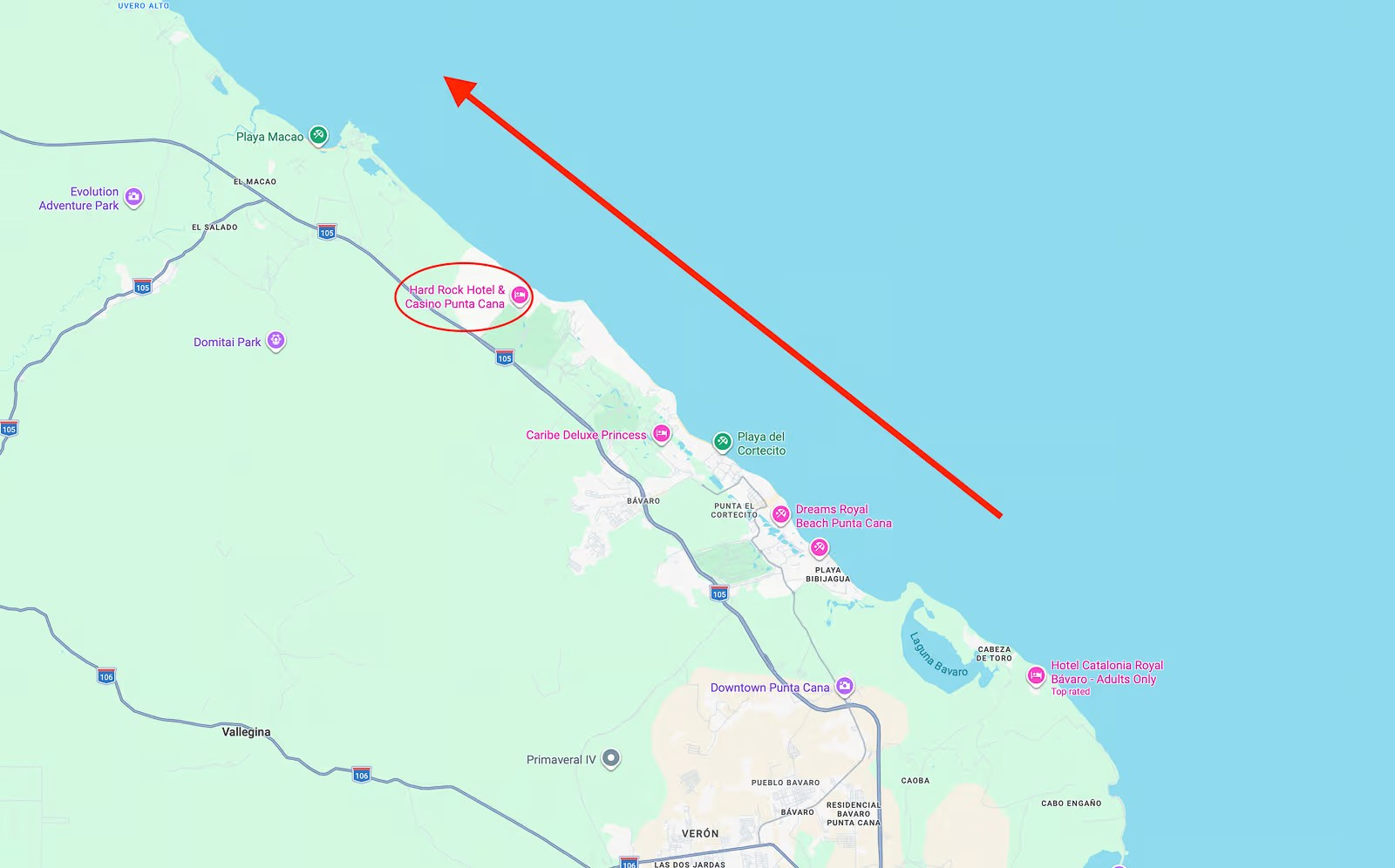
Com uma seta no mapa, mostrei a direção em que a quantidade de sargaço diminui. Ou seja, perto do hotel Hard Rock normalmente há menos sargaço.
O sargaço na praia de Bávaro é perigoso para a saúde?
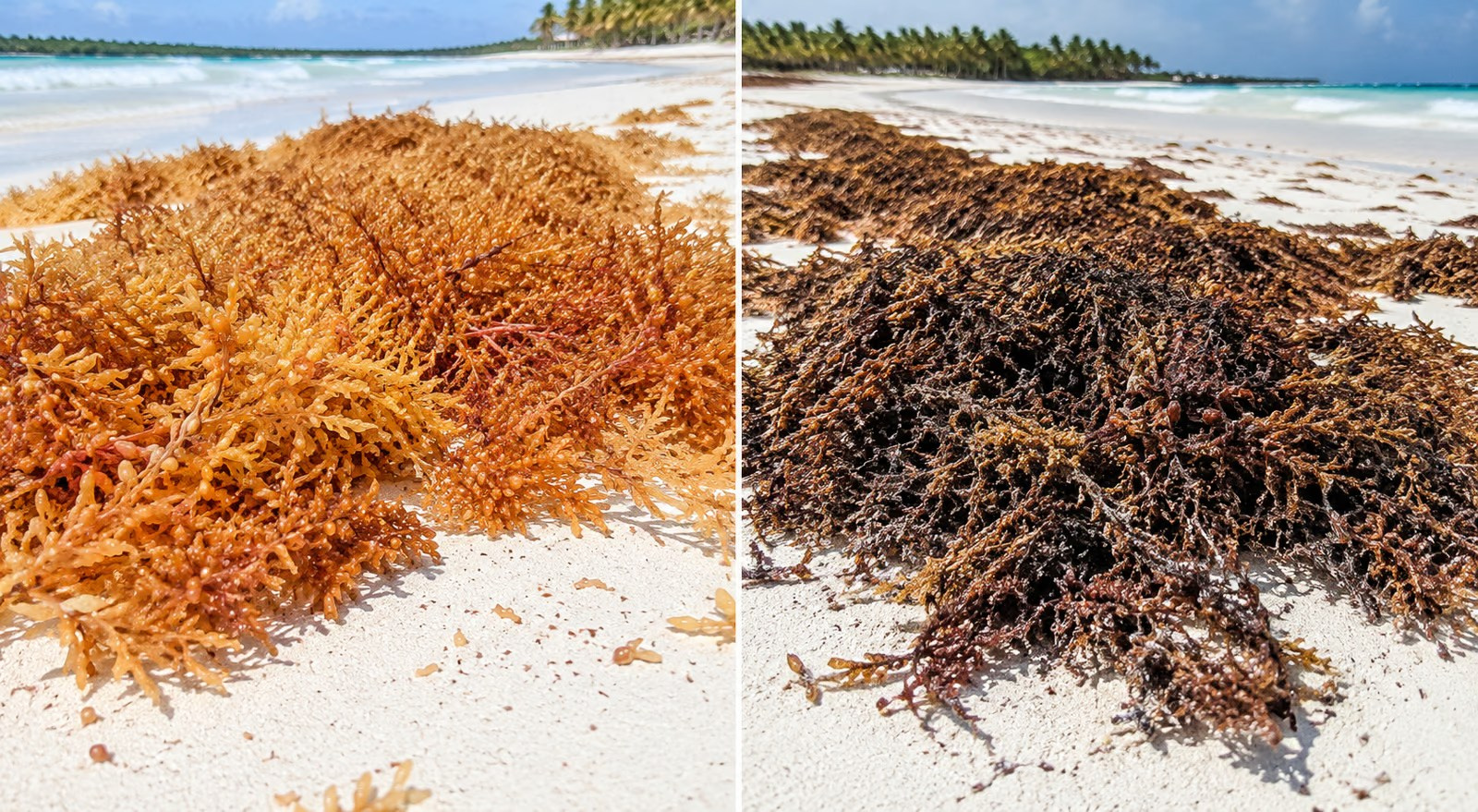
O sargaço fresco geralmente não é perigoso ao toque, mas se o sargaço ficar muito tempo na praia e começar a se decompor, ele pode liberar amônia ou sulfeto de hidrogênio. Isso já pode ser um pouco perigoso, mas o sargaço fresco é completamente inofensivo. É possível saber se está fresco pela cor. Se as algas estiverem marrom-claro, estão frescas, e quanto mais escuras ficarem, chegando até um tom marrom-avermelhado escuro — mais tempo estão ali.
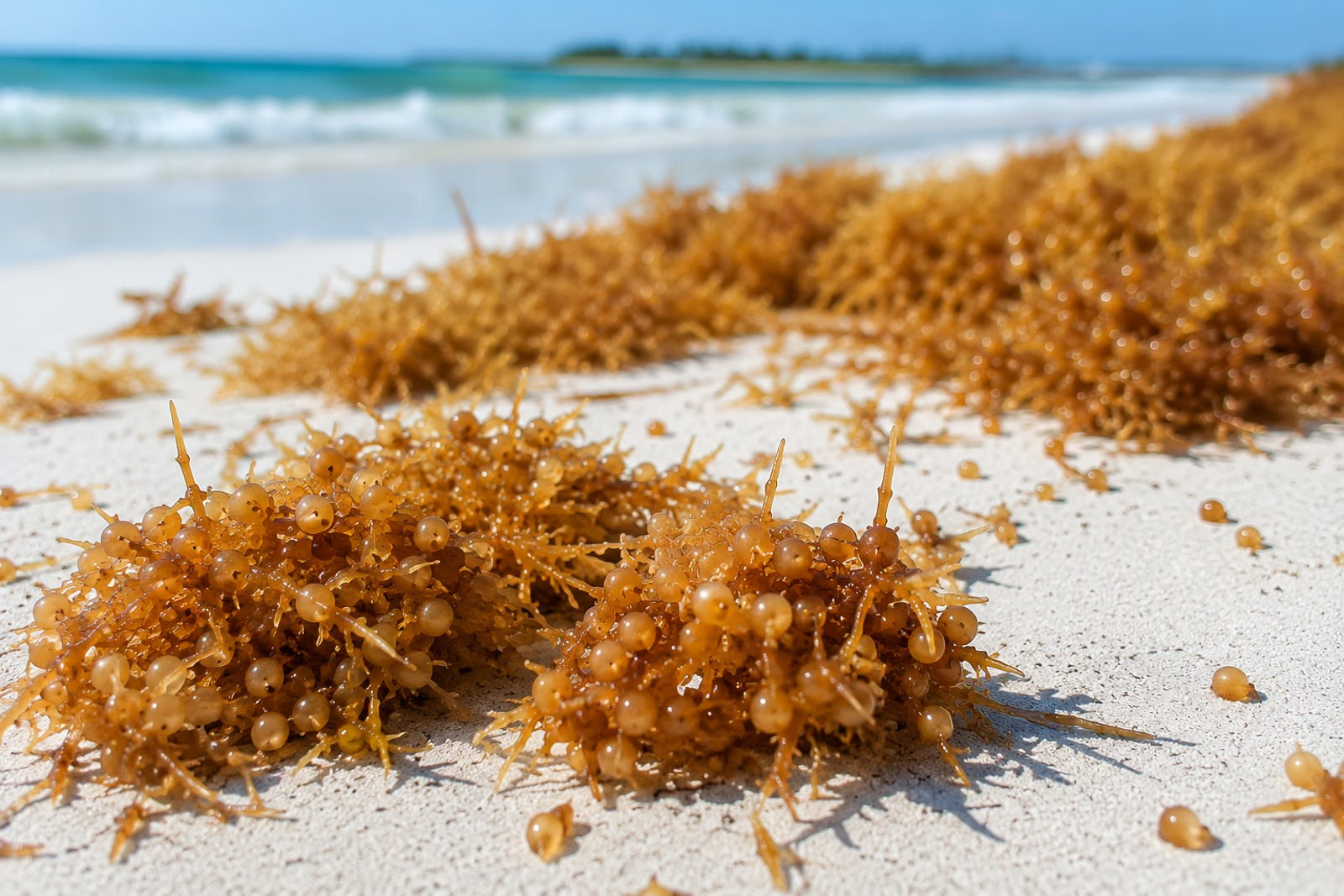
Aliás! Para quem gosta de caminhar pela praia, é bom ter cuidado, porque quando há muito sargaço na areia, às vezes caem dele pequenas bolinhas redondas e pontiagudas que podem espetar e machucar os pés. Então protejam os pés se eles forem sensíveis 😁
Vale a pena trocar Bávaro por Bayahíbe por causa do sargaço?
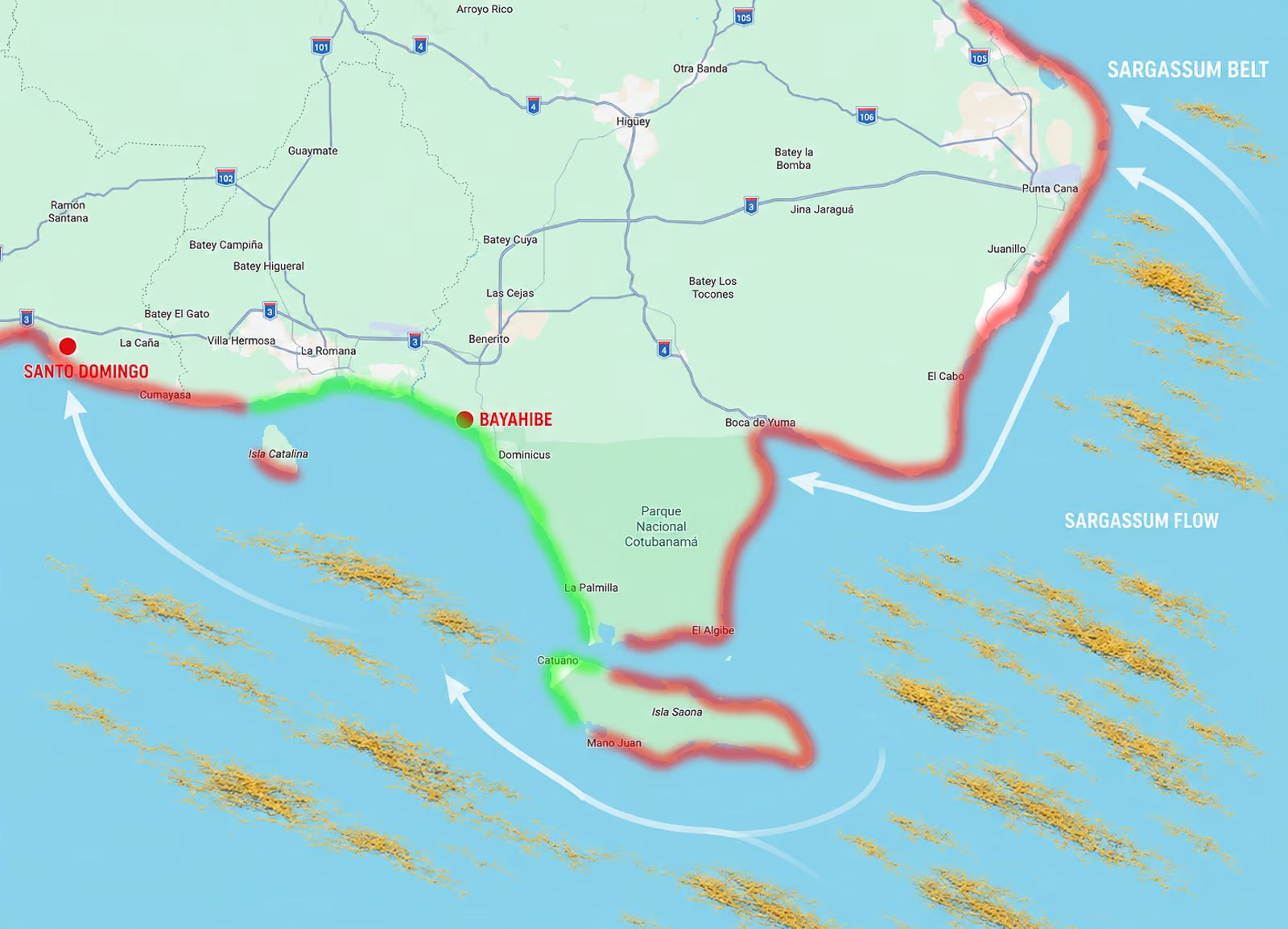
Na região de Dominicus e Bayahíbe realmente há muito menos sargaço. Antes, nunca havia sargaço aqui. Agora ele também chega a essa região, mas não nas mesmas quantidades que em Punta Cana, Cap Cana e Bávaro. Isso acontece porque Punta Cana está no caminho do sargaço que se desloca para o oeste a partir do Grande Cinturão de Sargaço do Atlântico.
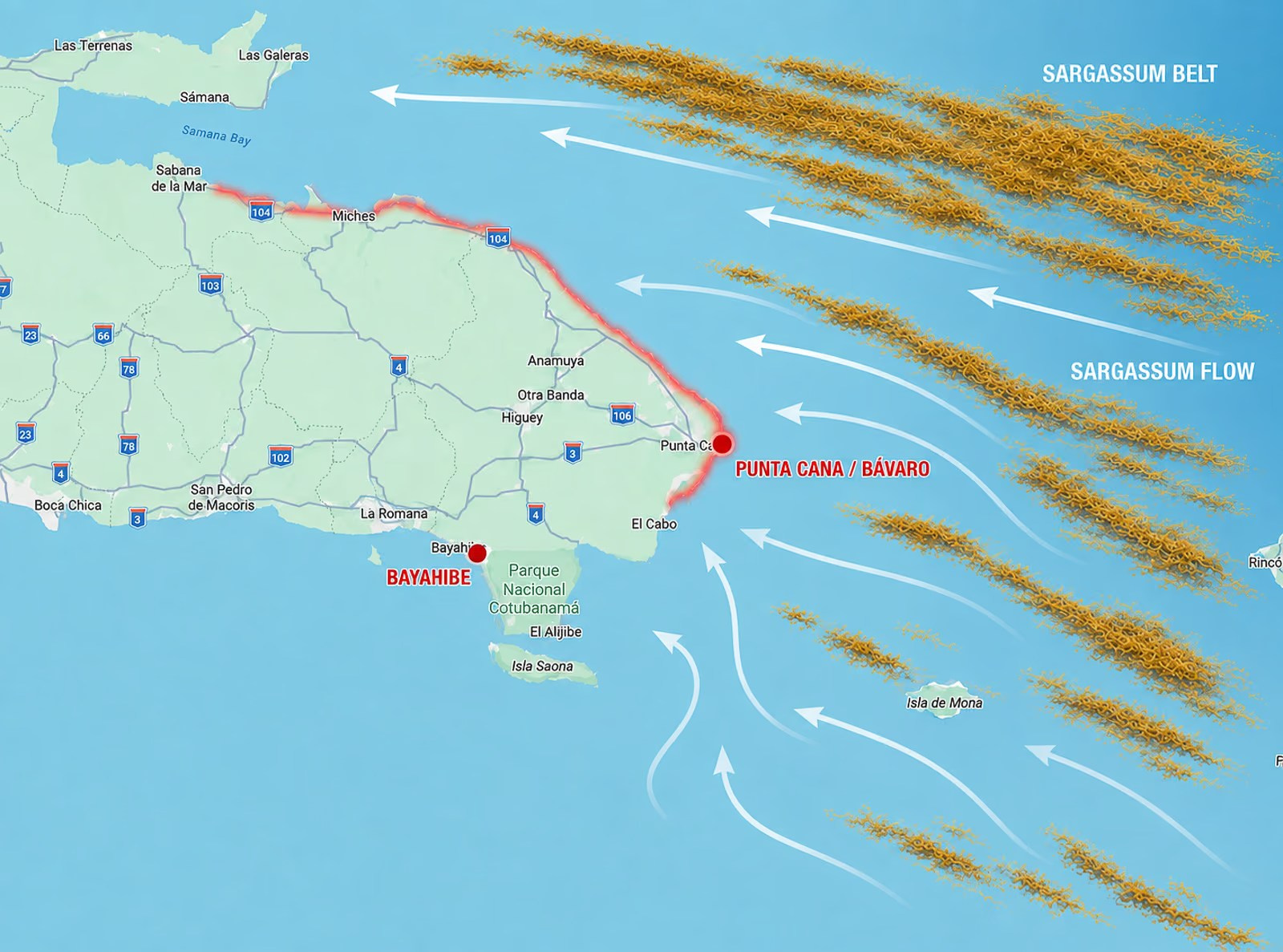
Bayahíbe, por outro lado, está localizada no sudeste e é protegida pelo Parque Nacional Cotubanamá. Por isso, o sargaço praticamente não chega a Bayahíbe e segue em direção a Santo Domingo e outras regiões do sul da República Dominicana.
Sessão de fotos na praia de Bávaro
Todo mundo tem apenas uma pergunta em mente — “Estamos pagando $300 — 400 e queremos uma linda sessão de fotos em um paraíso caribenho, mas podemos acabar com montanhas de sargaço e água marrom?”. E eu concordo totalmente, é justo receber fotos com água azul-turquesa e areia branca!
Deixem-me explicar algumas coisas importantes para entender a situação geral:
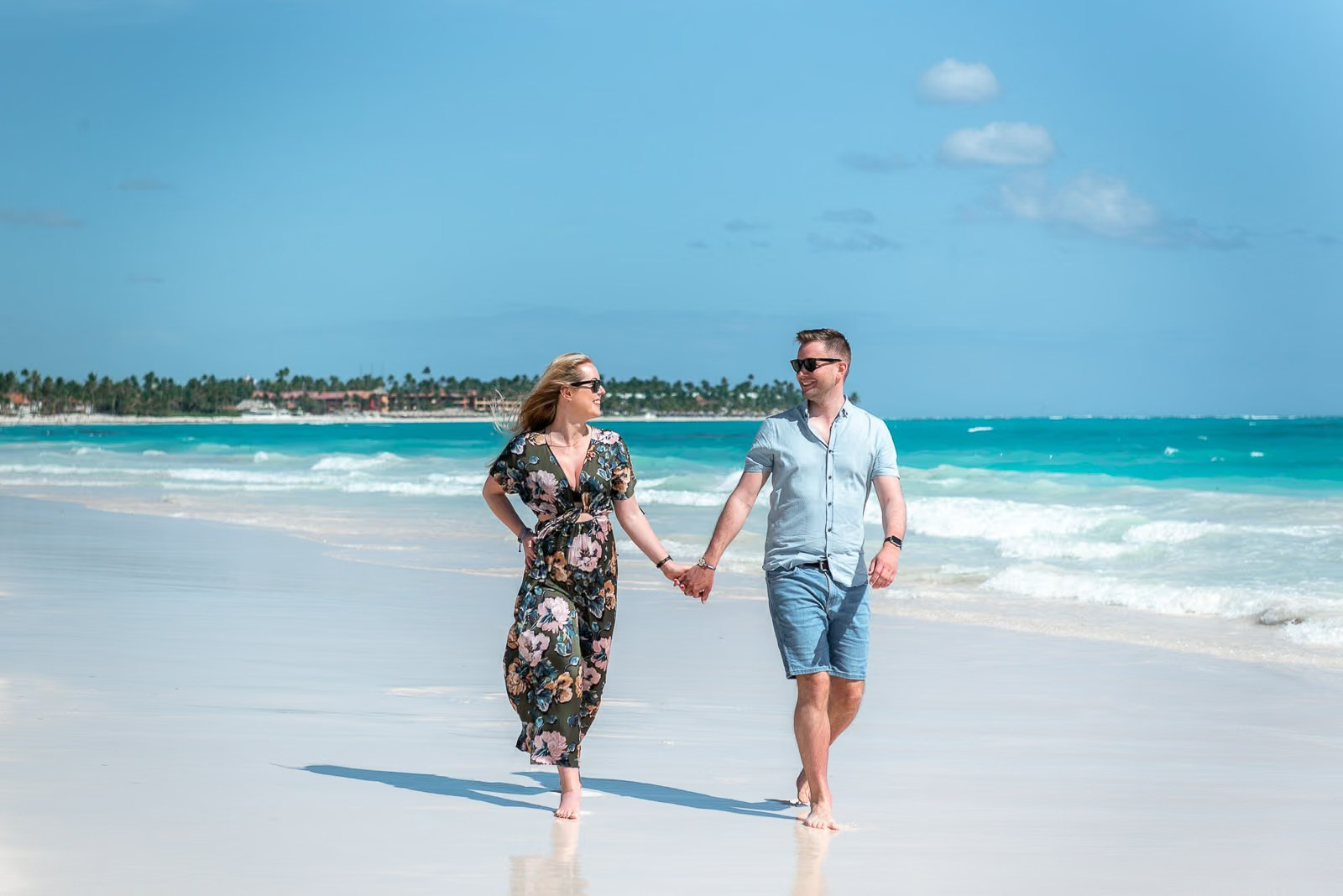
O que vocês veem na praia e o que vai aparecer nas fotos — são coisas completamente diferentes. Muita experiência e o conhecimento das características técnicas do equipamento permitem ao fotógrafo, por assim dizer, “eliminar” do enquadramento as coisas indesejadas: pessoas, sargaço, lixo e outros objetos desnecessários. Por isso, se vocês encontraram um fotógrafo profissional em Punta Cana, confiem nele! E se ainda não encontraram — escrevam para mim 😅
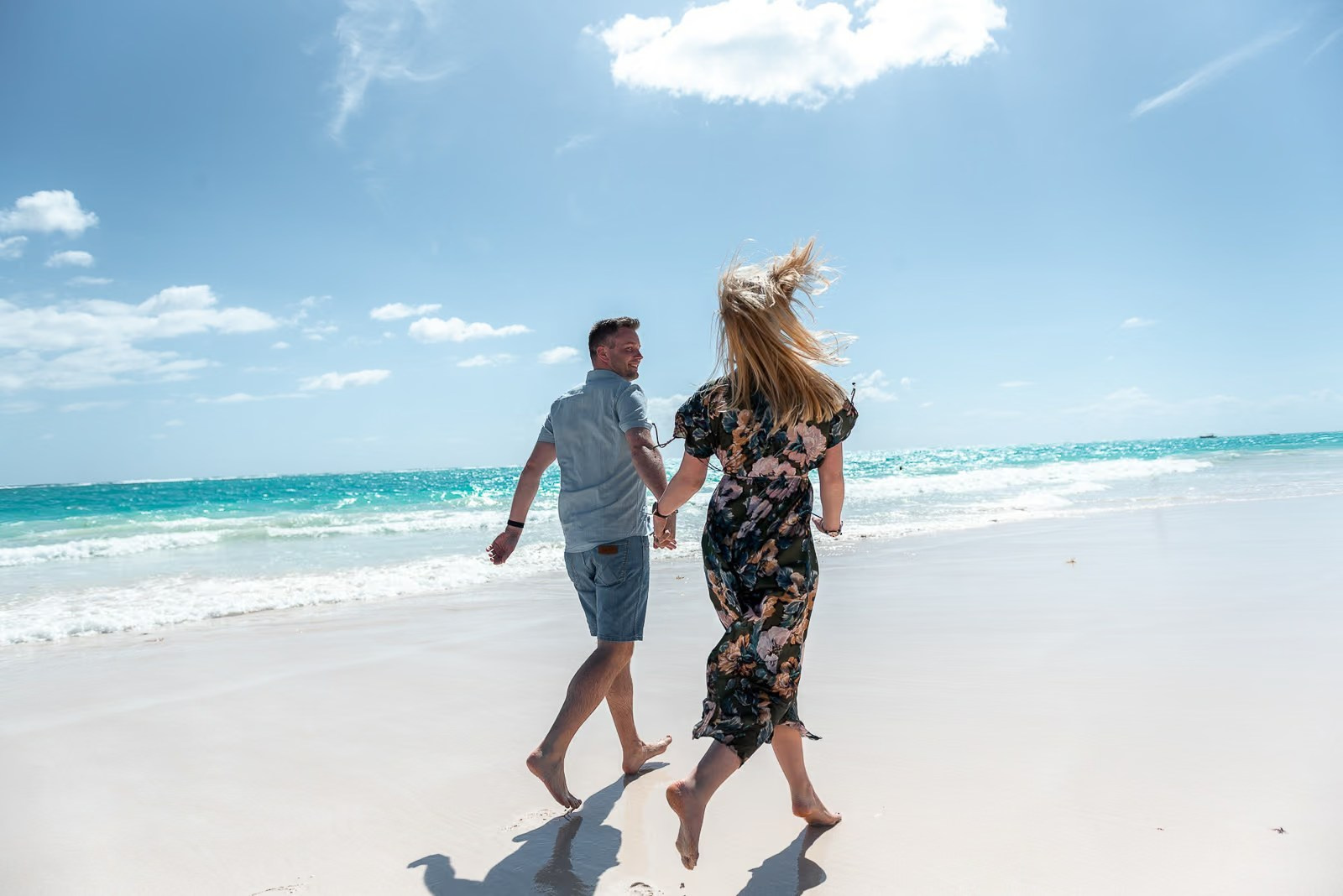
Por exemplo, nesta sessão de fotos love story na praia de Bávaro havia sargaço.
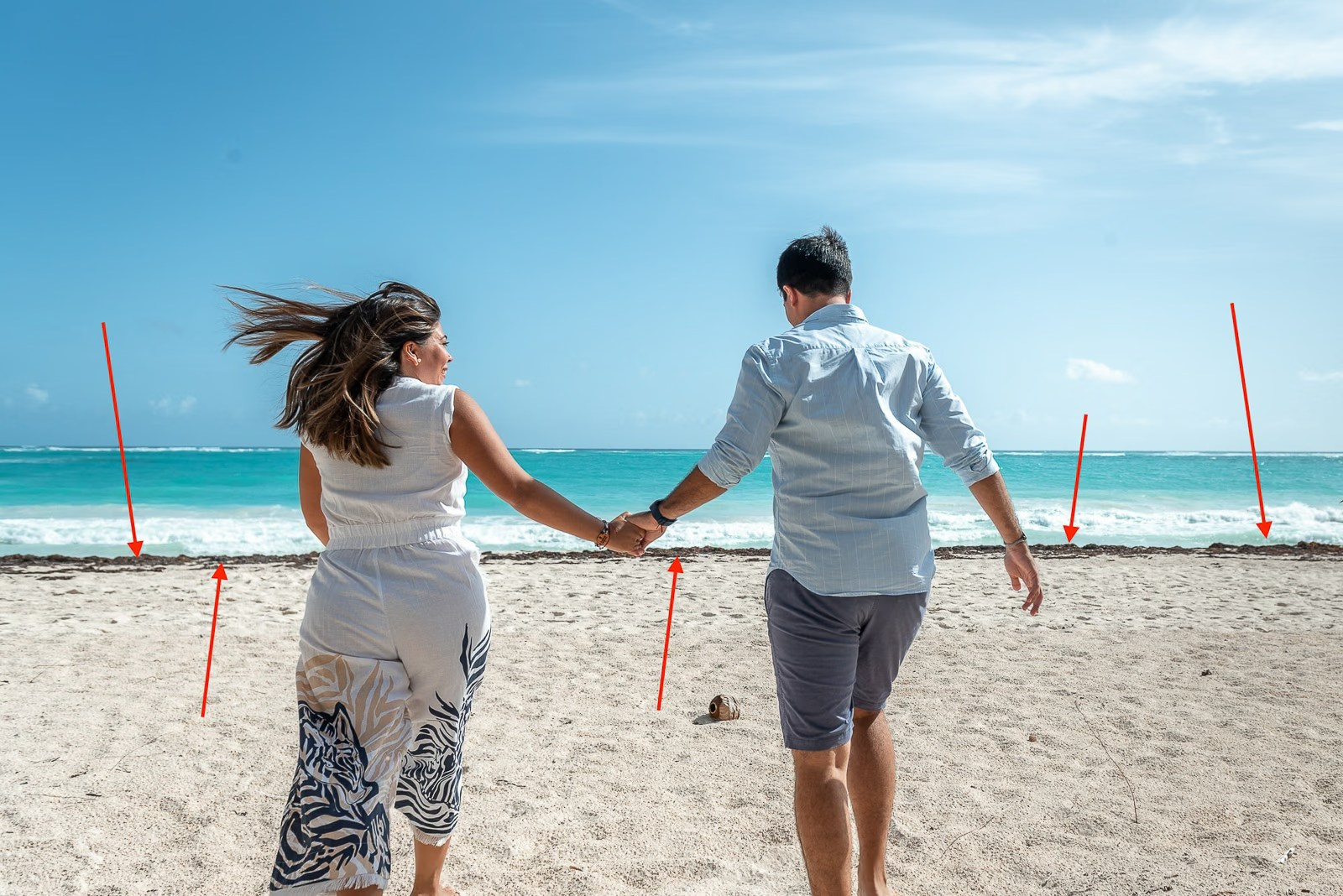
Mas eu fotografei mais longe na praia ou mais perto deles, virando a câmera para o outro lado, e em nenhuma das fotos aparece o sargaço.

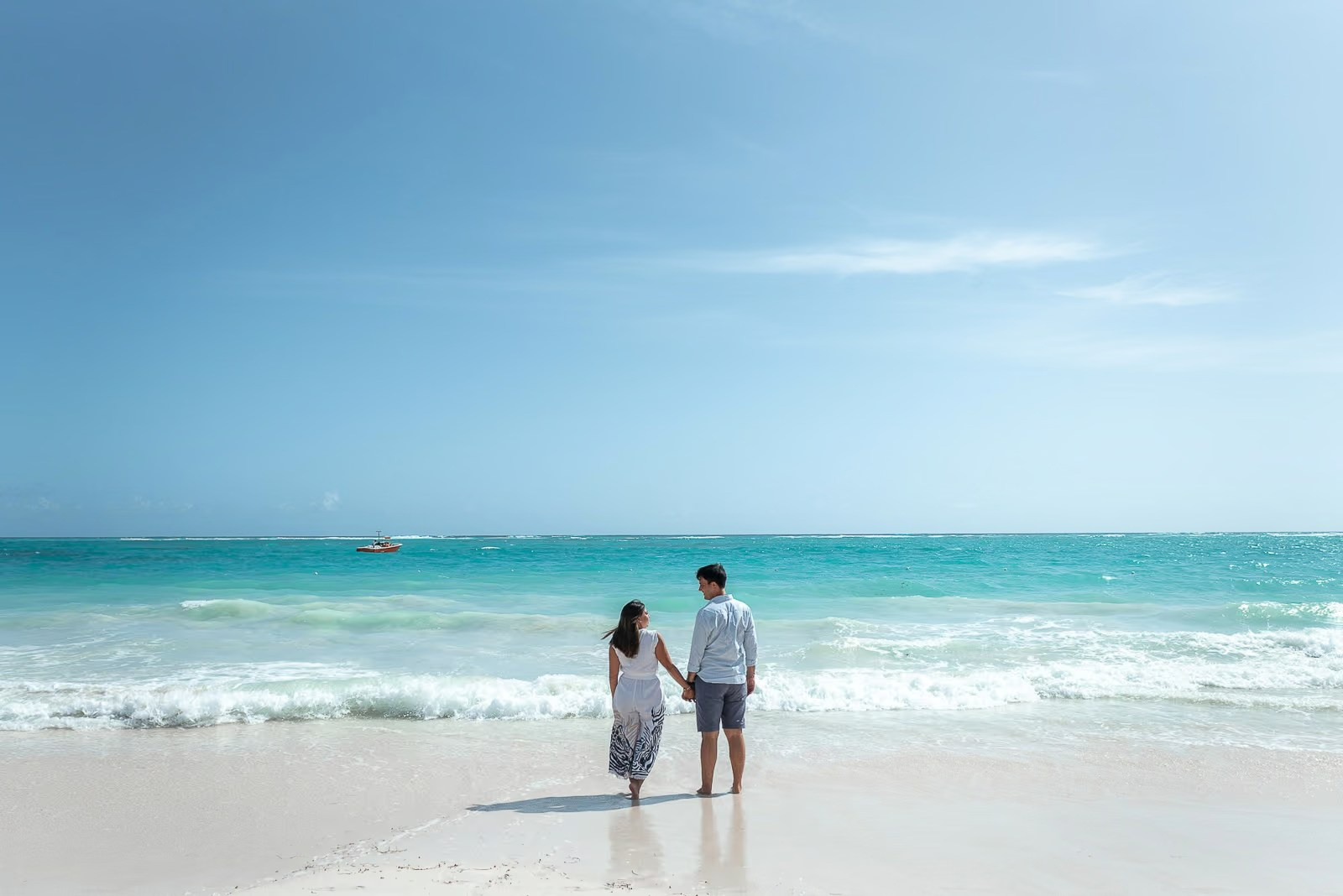

O sargaço e outros objetos indesejados sempre podem ser removidos durante o retoque. Com o desenvolvimento da inteligência artificial, remover o sargaço de uma foto leva apenas alguns segundos.


Mas, por outro lado, mesmo que apareça um pouco de sargaço na foto — é algo natural e verdadeiro. Quando não há muito sargaço, ele não estraga a foto de forma alguma, pelo contrário, deixa tudo mais natural. No nosso mundo há tanta mentira e engano que, na minha opinião, a naturalidade só deixa as fotos mais bonitas!
E se vocês se comportaram bem durante todo o ano, Deus certamente fará com que não haja sargaço no dia da sessão de fotos. Há dias em que a praia de Bávaro fica incrivelmente bonita mesmo sem edição!
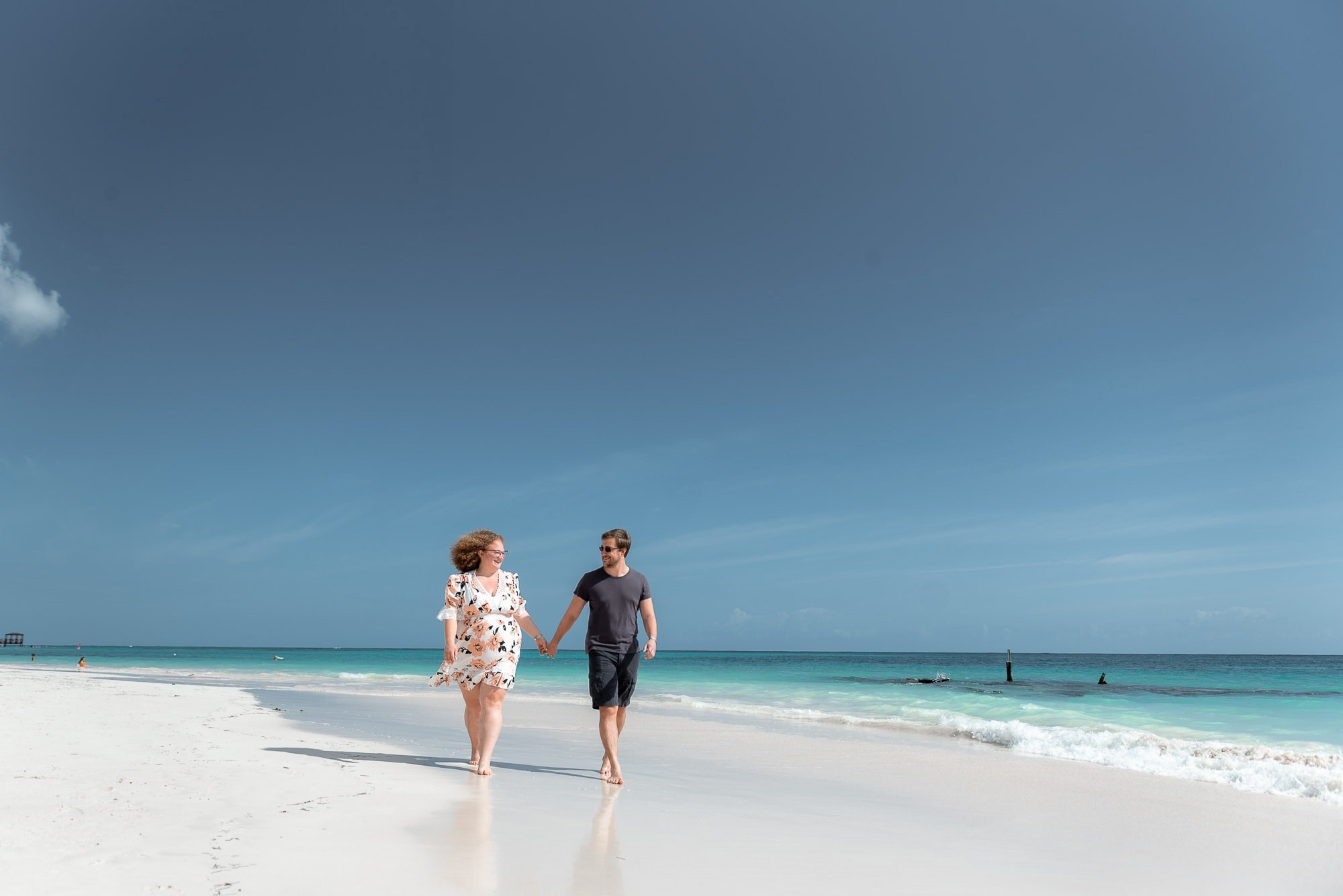
Aliás, no meu blog eu publico com frequência sessões de fotos reais, onde vocês podem ver fotos feitas na praia. Por exemplo, estas são algumas das mais recentes: uma sessão de fotos familiar em grupo na praia de Bávaro e uma sessão de fotos love story na praia de Bávaro. Nos dois casos havia sargaço, mas ele não aparece nas fotos!
É possível saber as condições da praia um dia antes da sessão de fotos?
Depende da praia. Na praia de Bávaro existem várias webcams que permitem ver as condições da praia naquele exato momento. Deixei os links das câmeras no início do artigo.
É melhor fazer uma sessão de fotos de manhã ou à tarde?
Na minha opinião, o horário ideal é 2 — 3 horas depois do nascer do sol. O sargaço é retirado ao amanhecer e a praia fica limpa. Além disso, há muito menos pessoas pela manhã. O ângulo da luz é mais favorável e adequado do que à tarde. Recomendo fazer a sessão de fotos por volta das 9 — 10 da manhã.
É possível remover o sargaço das fotos com Photoshop?!
Claro! Hoje, a tecnologia permite fazer isso literalmente em poucos segundos. Mesmo assim, acredito que uma pequena quantidade de sargaço não estraga as fotos, mas, se quiserem, ele pode ser removido!
Em qual praia de Punta Cana fazer uma sessão de fotos sem sargaço?
Quando há muito sargaço, ele está presente em praticamente todas as praias de Punta Cana e Bávaro. Para encontrar uma praia sem sargaço, é preciso viajar 1 — 2 horas para o norte ou para o sul. Por exemplo, Bayahíbe e Dominicus ao sul ou a praia Esmeralda ao norte. No entanto, nem mesmo essas praias garantem que estarão completamente limpas. Nos últimos anos, a quantidade de sargaço nas praias atingiu níveis recordes e essa é a nossa realidade atual, então é preciso aceitar e deixar para lá!
Perguntas frequentes:
Onde ver fotos recentes ou webcams da praia de Bávaro?
Atualmente existem 2 webcams funcionando em diferentes partes da praia de Bávaro. Com elas, é possível ver claramente as condições da praia em tempo real. Mas não se esqueçam de que a praia de Bávaro é muito grande e a situação com o sargaço pode ser bem diferente em cada parte da praia. Deixei os links das câmeras no início do artigo.
Quais hotéis limpam melhor o sargaço na praia de Bávaro?
Todos os hotéis localizados na praia de Bávaro que funcionam no sistema “tudo incluído” limpam cuidadosamente sua parte da praia desde cedo pela manhã. Apenas as áreas onde não há hotéis não são limpas. Os hotéis mais caros, como Hard Rock ou Majestic, limpam a praia com mais cuidado. Embora nessas partes da praia de Bávaro normalmente haja menos sargaço. Mas às vezes há tanto sargaço que é fisicamente impossível remover tudo, especialmente no verão, em junho, julho e agosto.
A praia fecha quando há uma grande quantidade de sargaço?
Não. Oficialmente, a praia não fecha por causa do sargaço. Embora às vezes seja simplesmente impossível nadar, porque os primeiros 10 — 20 metros de água a partir da margem ficam completamente cobertos de sargaço.
Por que as condições da praia podem ser diferentes entre hotéis vizinhos?
Porque quando as “ilhas” de sargaço se aproximam da costa, o clima local começa a influenciar. A praia de Bávaro se estende por 12 — 13 quilômetros, e as correntes submarinas e até o vento podem ser diferentes em cada parte. Por isso, algumas partes da praia recebem mais sargaço e outras menos.
As barreiras de proteção contra o sargaço dos hotéis ajudam?!
Depende da qualidade das barreiras. Por exemplo, nas praias de Cap Cana, onde os imóveis e os hotéis são muito mais caros — são instaladas barreiras maiores que protegem melhor contra o sargaço, embora ainda deixem passar uma parte. Na praia de Bávaro, na minha opinião, as barreiras de proteção funcionam apenas 20 — 30%. Por quê? Porque o sargaço flutua na superfície e as ondas o fazem passar por cima da barreira, e quando uma grande quantidade de sargaço se acumula perto da barreira, ele começa a passar por baixo. Por isso, por enquanto, não existe uma boa proteção contra grandes quantidades de sargaço.
Com que frequência os hotéis limpam o sargaço na praia de Bávaro?
Normalmente todas as manhãs, e muitos hotéis começam a limpeza antes do amanhecer, às 5 — 6 da manhã. Quando há muito sargaço, a limpeza é feita várias vezes ao dia. Embora, quando há sargaço demais, não faça sentido fazer a limpeza.
Quais praias perto de Punta Cana e Bávaro não têm sargaço?
As praias mais próximas que realmente são muito limpas ficam no sudeste, em Bayahíbe. Embora, pela minha experiência, as praias ao norte de Macao, como: Playa la Vacama, Playa Nisibon, Playa de la Barbacoa também estejam completamente limpas com muita frequência.
Qual é a intensidade do cheiro do sargaço?!
O sargaço fresco não tem cheiro. No entanto, se ficar um dia ou mais na praia, sob o sol, ele começa a se decompor e liberar sulfeto de hidrogênio e amônia, que podem produzir um cheiro não muito agradável de ovos podres e outras coisas em decomposição.
É possível nadar quando há muito sargaço?
Se o sargaço estiver apenas na areia, mesmo que toda a praia esteja coberta por ele, mas não houver sargaço na água, não haverá problemas para nadar. Mas se houver muito sargaço e ele ocupar os primeiros 5 — 10 metros de água a partir da margem, começa a se decompor, a água começa a escurecer e fica marrom, e entrar nessa água não é muito agradável.
Agora vocês já sabem quase tudo sobre o sargaço! Por que quase tudo? Porque deixei algumas informações secretas para depois 😁 Mas, claro, vou compartilhá-las nos próximos artigos! E se vocês decidiram que precisam de uma sessão de fotos em Punta Cana, escrevam para mim e vamos fazer fotos incríveis!

Sobre o autor:
Alex Po é fotógrafo em Punta Cana. Chegou pela primeira vez à República Dominicana em 2011. Trabalha com fotografia há mais de 15 anos e já realizou centenas de sessões de fotos na praia de Bávaro. Há muitos anos também observa a natureza da República Dominicana do alto com um drone.